

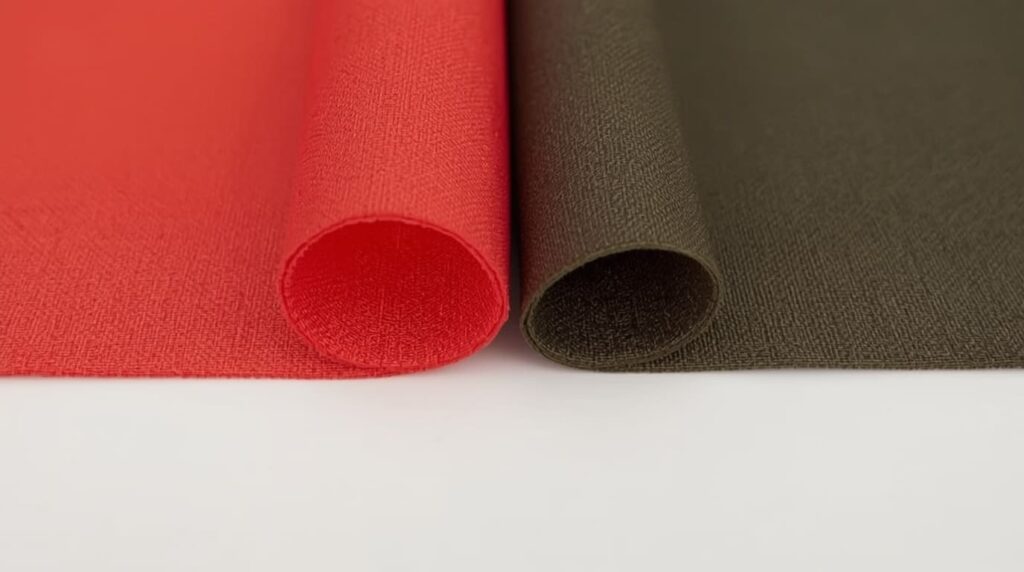
Why Two 90 GSM Non-Woven Bags Feel Totally Different: A Factory-Level Guide to Materials and Manufacturing Control
Non-woven bags are widely used for shopping, packaging, and promotional purposes. Many buyers assume that two bags labeled “90 GSM” should feel exactly the same. In practice, this is rarely the case. Even when the weight matches specifications, one bag can feel stiff and crisp while another feels soft and pliable. This confusion arises because GSM (grams per square meter) measures only weight, not the tactile properties that determine how a bag feels when held, lifted, or loaded.
The true hand-feel of a non-woven bag depends on a combination of factors including fiber quality, masterbatch content, bonding method, compression during production, layer structure, lamination or coating, and finishing processes. Understanding these factors allows buyers to evaluate samples more accurately and reduces misunderstandings with manufacturers.
Two non-woven bags can share the same GSM rating but feel very different because weight alone cannot define fiber density, bonding strength, surface smoothness, internal air volume, or polymer composition. These properties are engineered during production rather than specified on paper.
Summary of Main Factors Affecting Non-Woven Bag Hand-Feel
- Polymer grade and recycled ratio
- Masterbatch and filler content
- Filament size and uniformity
- Bonding technology
- Fabric density and thickness
- Layer structure
- Lamination and coating
- Thermal pressure and roller calibration
- Finishing treatments
- Bag construction and reinforcement
- Moisture content and storage
- Consistency between sampling and mass production
1. Polymer Grade and Recycled Ratio
Most non-woven bags are made from polypropylene (PP) or recycled polyester (RPET). The resin quality has a direct impact on fiber performance.
- Virgin PP or high-grade polyester: Forms uniform filaments, providing smooth, consistent surfaces, good tensile strength, and better bending recovery.
- High recycled content: Increases variability in filament diameter and surface roughness, sometimes leading to lower flexibility and a “scratchy” feel.
Even when two fabrics share 90 GSM, the type and quality of polymer can make one feel rigid and crisp while the other feels soft and spongy.
Example: Two 90 GSM shopping bags may look identical, but a bag made with high recycled content may fold less cleanly, feel rougher, and produce noise when moved, while a virgin-resin bag holds shape and feels smooth.
2. Masterbatch and Filler Content
Masterbatch is added to fibers to control color, stiffness, or functional properties. Some fillers, like calcium carbonate, are used to reduce cost or increase rigidity.
- High filler content: Increases stiffness and reduces elasticity, making bags feel brittle.
- Slip or softening masterbatch: Reduces surface friction and improves drape.
- Pigment masterbatch: Can affect fiber density slightly, influencing tactile perception.
Masterbatch content is one of the strongest contributors to hand-feel differences at the same GSM. Buyers often overlook this factor because it does not show up on the weight specification.
Scenario: A thermal-bonded non-woven bag with 5% calcium carbonate masterbatch feels harder than a bag with no filler, even though both weigh 90 GSM.
3. Filament Size and Uniformity
Filament diameter, measured in microns or denier, impacts density, softness, and strength.
- Finer filaments: Pack densely, create smooth surfaces, and enhance tear resistance.
- Coarser filaments: Produce uneven, rougher textures and can make the bag feel less premium.
Uniformity also matters: uneven filaments can create localized stiffness or softness. Even small differences in filament size can noticeably change how the bag behaves when carried or loaded.
4. Bonding Technology
Non-woven fabrics are held together by bonding rather than weaving. Three main methods are common:
- Thermal bonding: Fibers are pressed by heated rollers, creating a firm, flat sheet.
- Needle punching: Fibers are entangled mechanically, producing a thicker, softer texture.
- Chemical bonding: Uses adhesives or binders, altering flexibility and surface friction.
The bonding method affects stiffness, compression recovery, and tactile perception even when GSM remains constant.
Observation: Thermal-bonded 90 GSM bags feel structured and crisp, suitable for shopping totes that need to stand upright. Needle-punched bags of the same GSM feel softer, better for bags that need drape.
5. Fabric Density and Thickness
GSM does not reflect thickness. Two 90 GSM sheets may have:
- 0.45 mm thickness, compressed and firm
- 0.75 mm thickness, bulkier and soft
Higher-density sheets resist bending and feel crisp. Lower-density sheets are softer and compressible. Thickness should always be measured along with GSM during evaluation.
Example: Insulated bags often combine layers to increase thickness without changing total GSM, improving perceived rigidity and thermal performance.
6. Layer Structure
Some bags are single-layer, while others are multi-layer or composite:
- Two thin layers bonded together: Increases stiffness and improves load-bearing ability.
- Core layer with laminated outer layer: Adds smoothness and resistance to moisture.
- Insulated sandwich structures: Increase bulk and provide rigidity.
Layering changes bending stiffness and load distribution, directly affecting hand-feel.
7. Lamination and Surface Coating
Lamination or coating modifies both surface texture and bending behavior:
- Film lamination: Adds smoothness and stiffness.
- Water-based coating: Improves surface slip, may slightly increase rigidity.
Part of the 90 GSM may come from coating rather than the base fabric. Two bags with identical total weight can feel very different depending on lamination or coating.
8. Thermal Pressure and Roller Calibration
During thermal bonding, calender rollers compress the fiber web. Settings are critical:
- Higher temperature/pressure: Creates more bonding points, reduces thickness, produces a firm sheet.
- Lower settings: Fibers remain loosely bonded, resulting in a softer, more compressible fabric.
Small differences in roller pressure or line speed can produce visible tactile differences, even when using the same material.
9. Finishing Treatments
After formation, fabrics may receive finishing treatments:
- Heat setting: Stabilizes fibers, makes fabric crisp.
- Softening agents: Reduce stiffness, increase drape.
- Anti-static or water-repellent coatings: Modify surface feel and friction.
These processes change touch without altering GSM. Buyers who ignore finishing effects may be surprised by sample vs. bulk differences.
10. Bag Construction and Reinforcement
The final bag includes construction details beyond fabric:
- Handles: Reinforced handles make a bag feel more rigid at the top.
- Folded edges and binding tape: Increase stiffness at the seams.
- Gussets and bottom inserts: Add structure to panels.
Two bags made from the same fabric can feel different after assembly due to design choices.
11. Moisture and Storage Conditions
Humidity changes fabric feel:
- High moisture: Softens fibers, increases weight perception.
- Dry environment: Makes fabric firmer and crisp.
Proper storage and acclimation after shipping are essential for accurate evaluation.
12. Sampling Versus Mass Production
Hand-feel differences often originate from sampling:
- Pilot-line or small-run samples
- Temporary machine settings
- Alternative raw-material lots
- Hand-cut prototypes
Sealed reference samples from actual production lines are recommended to ensure consistent hand-feel in bulk orders.
How Professional Factories Maintain Consistency
Experienced factories maintain tactile consistency by:
- Controlling polymer batches and masterbatch ratios
- Calibrating bonding rollers and thermal settings
- Monitoring thickness, density, and tensile strength
- Checking lamination and finishing processes
- Conducting in-process and final inspection
These systems reduce variability across shipments and ensure repeatable quality.
Practical Questions for Evaluating Non-Woven Bags
- What polymer grade and recycled content is used?
- What masterbatch or filler percentage is added?
- Which bonding method is applied?
- What thickness tolerance is guaranteed?
- Does lamination contribute to GSM?
- How many layers form the final structure?
- Are reference samples sealed for future orders?
- How are finishing and thermal pressure controlled?
Focusing on these points gives buyers accurate insight into hand-feel before approving bulk production.
Conclusion
Non-woven bag hand-feel is engineered through material selection, masterbatch content, fiber size, bonding, density, layering, lamination, and finishing. GSM alone is insufficient to predict softness, stiffness, or durability. Accurate evaluation requires considering all contributing factors.
Understanding these manufacturing variables reduces surprises during inspection, ensures consistent quality, and creates a reliable supply chain.
For technical consultation on non-woven bag structure, masterbatch selection, and tactile evaluation:
📞 +86 138 6773 1930 (WhatsApp)
📧 [email protected]
Clear technical alignment ensures stable production and predictable hand-feel across all shipments.