
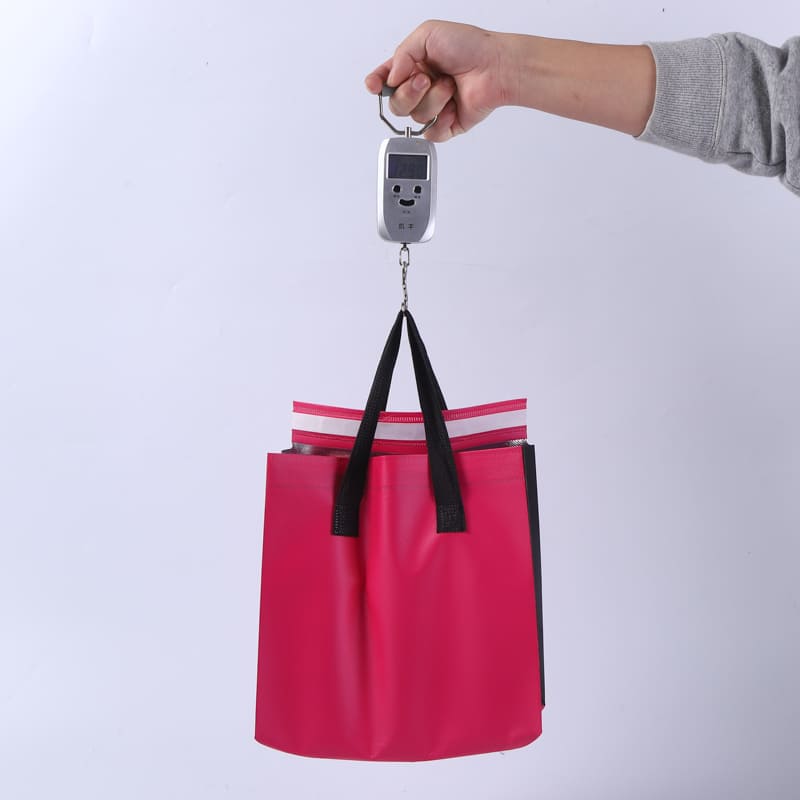
Problem
Many buyers choose non-woven bags based on price, appearance, or printing quality. At first everything looks perfect. The bag is clean, colorful, and neatly packed. But when customers actually use it, problems begin. Handles tear. Bottom seams open. The bag cannot hold the weight it was supposed to carry.
In practice, the most direct way to judge the load capacity of a non-woven bag is to check the fabric weight, also called GSM (grams per square meter). Higher GSM usually means thicker material and better load strength. However, real carrying capacity also depends on fiber density, sewing quality, handle structure, and bag design.
From years of manufacturing bags, it becomes clear that load capacity is never determined by a single factor. A strong bag is the result of material, structure, and production control working together.
If buyers understand these details, it becomes much easier to select the right bag for the right job.
Quick Summary
- Fabric GSM is the fastest and most direct indicator of strength.
- Fiber density determines the real durability of the fabric.
- Lamination changes how the material handles weight.
- Handle attachment is often the weakest point of the bag.
- Stitch density directly affects seam strength.
- Bottom structure distributes weight differently.
- Bag size influences the actual load limit.
- Reinforcement techniques increase durability.
- Simple physical testing verifies real performance.
1. Fabric GSM Is the Most Direct Indicator
When evaluating a non-woven bag, the first thing most professionals check is GSM.
GSM means grams per square meter, which describes how heavy the fabric is. In simple terms, it reflects the thickness of the material.
In daily manufacturing work, this number immediately tells a lot about the bag.
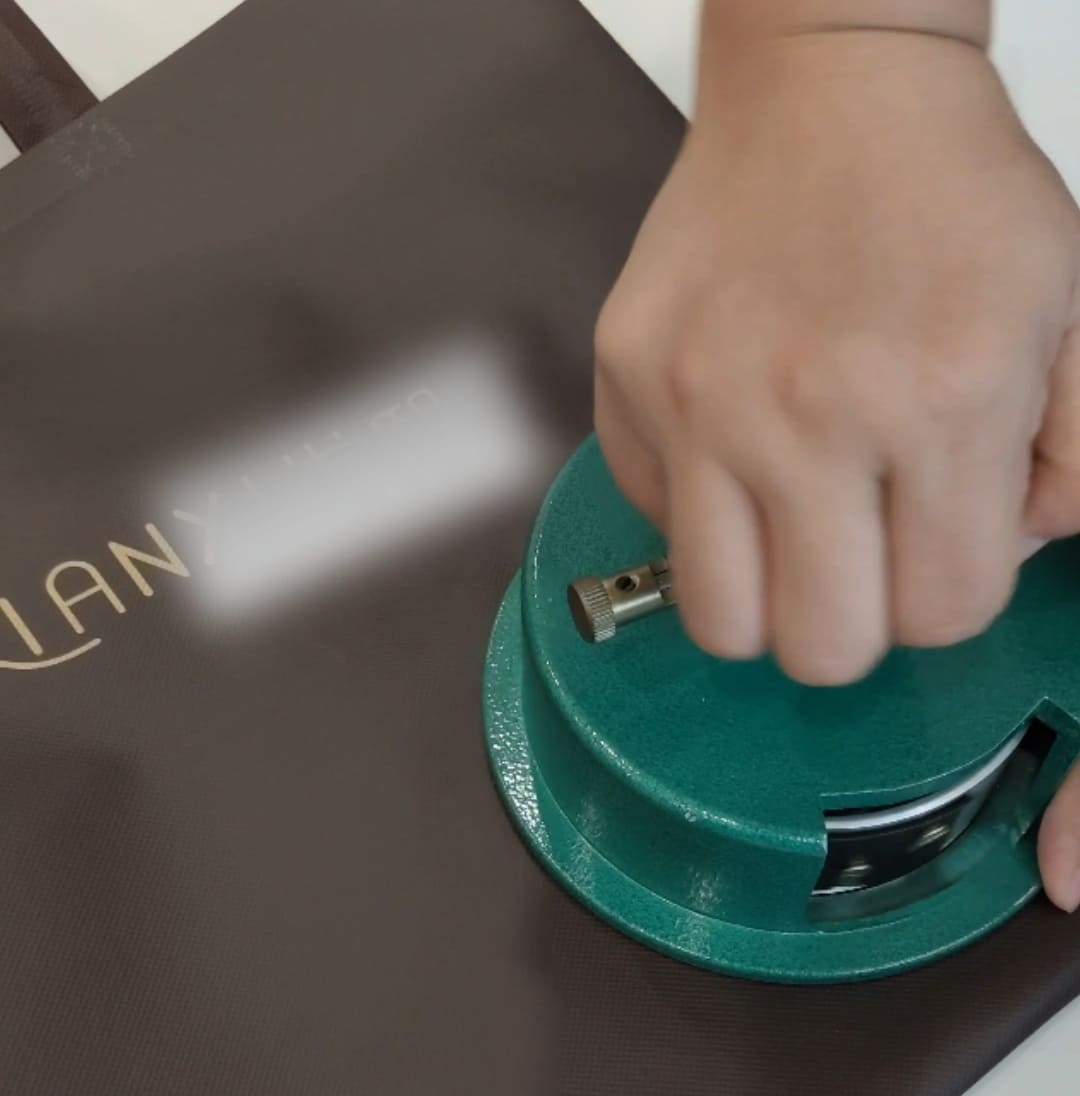 Cutting fabric samples to measure the GSM (fabric weight).
Typical ranges in the market include:
| Fabric Weight | Typical Application | Approximate Load |
|---|---|---|
| 60–70 GSM | Promotional giveaway bags | 3–5 kg |
| 80–90 GSM | Retail shopping bags | 5–8 kg |
| 100–120 GSM | Supermarket bags | 8–12 kg |
| 120+ GSM | Heavy duty bags | 12 kg or more |
From a manufacturer’s perspective, GSM is always the first reference point when a client asks about strength.
In many conversations with buyers, the first question is simply:
“What GSM do you recommend?”
After many years in bag production, one observation becomes very clear. When a bag fails, it is often because the fabric GSM was chosen too low for the intended use.
2. Fiber Density Matters More Than Many Buyers Realize
Two bags can both be labeled 90 GSM, but they may feel completely different in hand.
One may feel soft and flexible.
Another may feel firm and solid.
This difference usually comes from fiber density and bonding quality.
In the spun-bond process used to produce non-woven fabric, polypropylene fibers are melted, spun, and bonded together. If the fibers are distributed evenly and bonded tightly, the fabric becomes stronger.
If the fibers are loose or uneven, the material becomes weaker even if the GSM number is the same.
During factory inspections, experienced buyers often rub the fabric or stretch it slightly. This simple action reveals whether the structure is dense or loose.
From long production experience, it becomes clear that consistent fiber distribution is one of the hidden indicators of quality.
3. Laminated Fabric Behaves Differently Under Weight
Many non-woven bags are laminated with a thin film.
This film adds several benefits:
- water resistance
- smoother printing surface
- better color brightness
- easier cleaning
From the manufacturing side, lamination also changes how the bag handles weight.
A laminated bag often feels stiffer and more structured. The film spreads stress across the surface of the fabric.
However, lamination also reduces flexibility.
If overloaded, laminated fabric may crack rather than stretch. Because of this, laminated bags usually require stronger stitching and reinforcement.
Over the years, one lesson becomes clear: lamination improves appearance and durability, but it does not replace proper structural design.
4. Handle Attachment Is Often the Weakest Point
In real use, most bag failures happen at the handle connection area.
The fabric itself may be strong enough, but the handles may tear away.
Common attachment methods include:
- straight stitching
- box stitching
- X stitching
- ultrasonic sealing
Among these options, X stitching is widely used for stronger bags because it spreads the force in multiple directions.
During production checks, the handle area always receives special attention. A strong bag must transfer the load smoothly from the body to the handle.
From manufacturing experience, this small detail often determines whether a bag lasts months or only days.
5. Stitch Density Influences Seam Strength
Another important factor is stitch density, usually measured as stitches per inch (SPI).
Typical ranges include:
- 5–6 SPI for lightweight bags
- 7–8 SPI for standard retail bags
- 9+ SPI for heavy duty bags
Higher stitch density usually creates stronger seams.
However, there is also a balance. Too many stitches create too many needle holes, which can weaken the fabric.
In the factory, finding the correct balance between stitch density and material strength is part of daily production control.
After years of production adjustments, it becomes obvious that seam quality is just as important as fabric quality.
6. Bottom Structure Changes Weight Distribution
Bag structure also affects load capacity.
Common designs include:
- flat bottom
- gusset bottom
- box bottom
A gusset or box bottom allows the bag to expand and distribute weight across a wider area.
This is especially useful for supermarket shopping bags or grocery bags.
When the base is wider, pressure spreads more evenly across the fabric.
From production experience, bags with bottom gussets often perform much better in real life situations, even when the fabric GSM is the same.
7. Bag Size Influences Carrying Capacity
Many buyers assume that larger bags can carry more weight.
In reality, larger bags often experience more stress on the fabric.
When the bag dimensions increase, the distance between seams increases. This creates more tension when the bag is filled.
For example:
- A small bag made with 90 GSM may carry 8 kg.
- A larger bag with the same fabric may only carry 6 kg safely.
Because of this, manufacturers often recommend higher GSM for larger bags.
This adjustment keeps the performance consistent across different sizes.
8. Reinforcement Methods Improve Strength
Manufacturers often add reinforcement features to increase durability.
Common reinforcement techniques include:
Handle Reinforcement Patch
An extra layer of fabric is sewn inside the handle area.
This spreads the stress over a larger surface.
Bottom Reinforcement
Additional material or cardboard is added to strengthen the base.
Cross Stitch Reinforcement
Extra stitching patterns help distribute force more evenly.
From practical experience, small reinforcement details can increase load capacity significantly while adding only minimal cost.
9. Simple Load Testing Confirms Real Performance
Even with all technical specifications, the most reliable method remains physical load testing.
Factories usually test bags using simple procedures.
Typical steps include:
- Fill the bag with weight.
- Hang or lift the bag.
- Observe the seams and handle area.
For example, a supermarket bag might be tested with 10 kg for 24 hours.
If the bag shows no tearing, seam failure, or deformation, it passes the test.
Over time, this type of testing becomes routine in quality control.
From a manufacturer’s perspective, nothing reveals the truth faster than a real weight test.
A Practical Way Buyers Quickly Judge Bag Strength
In real business situations, experienced buyers usually perform three quick checks:
- Ask for the fabric GSM.
- Inspect the handle stitching.
- Perform a simple lifting test.
These steps take only a few minutes but reveal most quality issues.
After many years working with bags, it becomes clear that simple observation combined with basic knowledge can prevent many costly mistakes.
Final Thoughts
The load capacity of a non-woven bag depends on several factors, but fabric GSM remains the most direct and practical indicator. Higher GSM usually means stronger material, but real performance also relies on fiber density, handle design, seam strength, and structural reinforcement.
From years in bag manufacturing, one lesson becomes very clear: a reliable bag is not created by a single feature. It is the result of careful material selection, thoughtful design, and consistent production control.
When these elements work together, the bag not only looks good but also performs reliably in everyday use.
Custom Non-Woven Bag Manufacturer
JiaRong Packaging
📧 Email: [email protected]
📱 WhatsApp: Click to Chat