
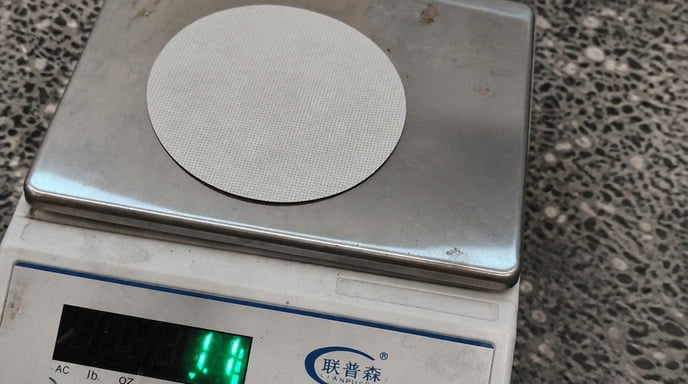
GSM is one of the most important specifications used to describe non-woven bag materials.
For traders, importers, and wholesalers, measuring GSM helps verify whether the actual material weight matches the supplier's specification before bulk production.
GSM stands for Grams per Square Meter, which refers to the weight of material within one square meter.
However, when discussing GSM for non-woven bags, buyers need to understand that the term may refer to different material stages:
- Raw non-woven fabric GSM: The weight of the original fabric before printing, lamination, or other processing.
- Laminated non-woven GSM: The weight after adding a film layer or coating.
- Finished bag material weight: The weight measured from a completed bag, including additional materials such as lamination and printing.
These values are not always identical.
Therefore, before comparing GSM specifications, buyers should confirm exactly what material stage the supplier is referring to.
This guide explains how to measure the GSM of non-woven bags, what tools are required, how to calculate GSM, and what factors affect the final measurement.
Quick Summary
GSM measures material weight per square meter. Before testing, buyers should confirm whether the GSM refers to raw fabric, laminated material, or finished bag weight.
Key Takeaways
- GSM means grams per square meter and measures the weight of non-woven material.
- Buyers should confirm whether the supplier's GSM refers to raw fabric or processed material.
- Finished bag samples are commonly tested by buyers because they are usually received after printing and lamination.
- The basic GSM test requires only a sample, cutting tool, ruler, and accurate digital scale.
- GSM is calculated by dividing material weight by sample area.
- Two bags with the same GSM may still have different thickness and performance because of raw material quality and production methods.
What Is GSM in Non-Woven Bags?
GSM represents the weight of material within one square meter.
For example:
- 70 GSM means one square meter of material weighs approximately 70 grams.
- 100 GSM means one square meter of material weighs approximately 100 grams.
In non-woven bag production, GSM is mainly used to describe polypropylene (PP) non-woven fabric specifications.
However, buyers should understand the difference between different GSM measurements.
Raw Non-Woven Fabric GSM
Raw fabric GSM refers to the material weight before any additional processing.
It is commonly checked by factories during incoming material inspection.
Laminated Non-Woven GSM
Many non-woven bags use lamination to improve:
- Water resistance
- Surface appearance
- Printing performance
- Material stiffness
Because the film layer adds extra weight, laminated GSM will normally be higher than raw fabric GSM.
Finished Bag Weight
When buyers receive samples from suppliers, they usually test the finished bag.
The measurement may include:
- Non-woven fabric
- Lamination film
- Printing ink
- Coating materials
Therefore, a buyer measuring a finished laminated bag should not directly compare the result with raw fabric GSM.
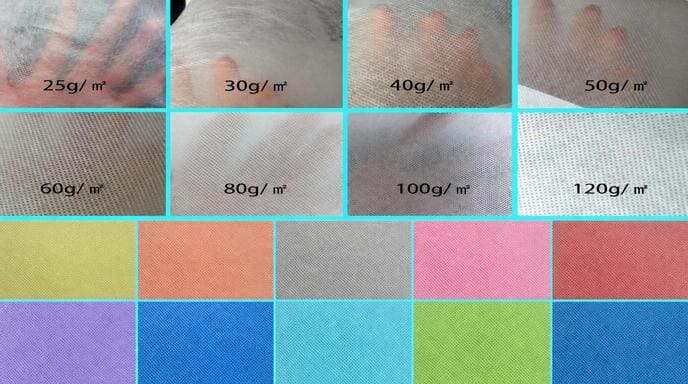
Quick Summary
GSM testing only has meaning when the material condition is clear. Raw fabric GSM and finished laminated bag weight are different measurements.
Why Should Buyers Measure the GSM of Non-Woven Bags?
For importers and wholesalers, GSM measurement is mainly used to verify whether the received product matches the agreed specification.
1. Verify Supplier Information
Suppliers may describe materials as:
- Lightweight non-woven
- Standard non-woven
- Heavy-duty non-woven
These descriptions are not precise enough for bulk purchasing.
GSM testing provides a measurable reference to confirm the actual material weight.
2. Maintain Batch Consistency
For repeated orders, consistent GSM helps maintain similar:
- Fabric feeling
- Product appearance
- Customer experience
A large GSM difference between batches may affect how customers perceive product quality.
3. Understand Cost Differences
Material weight directly affects production cost.
A higher GSM usually means:
- More PP material consumption
- Higher manufacturing cost
- Higher shipping weight
Understanding GSM helps buyers balance product requirements and budget.
Quick Summary
GSM measurement helps buyers verify specifications, maintain consistency, and understand the relationship between material weight and cost.
How to Measure the GSM of a Non-Woven Bag Sample
A basic GSM test requires only a sample with a known area and an accurate scale.
Tools Required
1. Sample
For buyers, the sample is usually a finished non-woven bag.
Choose a flat area from the main body.
Avoid:
- Seams
- Handles
- Reinforced sections
- Labels or accessories
2. Cutting Tool
Common options include:
- GSM fabric cutter
- Circular cutter
- Precision scissors
3. Measuring Tool
Common sample sizes:
- 10 cm × 10 cm
- 20 cm × 20 cm
4. Digital Scale
Recommended:
- Accuracy of 0.01g or better
- Stable measurement
- Proper calibration
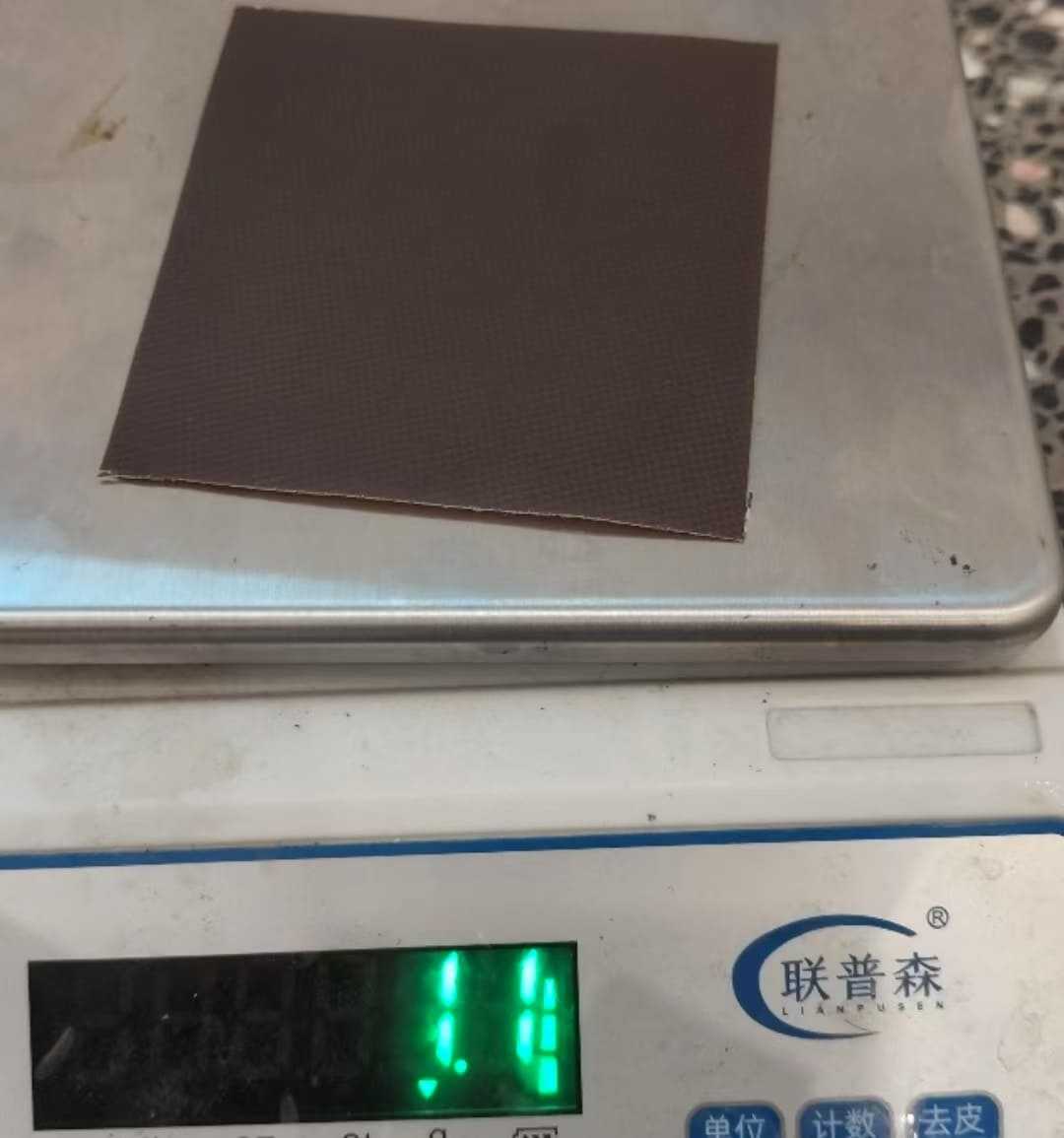
GSM Testing Steps
Step 1: Cut the Sample
Cut a square sample from the main material area.
Example:
10 cm × 10 cm sample
Area:
0.01㎡
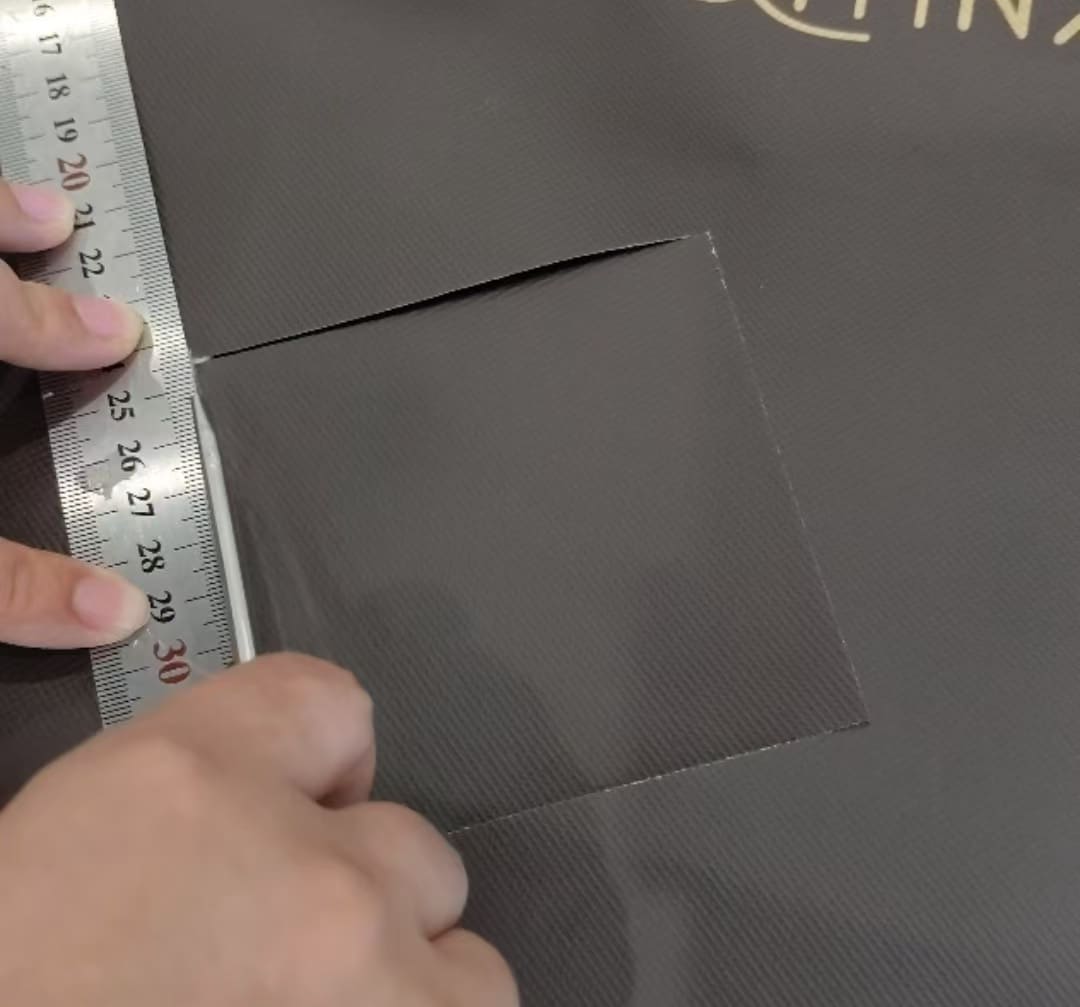
Step 2: Measure Weight
Place the sample on the digital scale.
Example:
Sample weight:
1 gram
Step 3: Calculate GSM
Formula: GSM = Material Weight (g) ÷ Material Area (㎡)
Example: 1g ÷ 0.01㎡ = 100 GSM
The material is approximately:
100 GSM
Quick Summary
GSM testing is a simple calculation: measure the sample weight, divide it by the sample area, and convert it into grams per square meter.
Common GSM Testing Mistakes Buyers Should Avoid
Although GSM testing is simple, incorrect testing methods can lead to misleading results.
1. Comparing Different Material Stages
This is the most common mistake.
For example:
A supplier provides:
80 GSM non-woven fabric
But the buyer measures:
A finished laminated bag sample
The test result may be higher because the finished bag includes:
- Lamination film
- Printing ink
- Coating materials
Therefore, buyers should always compare the same material stage.
Correct comparison:
| Supplier Specification | Buyer Test Sample |
|---|---|
| Raw fabric GSM | Raw fabric sample |
| Laminated GSM | Laminated material sample |
| Finished bag weight | Finished bag sample |
2. Measuring Areas With Additional Materials
A finished bag may contain different structures, including:
- Handles
- Seams
- Reinforced parts
- Labels
These areas can affect the result.
For more accurate testing, the sample should be taken from the main body fabric area.
3. Using an Incorrect Sample Size
Because GSM is calculated based on area, inaccurate dimensions will affect the result.
For example:
A sample intended to be 10 cm × 10 cm but actually cut as 9 cm × 10 cm will produce an incorrect GSM value.
The sample size should always be measured accurately before calculation.
4. Testing Only One Sample
Fabric weight can vary slightly across different production areas.
For better verification:
- Test multiple samples.
- Calculate the average result.
- Compare results between different batches.
Quick Summary
Accurate GSM testing depends on comparing the same material stage, selecting the correct sample area, and using consistent measurement methods.
Why Do Non-Woven Bags With the Same GSM Perform Differently?
Many buyers notice that two non-woven bags with the same GSM specification may feel different in thickness, softness, or strength.
This happens because GSM only measures material weight. It does not fully represent material quality.
Several factors can affect the final performance.
1. Virgin PP Material vs Recycled PP Material
The type of polypropylene (PP) raw material has a significant impact on fabric performance.
Virgin PP Material
Non-woven fabric made from new PP material usually provides:
- More uniform fibers
- Better fabric consistency
- Smoother surface feeling
- Better strength and durability
Recycled PP Material
Recycled PP can help reduce material cost, but performance depends on the recycling process and material quality.
Compared with virgin PP, recycled material may have differences in:
- Fiber consistency
- Surface appearance
- Softness
- Tensile strength
Therefore, two bags with the same GSM may still have different thickness and hand feeling.
For buyers comparing suppliers, GSM alone is not enough. The raw material source should also be considered.
2. Manufacturing Process
The non-woven production process also affects the final fabric performance.
Important factors include:
- Fiber bonding quality
- Production control
- Material uniformity
A well-produced 90 GSM fabric may feel stronger and more stable than a lower-quality fabric with the same or higher GSM.
3. Lamination and Surface Treatment
Lamination changes both the weight and the feeling of the material.
A laminated bag may have:
- Higher measured weight
- More stiffness
- Smoother surface
- Better water resistance
However, the added film layer does not necessarily mean the original non-woven fabric itself is heavier.
Therefore, buyers should separate:
- Fabric GSM
- Laminated GSM
- Final bag weight
Quick Summary
GSM shows material weight, but actual bag performance depends on raw material quality, manufacturing process, and additional processing such as lamination.
How Manufacturers Control GSM During Non-Woven Bag Production
Professional manufacturers usually control GSM from material inspection to finished production.
The main purpose is to ensure that the delivered bags match the approved specification.
1. Incoming Material Inspection
Before production starts, factories check the non-woven fabric rolls.
Typical checks include:
- GSM verification
- Fabric appearance
- Material consistency
- Color confirmation
This ensures that the incoming material matches the production requirement.
2. Production Material Confirmation
Before mass production, manufacturers normally confirm:
- Approved material specification
- Lamination requirements
- Printing requirements
- Final product structure
This prevents differences between the approved sample and bulk production.
3. Finished Product Verification
After production, manufacturers may check finished bags according to customer requirements.
For GSM-related verification, checks may include:
- Finished material weight
- Sample comparison
- Batch consistency
Quick Summary
GSM control is not only a testing step. Manufacturers need to confirm material specifications from incoming fabric to finished products.
Frequently Asked Questions (FAQ)
1. What does GSM mean in non-woven bags?
GSM means Grams per Square Meter. It represents the weight of material within one square meter.
2. How do I calculate the GSM of a non-woven bag?
The formula is: GSM = Material Weight (g) ÷ Material Area (㎡)
For example:
A 10 cm × 10 cm sample weighs 1 gram.
Because the area is 0.01㎡: 1g ÷ 0.01㎡ = 100 GSM
3. Should I test raw fabric GSM or finished bag GSM?
It depends on the purpose.
Factories usually test raw fabric GSM during material inspection.
Buyers receiving samples usually test finished bags because that is the actual product they will purchase.
However, buyers should confirm whether the result includes:
- Lamination
- Printing
- Coating
4. What is the difference between raw GSM and laminated GSM?
Raw GSM refers to the weight of the original non-woven fabric before processing.
Laminated GSM includes the additional weight from the film layer or coating.
Because lamination adds material, laminated GSM is normally higher.
5. Why do two bags with the same GSM feel different?
Because GSM only measures weight.
Other factors also affect performance:
- Virgin PP or recycled PP material
- Fiber quality
- Manufacturing process
- Lamination
- Bag structure
6. Is higher GSM always better for non-woven bags?
No.
Higher GSM usually means heavier material, but it does not automatically mean better quality.
A suitable GSM depends on:
- Bag size
- Intended use
- Material quality
- Production requirements
7. What GSM is commonly used for non-woven bags?
Typical ranges include:
| Application | Common GSM Range |
|---|---|
| Promotional bags | 50-70 GSM |
| Lightweight shopping bags | 70-80 GSM |
| Reusable shopping bags | 80-120 GSM |
| Heavy-duty bags | 120 GSM+ |
The suitable GSM depends on the customer's requirements and expected usage.
Conclusion
Measuring the GSM of non-woven bags is a practical way to verify material specifications and maintain product consistency.
However, buyers should understand that GSM is not always a single measurement.
Before comparing specifications, confirm whether the GSM refers to:
- Raw non-woven fabric
- Laminated material
- Finished bag weight
In addition, material quality plays an important role. Two bags with the same GSM may still have different thickness, strength, and appearance because of differences in PP raw materials and manufacturing processes.
By understanding how GSM is measured and what factors influence the result, traders, importers, and wholesalers can communicate more effectively with suppliers and make better sourcing decisions.