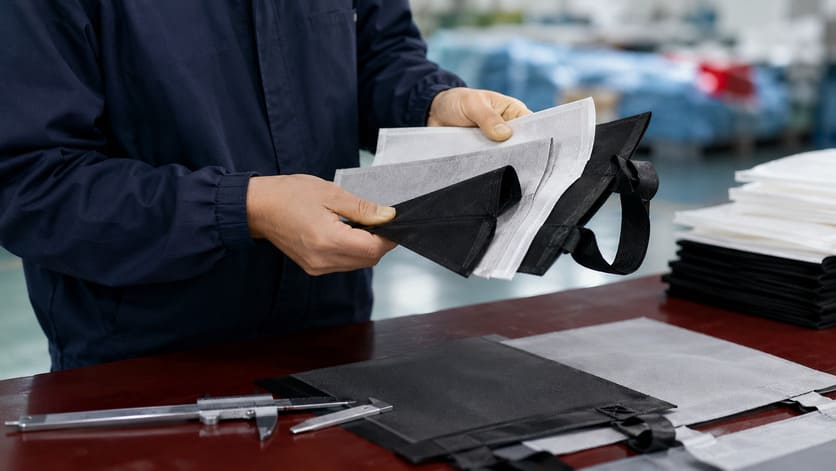
Many buyers focus on bag size, handle style, printing design, and unit price when sourcing non woven bags. However, one specification often determines whether a project succeeds or fails: GSM.
Choosing the wrong GSM can lead to bags that tear too easily, fail under normal use, appear too flimsy for the target market, or cost more than necessary. At the same time, selecting the highest GSM available does not automatically guarantee better performance.
The ideal GSM for a non woven bag depends on the intended application, product weight, expected lifespan, printing requirements, customer expectations, and budget. A well-chosen GSM balances durability, appearance, and cost efficiency rather than simply maximizing fabric thickness.
For importers, wholesalers, retailers, and promotional product buyers, understanding GSM helps improve purchasing decisions, reduce unnecessary costs, and deliver a better product to end users.
Quick Summary: Common GSM Recommendations
- 40–60 GSM is commonly used for promotional giveaways and lightweight applications.
- 70–80 GSM is suitable for standard retail and exhibition bags.
- 80–100 GSM is the most common range for shopping bags.
- 100–120 GSM is widely used for reusable grocery bags and premium retail packaging.
- 120 GSM and above is typically reserved for heavy-duty applications.
- Higher GSM generally improves durability and thickness.
- Higher GSM also increases material consumption and shipping weight.
- GSM alone does not determine bag strength.
- Handle construction and bag structure are equally important.
- The best GSM is the one that matches the intended application.
What Is GSM in Non Woven Bags?
GSM stands for Grams per Square Meter.
It is the standard measurement used worldwide to indicate the weight and density of non woven fabric.
The calculation is simple. A piece of fabric measuring exactly one square meter is weighed. The resulting weight in grams becomes the GSM value.
| GSM | Weight Per Square Meter |
|---|---|
| 50 GSM | 50 grams |
| 80 GSM | 80 grams |
| 100 GSM | 100 grams |
| 120 GSM | 120 grams |
The higher the GSM, the more polypropylene material is contained within the same area of fabric.
As GSM increases, several physical characteristics usually change:
- Thickness increases
- Opacity increases
- Rigidity increases
- Tear resistance generally improves
- Durability generally improves
- Material consumption increases
Many buyers compare GSM to paper.
A thin flyer feels light and flexible. A piece of cardboard feels thicker and stronger. Non woven fabrics behave in a similar way.
However, GSM should not be confused with overall quality.
Two fabrics may both be labeled 100 GSM but perform very differently due to differences in raw materials, manufacturing processes, fiber bonding, and production consistency.
For this reason, professional buyers evaluate GSM together with fabric quality rather than treating GSM as the only purchasing criterion.
Why GSM Matters When Buying Non Woven Bags
GSM influences nearly every aspect of bag performance.
A bag that is too light may fail during use.
A bag that is too heavy may create unnecessary costs without providing additional value.
Understanding how GSM affects performance allows buyers to make better sourcing decisions.
Durability
Durability is one of the primary reasons buyers pay attention to GSM.
Reusable bags are expected to withstand repeated carrying, folding, storage, and transportation.
Higher GSM fabrics generally contain more material, which helps resist wear and tear over time.
For brands promoting sustainability, durability is particularly important because a bag that lasts longer is more likely to be reused repeatedly.
A reusable bag that survives hundreds of uses delivers greater environmental value than a disposable alternative.
Customer Perception
Consumers often associate thickness with quality.
When a customer receives an extremely thin bag, the product may appear cheap even if the printing quality is excellent.
A thicker bag typically feels more substantial in hand.
This can improve perceived value for:
- Retail stores
- Fashion brands
- Cosmetic brands
- Wine retailers
- Gift packaging companies
The bag itself becomes part of the customer's overall experience.
For premium brands, this perception can be just as important as carrying performance.
How GSM Affects Bag Performance
Although GSM is not the only factor affecting quality, it plays a major role in determining strength, printing performance, and cost efficiency.
Strength and Durability
One of the most common misconceptions is that GSM directly determines carrying capacity.
The reality is more complicated.
Higher GSM fabrics generally contain more polypropylene fibers, which usually improves resistance to stretching, tearing, and puncturing.
This becomes important when bags are used to carry:
- Groceries
- Bottles
- Books
- Promotional products
- Electronics
- Retail merchandise
For example, a 120 GSM bag will usually withstand more stress than a 50 GSM bag when all other construction factors remain equal.
However, GSM should not be viewed in isolation.
Handle attachment methods, stitching quality, gusset design, and reinforcement techniques often influence real-world performance just as much as fabric weight.
Printing Quality
Many buyers focus exclusively on strength.
However, non woven bags often function as mobile advertisements.
A customer may carry a reusable shopping bag hundreds of times.
Every use exposes the printed logo to new potential customers.
Fabric stability affects print quality.
Higher GSM fabrics typically provide:
- Better surface consistency
- Improved ink adhesion
- Sharper graphics
- Cleaner logo edges
- More consistent color appearance
This is one reason premium retail brands often choose slightly higher GSM fabrics even when additional strength is not strictly necessary.
The improved appearance helps reinforce brand image.
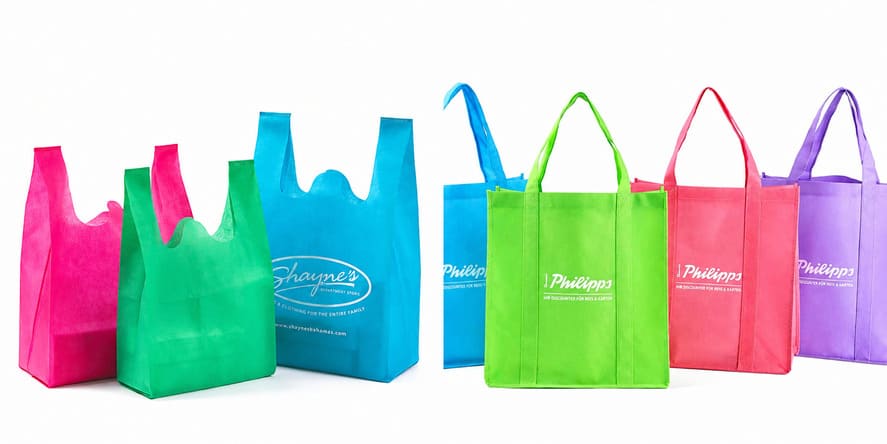 Non Woven Bag Printing Quality Comparison
Cost Efficiency
GSM directly affects material consumption.
Because non woven fabric represents one of the largest cost components of a bag, GSM selection has a significant impact on overall project economics.
However, many buyers misunderstand this relationship.
A small increase of 5 GSM often has only a limited effect on the cost of a single bag. In contrast, the perceived difference in thickness and quality can be much more noticeable, especially in lower GSM ranges.
For example:
- 60 GSM to 65 GSM may feel substantially different.
- 100 GSM to 105 GSM may be less noticeable.
The effect is usually more obvious in lightweight fabrics.
For large orders, however, even a small GSM increase can create meaningful cost differences because material consumption is multiplied across tens or hundreds of thousands of bags.
At the same time, selecting a GSM that is too low can create hidden costs:
- Product failures
- Customer complaints
- Brand damage
- Replacements
- Return handling
In many cases, the cost of bag failure exceeds the cost of adding a few extra grams of material.
The objective is not to select the lowest GSM possible.
The objective is to find the GSM that delivers the best balance between performance, customer expectations, and budget.
GSM Recommendations by Application
The most effective way to choose GSM is to start with the intended application.
Many buyers ask:
"What GSM do you recommend?"
A better question is:
"What products will the bag carry?"
Once the application is clear, selecting GSM becomes much easier.
Promotional Non Woven Bags
Promotional bags are typically distributed at:
- Trade shows
- Conferences
- Product launches
- Marketing campaigns
- Corporate events
Their primary purpose is brand exposure.
Recommended GSM
50–70 GSM
Advantages
- Lower material cost
- Lightweight transportation
- Cost-effective for large quantities
Typical Contents
- Brochures
- Flyers
- Samples
- Catalogs
- Small promotional items
For most promotional projects, durability is less important than distribution volume and budget control.
Retail Shopping Bags
Retail shopping bags represent one of the largest applications for non woven fabric.
Recommended GSM
80–100 GSM
Advantages
- Good appearance
- Reliable strength
- Reasonable cost
- Strong consumer acceptance
This range offers one of the best balances between durability and affordability.
Many fashion brands, shoe stores, and department stores choose fabrics within this range.
Grocery Bags
Grocery bags experience higher stress because they frequently carry concentrated weight.
Typical contents include:
- Bottled drinks
- Vegetables
- Canned goods
- Household products
Recommended GSM
100–120 GSM
Advantages
- Improved load capacity
- Better durability
- Longer service life
Many reusable supermarket bag programs use this GSM range.
Wine Bags
Wine bags require both strength and premium appearance.
A single bottle can weigh more than an entire bag of clothing.
Recommended GSM
100–120 GSM
Advantages
- Better bottle protection
- Enhanced stability
- Premium presentation
For multi-bottle wine bags, reinforcement methods become especially important.
Cooler Bags
Cooler bags differ from standard shopping bags.
Their insulation performance depends primarily on:
- Foam thickness
- Aluminum foil lining
- Thermal structure
rather than GSM alone.
Recommended Outer Fabric GSM
80–120 GSM
The outer layer mainly provides:
- Structural support
- Durability
- Printing surface
- Brand presentation
Higher GSM often improves appearance and lifespan, but insulation performance depends mainly on the materials inside the bag.
Takeaway Bags
Food delivery and takeaway services continue to grow worldwide.
Restaurants and food chains require packaging that balances durability, appearance, and cost control.
Recommended GSM
80–100 GSM
Why It Works
Takeaway bags usually carry:
- Meal containers
- Drinks
- Snacks
- Bakery products
Most food delivery applications do not require extremely high GSM fabrics.
Instead, buyers typically prioritize:
- Cost efficiency
- Brand visibility
- Reliable carrying performance
For large restaurant chains, selecting a GSM above actual requirements can significantly increase annual packaging costs without creating meaningful customer benefits.
Garment Bags
Garment bags are generally used for:
- Suits
- Dresses
- Uniforms
- Shirts
- Fashion products
The products themselves are relatively lightweight.
Recommended GSM
70–90 GSM
Why It Works
This range provides:
- Professional appearance
- Sufficient durability
- Lower transportation weight
- Cost efficiency
Many garment bags focus more on presentation and protection from dust than on heavy load carrying.
As a result, extremely high GSM fabrics are usually unnecessary.
Gift Bags
Gift bags occupy a unique position.
The bag itself often becomes part of the product presentation.
Customers notice:
- Thickness
- Shape retention
- Surface quality
- Print quality
Recommended GSM
80–120 GSM
Why It Works
Benefits include:
- Better structure
- Improved appearance
- Enhanced customer experience
- Stronger perceived value
Luxury retailers often choose higher GSM materials because customers expect premium packaging to feel substantial.
In these situations, perceived value can be just as important as actual carrying performance.
Why GSM Alone Does Not Determine Bag Strength
One of the biggest mistakes buyers make is assuming that GSM alone determines how much weight a bag can carry.
In reality, bag performance depends on multiple factors working together.
A poorly designed 120 GSM bag may fail sooner than a well-manufactured 80 GSM bag.
Understanding these factors helps buyers make better purchasing decisions.
Bag Dimensions Matter
Bag size directly influences carrying performance.
Many buyers compare GSM while overlooking dimensions.
For example:
Bag A:
- 30 × 35 cm
Bag B:
- 50 × 45 × 15 cm
Even if both bags use identical fabric, their carrying behavior will be different.
Larger bags create greater stress on:
- Handles
- Seams
- Bottom panels
- Side panels
As dimensions increase, stronger construction often becomes necessary.
This is why GSM should always be evaluated together with bag size.
The Importance of Gussets
Gussets play a major role in load distribution.
A gusset is the additional panel added to the side or bottom of a bag.
Common types include:
- Side gussets
- Bottom gussets
- Combined gussets
Benefits include:
- Better weight distribution
- Improved stability
- Increased capacity
- Reduced stress concentration
Without gussets, weight tends to concentrate in the center of the bag.
This increases strain on both the fabric and the handles.
Many grocery bags utilize gussets because they improve carrying performance without necessarily increasing GSM.
Handle Construction Is Critical
In many cases, handles fail before the fabric itself.
This is one reason why evaluating GSM alone can be misleading.
Several handle styles are commonly used.
Die-Cut Handles
Advantages:
- Low cost
- Fast production
- Simple design
Limitations:
- Lower carrying capacity
- Reduced durability
Typical Applications:
- Promotional bags
- Event bags
- Lightweight packaging
Ultrasonic Attached Handles
Advantages:
- Efficient production
- Cost-effective manufacturing
- Clean appearance
Limitations:
- Moderate load-bearing capability
Typical Applications:
- Retail shopping bags
- Promotional bags
- Medium-duty reusable bags
Sewn Handles
Advantages:
- Superior strength
- Better load distribution
- Longer lifespan
- Improved reliability
Typical Applications:
- Grocery bags
- Wine bags
- Heavy-duty reusable bags
For projects involving repeated use, sewn handles are often the preferred solution.
Sewing vs Ultrasonic Bonding
One of the most common questions from buyers concerns the difference between sewn bags and ultrasonic bags.
Both methods are widely used in the non woven bag industry.
However, their performance characteristics differ.
Sewn Construction
Sewn bags use stitching to join panels and attach handles.
Benefits include:
- Higher strength
- Better durability
- Greater resistance to repeated use
- Improved performance under heavy loads
Sewn construction is commonly selected for:
- Grocery bags
- Wine bags
- Cooler bags
- Heavy-duty reusable bags
Ultrasonic Construction
Ultrasonic bags are bonded using ultrasonic welding technology.
Benefits include:
- Faster production
- Lower labor requirements
- Consistent appearance
- Competitive pricing
These bags are commonly used for:
- Promotional campaigns
- Retail packaging
- Exhibition bags
For lightweight applications, ultrasonic bonding often provides excellent value.
Reinforcement Methods Matter
Professional buyers often focus on reinforcement methods because they significantly influence service life.
A well-reinforced bag may outperform a higher GSM bag with poor construction.
X-Stitch Reinforcement
Many premium reusable bags use X-shaped stitching at handle attachment points.
Benefits include:
- Improved stress distribution
- Reduced handle failure
- Increased durability
This small construction detail can significantly extend bag lifespan.
Bottom Reinforcement
Heavy products create pressure at the bottom of the bag.
Some manufacturers add:
- Extra fabric layers
- Reinforced bottom panels
- Additional stitching
These features often provide more practical strength improvements than simply increasing GSM.
Edge Reinforcement
Bag edges frequently experience friction during use.
Reinforcing edges can improve:
- Wear resistance
- Shape retention
- Long-term appearance
This is particularly important for premium retail bags.
Fabric Quality Is Just as Important as GSM
Two fabrics can both be labeled 100 GSM and still perform very differently.
This surprises many buyers.
Fabric performance is influenced by:
- Polypropylene quality
- Fiber uniformity
- Manufacturing consistency
- Bonding technology
- Production controls
High-quality virgin polypropylene often provides:
- Better strength
- Better consistency
- Improved appearance
compared with lower-quality materials.
This is why experienced sourcing managers evaluate both GSM and raw material quality before approving production.
Typical Load Capacity Reference
Many buyers ask:
"How much weight can a particular GSM carry?"
There is no universal answer because construction methods vary.
However, the following table provides general industry guidance.
| GSM Range | Typical Application |
|---|---|
| 40–50 GSM | Flyers, brochures, lightweight giveaways |
| 60–70 GSM | Promotional products |
| 70–80 GSM | Standard retail purchases |
| 80–100 GSM | Daily shopping bags |
| 100–120 GSM | Grocery bags |
| 120 GSM+ | Heavy-duty reusable applications |
These examples should be viewed as reference points rather than guaranteed weight ratings.
Actual performance depends heavily on:
- Handle construction
- Stitching quality
- Gusset design
- Reinforcement methods
- Fabric quality
For this reason, physical sample testing remains one of the most effective ways to evaluate bag performance before mass production.
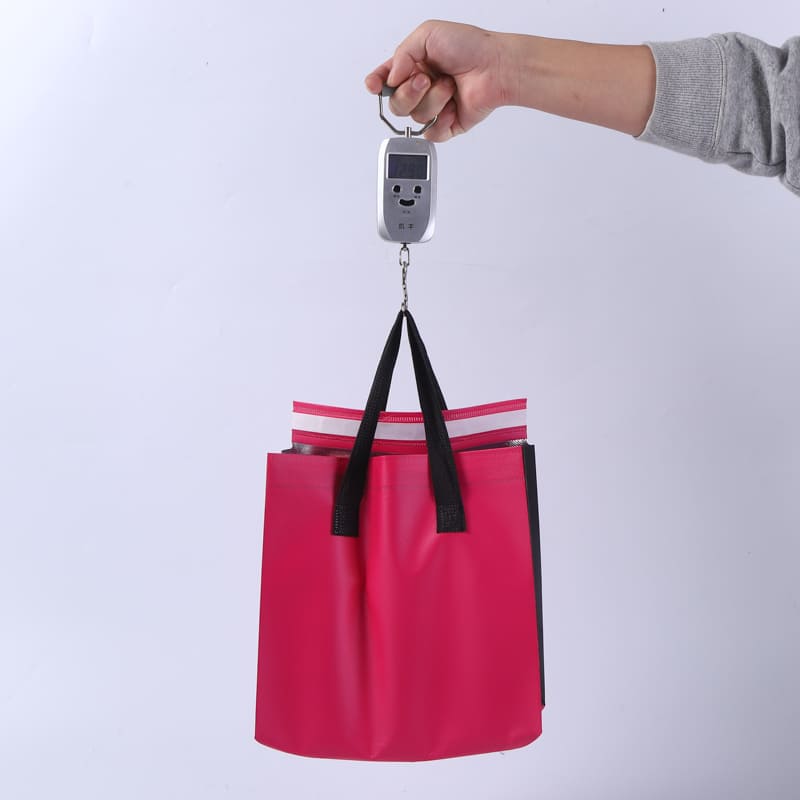
How GSM Influences Different Printing Methods
Many buyers select GSM primarily for durability.
However, GSM also affects printing results.
Since non woven bags often function as brand marketing tools, print quality deserves careful consideration.
Screen Printing
Screen printing remains one of the most widely used decoration methods.
It works particularly well for:
- Logos
- Simple graphics
- Solid colors
- Promotional branding
Higher GSM fabrics generally provide:
- Cleaner print edges
- Better color consistency
- Improved surface stability
This helps create a more professional appearance.
Flexographic Printing
Flexographic printing is often used for large-volume production.
Advantages include:
- Fast production speed
- Multi-color capability
- Cost efficiency at scale
Because fabric movement can affect registration accuracy, higher GSM materials often improve print consistency during production.
Laminated Non Woven Bags
Laminated bags combine non woven fabric with printed film.
Common options include:
- Gloss lamination
- Matte lamination
Benefits include:
- Premium appearance
- Enhanced graphics
- Better moisture resistance
- Improved brand presentation
Even though the printed film creates the visual surface, GSM still influences overall bag structure and durability.
Premium Branding Considerations
Many luxury brands select higher GSM fabrics not solely because they are stronger.
Higher GSM can also provide:
- Better shape retention
- Improved hand feel
- Enhanced perceived value
For premium packaging projects, these factors often influence purchasing decisions just as much as technical performance.
Common GSM Mistakes Buyers Should Avoid
Many sourcing problems can be traced back to misunderstandings about GSM.
Avoiding these mistakes can improve product performance, reduce unnecessary costs, and help buyers achieve better long-term value.
Mistake #1: Assuming Higher GSM Always Means Better Quality
This is perhaps the most common misconception in the industry.
A higher GSM fabric contains more material, but that does not automatically mean the bag is better.
Overall quality also depends on:
- Raw material quality
- Manufacturing consistency
- Handle attachment
- Stitching quality
- Reinforcement methods
A well-made 80 GSM bag can easily outperform a poorly manufactured 120 GSM bag.
Professional buyers evaluate the entire product rather than focusing only on GSM.
Mistake #2: Choosing the Lowest GSM to Reduce Cost
Some buyers focus exclusively on reducing unit cost.
While this may lower the initial purchase price, it can create hidden expenses later.
Potential consequences include:
- Bag breakage
- Customer complaints
- Product damage
- Brand image issues
- Replacement costs
In many cases, adding a small amount of material creates far greater value than the additional cost incurred.
Mistake #3: Ignoring Product Weight
Different products create different carrying requirements.
For example:
- Brochures require very little strength.
- Clothing requires moderate strength.
- Wine bottles require significant strength.
- Grocery products often create concentrated loads.
Selecting GSM without considering product weight often results in over-specification or under-specification.
Mistake #4: Ignoring Bag Construction
Many buyers compare GSM values while overlooking construction quality.
Important factors include:
- Handle type
- Stitching quality
- Gussets
- Reinforcement methods
- Sealing technology
These elements frequently determine real-world performance more than GSM alone.
Mistake #5: Ignoring Printing Requirements
The bag is often an advertising tool.
Selecting GSM solely based on carrying performance may overlook branding needs.
Higher GSM fabrics often provide:
- Better logo appearance
- Better color consistency
- Better structural presentation
For retail brands, appearance can be just as important as durability.
Mistake #6: Not Requesting Samples Before Production
Physical samples remain one of the most valuable evaluation tools.
Samples allow buyers to assess:
- Thickness
- Flexibility
- Appearance
- Print quality
- Construction quality
- Perceived value
before committing to mass production.
A small investment in sampling can prevent expensive production mistakes.
GSM Comparison Chart
The following chart provides a simplified overview of common GSM ranges.
| GSM | Thickness | Durability | Printing Performance | Cost Level | Typical Applications |
|---|---|---|---|---|---|
| 40 GSM | Very Light | Low | Basic | Lowest | Giveaways |
| 50 GSM | Light | Low | Basic | Low | Promotional Bags |
| 60 GSM | Light | Moderate | Fair | Low | Events |
| 70 GSM | Moderate | Moderate | Good | Moderate | Retail |
| 80 GSM | Standard | Good | Good | Moderate | Shopping Bags |
| 90 GSM | Standard | Good | Better | Moderate | Retail Bags |
| 100 GSM | Thick | Strong | Very Good | Higher | Grocery Bags |
| 120 GSM | Very Thick | Very Strong | Excellent | High | Reusable Bags |
| 140 GSM+ | Heavy Duty | Maximum | Excellent | Highest | Industrial Applications |
Questions Buyers Should Ask Non Woven Bag Suppliers
The right questions often reveal more about a supplier than the quotation itself.
Experienced buyers use supplier discussions to evaluate manufacturing capability, quality control systems, and technical expertise.
What GSM Options Do You Offer?
This helps determine:
- Production flexibility
- Material sourcing capability
- Experience across multiple applications
Suppliers with broad GSM capabilities can often provide more accurate recommendations.
How Do You Verify GSM During Production?
Reliable manufacturers should have internal testing procedures.
Verification methods may include:
- GSM testing equipment
- Incoming material inspections
- Production quality checks
Consistency is often more important than the GSM number itself.
What GSM Tolerance Do You Allow?
Minor variations are normal in fabric production.
Understanding tolerance levels helps establish realistic expectations.
This question also helps identify whether the supplier understands quality management.
Can You Recommend GSM Based on My Application?
Experienced manufacturers should ask questions about:
- Product weight
- Intended use
- Market positioning
- Budget targets
- Expected lifespan
A supplier that immediately recommends the highest GSM available may not be considering your actual needs.
What Reinforcement Methods Do You Use?
Ask specifically about:
- X-stitch reinforcement
- Bottom reinforcement
- Edge reinforcement
- Handle attachment methods
These factors often determine long-term durability.
Can You Provide Samples?
A professional supplier should be able to provide:
- Existing samples
- Material samples
- Pre-production samples
- Customized prototypes
Sample evaluation remains one of the most effective risk-reduction tools available to buyers.
What Quality Certifications Do You Have?
Examples include:
- ISO 9001
- ISO 14001
- BSCI
- Material testing reports
While certifications do not guarantee product quality, they often indicate stronger management systems and production controls.
How to Balance Cost, Durability, and Brand Image
The most successful sourcing projects rarely focus on only one objective.
Instead, buyers balance three priorities.
Cost
Avoid paying for material that provides no practical benefit.
Selecting 140 GSM for a lightweight promotional bag often increases costs unnecessarily.
The goal is efficient material utilization.
Durability
The bag should perform reliably throughout its intended lifespan.
Durability requirements vary significantly between:
- Trade show giveaways
- Retail shopping bags
- Grocery bags
- Wine bags
- Cooler bags
Matching GSM to application helps optimize performance.
Brand Presentation
The bag often reflects the quality of the brand itself.
Consumers frequently judge:
- Thickness
- Structure
- Appearance
- Printing quality
A bag that feels premium can enhance customer perception and strengthen brand positioning.
Finding the Right Balance
The best GSM is not the highest GSM.
The best GSM is the one that satisfies:
- Performance requirements
- Customer expectations
- Budget targets
simultaneously.
This balance usually delivers the highest return on investment.
Conclusion
Choosing the right GSM for non woven bags is not simply a matter of selecting the thickest fabric available. GSM influences durability, appearance, printing quality, material consumption, and overall project cost, but it is only one part of the equation.
For most retail applications, 80–100 GSM provides an excellent balance between strength, appearance, and affordability. Grocery bags and wine bags often benefit from 100–120 GSM fabrics, while promotional bags can successfully use 50–70 GSM materials. Buyers should also remember that handle construction, reinforcement methods, bag dimensions, gussets, and fabric quality frequently influence real-world performance as much as GSM itself.
The most successful sourcing decisions are based on application requirements rather than assumptions. By matching GSM to product weight, customer expectations, and budget objectives, buyers can achieve the optimal combination of durability, cost efficiency, and brand value.
FAQ
What does GSM mean in non woven bags?
GSM stands for Grams per Square Meter. It measures the weight and density of non woven fabric and is commonly used to indicate thickness and durability.
What is the most common GSM for non woven shopping bags?
The most common range is 80–100 GSM because it offers a good balance between strength, appearance, and cost.
Is 80 GSM strong enough for reusable shopping bags?
For many retail shopping applications, yes. However, grocery bags carrying heavier loads often benefit from 100–120 GSM fabrics.
What GSM is recommended for promotional bags?
Most promotional bags use 50–70 GSM because they prioritize affordability and large-volume distribution.
What GSM is commonly used for grocery bags?
Reusable grocery bags typically use 100–120 GSM fabrics combined with reinforced handles and strong construction.
What GSM is suitable for wine bags?
Wine bags generally use 100–120 GSM materials because they need to support heavier loads while maintaining a premium appearance.
Does higher GSM always mean stronger bags?
Not necessarily. Strength also depends on handle attachment, stitching quality, reinforcement methods, bag dimensions, and fabric quality.
How does GSM affect printing quality?
Higher GSM fabrics generally provide a more stable surface, which can improve logo sharpness, color consistency, and overall print appearance.
Does GSM affect shipping costs?
Yes. Higher GSM fabrics contain more material and create heavier finished bags, which can increase freight costs on large-volume orders.
Can two bags with the same GSM perform differently?
Yes. Differences in raw materials, manufacturing quality, stitching, reinforcement, and construction methods can create significant performance variations.
Should buyers choose GSM before determining bag size?
No. GSM selection should be evaluated together with bag dimensions, intended use, carrying weight, and construction requirements.
How can buyers verify GSM supplied by manufacturers?
Buyers can request GSM test reports, perform third-party inspections, conduct random fabric testing, and review material specifications before production.
What is more important: GSM or construction quality?
Both are important. However, the impact depends on the GSM level. For low-GSM bags, increasing GSM often improves strength more noticeably than adding structural reinforcements. For high-GSM bags, the material is already relatively strong, so optimizing the bag structure, handle attachment, and stitching may have a greater effect on load-bearing performance.
What GSM is recommended for cooler bags?
Most cooler bags use outer fabrics ranging from 80–120 GSM. Insulation performance depends primarily on foam thickness and lining materials rather than GSM itself.
How do buyers select the best GSM?
The best approach is to evaluate:
- Product weight
- Intended application
- Customer expectations
- Branding requirements
- Budget objectives
The optimal GSM is the one that delivers the required performance without adding unnecessary cost.