Choosing the right cooler bag manufacturer is one of the most important decisions a buyer can make when sourcing insulated products. Whether the goal is to purchase promotional cooler bags, insulated grocery bags, food delivery bags, or retail packaging solutions, the success of the project depends heavily on the supplier behind the product.
A quick online search for a custom cooler bag manufacturer or cooler bag supplier may return hundreds of options. Many suppliers offer similar product photos, similar certifications, and even similar pricing structures. At first glance, they may appear nearly identical.
However, experienced procurement professionals know that two manufacturers offering the same product can deliver very different results once mass production begins.
Differences in material sourcing, quality control procedures, production capacity, engineering support, and order management can significantly affect product quality, delivery performance, and total procurement cost.
The purpose of supplier evaluation is not simply to find a company capable of producing a sample. The objective is to identify a manufacturing partner that can consistently deliver quality products, support future growth, and minimize sourcing risks over the long term.
This guide explains how buyers can effectively evaluate a cooler bag manufacturer before placing an order and avoid many of the problems commonly encountered during mass production.
Why Choosing the Right Cooler Bag Manufacturer Matters
Many sourcing projects begin with price comparisons.
Unfortunately, this is also where many procurement mistakes begin.
When buyers focus primarily on unit cost, important factors such as production consistency, insulation performance, and delivery reliability can be overlooked.
For example, a supplier may reduce costs by using thinner insulation foam, lower-grade aluminum foil lining, lighter fabric weights, or lower-quality zippers. While these changes may not be immediately visible during sample evaluation, they can significantly affect product performance after the bags reach end users.
A food delivery company receiving complaints about poor temperature retention will quickly discover that saving a few cents per bag was not worth the risk.
Similarly, a retailer experiencing handle failures or printing defects may spend more money handling customer complaints than was originally saved during procurement.
The true cost of a cooler bag includes much more than the purchase price. It also includes quality consistency, product lifespan, customer satisfaction, and supply chain reliability.
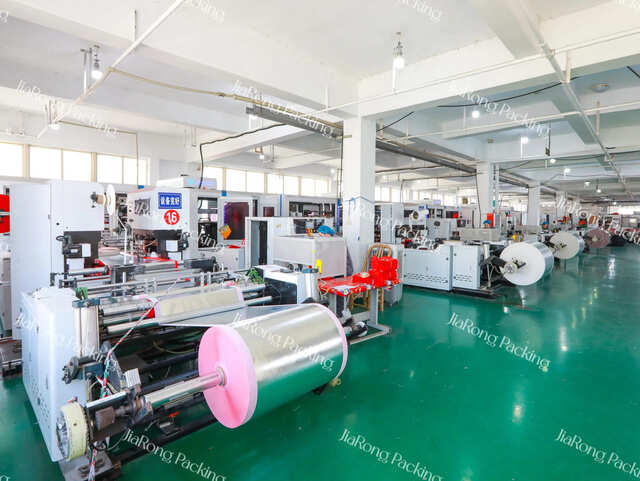 Cooler Bag Production Workshop
A real production workshop often reveals more about a manufacturer's capabilities than a product catalog or marketing brochure.
Verify Whether the Supplier Is a Genuine Cooler Bag Manufacturer
The first step in supplier evaluation is confirming whether the company actually manufactures cooler bags.
Many businesses market themselves as manufacturers while relying heavily on subcontractors or third-party factories.
This does not automatically mean poor service. However, buyers should understand who controls production because it directly affects communication, quality control, and problem resolution.
A genuine cooler bag manufacturer should be able to explain:
- How cooler bags are produced
- Which materials are used
- What equipment is involved
- How quality inspections are conducted
- How production schedules are managed
One effective method is requesting a live video factory tour.
Unlike promotional videos, a live walkthrough allows buyers to observe actual production activity, equipment quantity, warehouse organization, and quality inspection procedures.
Areas to Review During a Factory Audit
| Area | What to Observe |
|---|---|
| Raw Material Warehouse | Material organization and inventory levels |
| Cutting Department | Cutting equipment and workflow |
| Sewing Workshop | Production activity and workmanship |
| Quality Inspection Area | Inspection standards and records |
| Finished Goods Warehouse | Packaging and shipment preparation |
Factories that openly demonstrate their operations are usually easier to work with during production.
Evaluate Material Expertise Rather Than Product Availability
A professional insulated bag manufacturer should understand why different cooler bag structures are used for different applications.
Many buyers make the mistake of asking suppliers what materials they offer.
A better question is:
"Which material structure would you recommend for my application, and why?"
The answer often reveals the supplier's technical expertise.
Most cooler bags consist of three main layers.
| Layer | Common Materials |
|---|---|
| Outer Layer | Non woven, laminated non woven, polyester, Oxford fabric |
| Insulation Layer | EPE foam, PE foam |
| Inner Layer | Aluminum foil, PEVA, food-grade lining |
For example, a promotional insulated tote bag used occasionally by consumers may require a different construction than a reusable grocery cooler bag expected to carry heavy loads several times per week.
A knowledgeable cooler bag supplier should discuss factors such as durability, insulation performance, weight, cost, and transportation efficiency when recommending materials.
When suppliers only discuss pricing without explaining material performance, buyers should proceed carefully.
Assess Construction Quality Beyond Surface Appearance
Many cooler bags look similar when viewed online.
The real differences often exist inside the product.
Construction quality determines how long a cooler bag will remain functional after repeated use.
This is particularly important for reusable insulated bags, grocery cooler bags, and food delivery applications.
One of the most common failure points is handle attachment.
A bag may appear strong externally while using minimal reinforcement internally.
Similarly, low-quality zippers may operate smoothly during inspection but fail after only a short period of use.
Buyers should closely evaluate:
- Handle attachment methods
- Reinforcement stitching
- Zipper durability
- Edge construction
- Foam bonding quality
- Lining attachment methods
The objective is not simply to determine whether the sample looks good but whether the construction is suitable for its intended application.
Examine the Manufacturer's Quality Control System
One of the biggest misconceptions in sourcing is assuming that a good sample guarantees a good production run.
Producing a single high-quality sample is relatively easy.
Producing 50,000 identical bags is considerably more difficult.
The ability to maintain consistency during mass production depends largely on the manufacturer's quality control system.
Professional factories typically inspect products throughout the manufacturing process rather than relying solely on final inspections.
Typical Quality Control Flow
| Stage | Inspection Focus |
|---|---|
| Incoming Inspection | Fabric, foam, foil, zippers |
| In-Process Inspection | Printing, cutting, sewing |
| Final Inspection | Appearance and dimensions |
| Packing Inspection | Carton condition and quantities |
When evaluating a custom cooler bag manufacturer, buyers should ask how defects are identified, documented, analyzed, and corrected.
A supplier's response often reveals more than the quality report itself.
Evaluate Production Capacity and Delivery Reliability
Production capacity is frequently misunderstood.
A factory claiming to produce millions of bags per month may still struggle with delivery reliability if production schedules are already overloaded.
Rather than focusing only on output figures, buyers should evaluate the overall production system.
Questions worth asking include:
- How many production lines are dedicated to cooler bags?
- What percentage of capacity is currently utilized?
- How are urgent orders handled?
- How is peak-season demand managed?
- Which processes are completed in-house?
A supplier capable of maintaining stable lead times during busy periods is often more valuable than one advertising impressive production capacity numbers.
Reliable delivery performance is especially important for seasonal promotions and retail programs where missed deadlines can have significant financial consequences.
Analyze Packaging and Export Experience
Packaging is often overlooked during supplier selection.
However, poor packaging can damage an otherwise excellent product.
Experienced insulated bag manufacturers understand that packaging affects transportation efficiency, shipping costs, and product protection.
When reviewing a supplier's packaging capabilities, buyers should evaluate:
- Carton strength
- Packing density
- Palletization capability
- Container loading experience
- Export shipping procedures
A factory experienced in international shipping can often reduce logistics costs while minimizing transportation damage risks.
Image Suggestion
Insert Image: Export Cartons and Palletized Cooler Bags
Proper export packaging helps protect products throughout international transportation.
Investigate Supply Chain Stability
Even the best factory cannot manufacture cooler bags without reliable access to raw materials.
Cooler bag production typically depends on several material categories, including non woven fabric, insulation foam, aluminum foil, webbing, and zippers.
Supply chain disruptions can affect:
- Lead times
- Product consistency
- Material specifications
- Production schedules
Manufacturers with long-term supplier relationships and backup sourcing options are generally better positioned to maintain stable production.
This becomes especially important during periods of high raw material demand or supply shortages.
Evaluate Engineering and Product Development Capability
Not every cooler bag project begins with a finished design.
Many buyers require assistance with product development, cost optimization, and structural improvements.
Strong engineering teams can identify manufacturing risks before mass production begins.
For example, they may recommend:
- Stronger handle structures
- More efficient insulation designs
- Cost-saving material substitutions
- Improved packaging methods
Factories that actively contribute technical suggestions often create more successful products than factories that simply follow instructions without feedback.
Use a Structured Supplier Evaluation Scorecard
Comparing multiple cooler bag suppliers can become subjective without a standardized evaluation process.
A weighted scorecard helps procurement teams compare suppliers objectively.
| Evaluation Area | Weight |
|---|---|
| Manufacturing Capability | 12% |
| Product Quality Consistency | 12% |
| Quality Control System | 10% |
| Supply Chain Stability | 10% |
| Production Capacity | 10% |
| Packaging & Export Capability | 8% |
| Engineering Support | 8% |
| Order Management | 8% |
| Communication | 6% |
| Risk Management | 6% |
| Industry Experience | 5% |
| Compliance & Certification | 3% |
| Cost Transparency | 2% |
Using a structured evaluation system reduces the likelihood of selecting suppliers solely based on pricing.
Conclusion
Evaluating a cooler bag manufacturer is ultimately a process of identifying risk before production begins.
While pricing will always play an important role, successful sourcing decisions require a broader perspective.
A reliable custom cooler bag manufacturer should demonstrate strong production capability, technical expertise, quality control systems, stable material sourcing, and effective communication. More importantly, the supplier should be capable of maintaining these standards as order volumes increase over time.
By taking a structured approach to supplier evaluation, buyers can significantly reduce sourcing risks, improve product consistency, and build stronger long-term supply relationships.
For businesses purchasing insulated bags at scale, investing additional time in supplier evaluation is often one of the most cost-effective decisions they can make.
FAQ
How can I verify whether a cooler bag supplier is a real manufacturer?
Request factory photos, production videos, business licenses, equipment information, and a live video factory tour. Genuine manufacturers can usually demonstrate active production processes and explain technical details clearly.
What should I look for when choosing a custom cooler bag manufacturer?
Buyers should evaluate manufacturing capability, quality control systems, material expertise, production capacity, supply chain stability, communication quality, and engineering support rather than focusing solely on price.
What materials are commonly used in insulated cooler bags?
Most insulated cooler bags use non woven fabric, laminated non woven fabric, Oxford fabric, polyester fabric, EPE foam insulation, aluminum foil lining, or PEVA lining depending on the application.
Why is quality control important when sourcing cooler bags?
Quality control helps ensure consistent product quality across large production runs and reduces the risk of defects, customer complaints, and costly product replacements.
How can I compare multiple cooler bag manufacturers objectively?
Using a supplier evaluation scorecard allows buyers to compare manufacturers across consistent criteria such as quality, production capability, delivery reliability, and technical support.
Is the lowest-priced cooler bag manufacturer always the best choice?
Not necessarily. Lower prices may result from lower-quality materials, weaker construction, limited quality control, or reduced production support. Total procurement cost is often more important than unit price.
Why is production capacity important when selecting a cooler bag manufacturer?
Production capacity affects a supplier's ability to handle large orders, seasonal demand increases, and future business growth while maintaining delivery schedules.
What certifications should an insulated bag manufacturer have?
Common certifications include ISO 9001, ISO 14001, BSCI, and Sedex. Specific requirements depend on the target market and customer expectations.
Why should buyers request samples before mass production?
Samples allow buyers to evaluate construction quality, printing performance, insulation structure, dimensions, and overall workmanship before committing to a large order.
What is the biggest risk when selecting a cooler bag supplier?
The biggest risk is choosing a supplier based only on price without evaluating quality systems, manufacturing capability, and delivery reliability. This often leads to higher costs later through defects, delays, and customer complaints.