China remains the world's largest manufacturing center for non woven bags, supplying billions of bags every year to supermarkets, retailers, promotional companies, packaging distributors, wholesalers, and brand owners across North America, Europe, Australia, Southeast Asia, and the Middle East.
Despite growing discussions about supply chain diversification, rising labor costs, tariffs, and geopolitical uncertainty, China continues to maintain a significant competitive advantage in non woven bag manufacturing thanks to its mature industrial ecosystem, skilled workforce, efficient logistics network, and extensive raw material supply chain.
However, finding suppliers is no longer the biggest challenge.
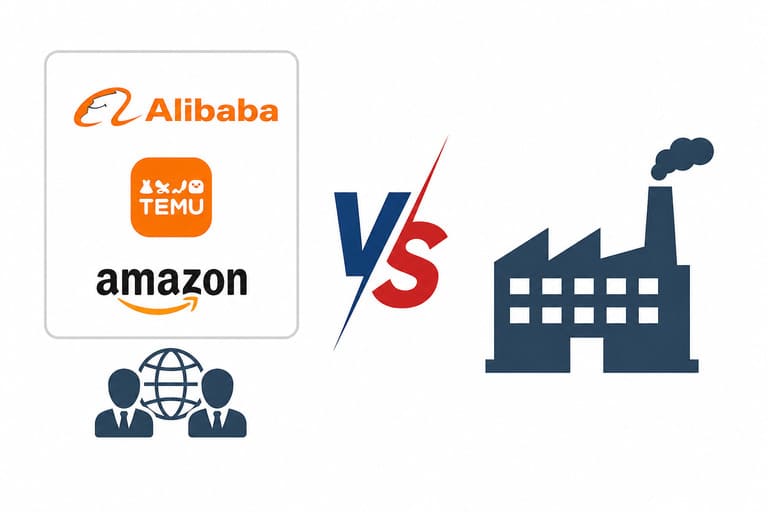
In 2026, buyers have more sourcing options than ever before:
- Direct manufacturers
- Alibaba suppliers
- Temu sellers
- Amazon sellers
- Walmart Marketplace sellers
- 1688 suppliers
- Trading companies
- Sourcing agents
The real challenge is understanding which sourcing channel fits your business needs and how to identify suppliers that can consistently deliver quality products, competitive pricing, and reliable service.
Having worked in the non woven bag industry for many years and communicated with buyers from dozens of countries, I have seen both successful sourcing partnerships and expensive sourcing mistakes.
This guide explains how experienced buyers evaluate suppliers in 2026 and what factors matter most when choosing a non woven bag supplier from China.
Why China Still Dominates the Non Woven Bag Industry
Many buyers ask the same question:
"With tariffs, shipping fluctuations, and rising costs, is China still the best place to buy non woven bags?"
The short answer is yes.
Although international trade conditions have changed over the past several years, China's overall manufacturing ecosystem remains difficult to replicate.
China still offers:
- Large-scale production capacity
- Competitive labor costs
- Mature raw material supply chains
- Advanced printing technologies
- Flexible customization options
- Experienced export teams
- Efficient port infrastructure
More importantly, thousands of packaging-related suppliers are concentrated within specific industrial regions.
For non woven bags, this means factories can source fabric, printing materials, accessories, packaging materials, and transportation services quickly and efficiently.
This industrial clustering helps reduce costs and shorten lead times compared with many alternative sourcing destinations.
For wholesale buyers, the total landed cost often remains highly competitive even when freight rates or tariffs fluctuate.
Step 1: Understand Your Purchasing Requirements First
Before searching for suppliers, buyers should clearly define their requirements.
Many sourcing problems begin because buyers contact suppliers before understanding their own needs.
Start by answering several key questions.
What Type of Non Woven Bag Do You Need?
Common categories include:
Promotional Non Woven Bags
Typically used for:
- Trade shows
- Marketing campaigns
- Brand giveaways
- Event promotions
These products often prioritize low cost and large quantity production.
Retail Shopping Bags
Used by:
- Supermarkets
- Grocery stores
- Retail chains
- Convenience stores
These usually require stronger handles and higher durability.
Laminated Non Woven Bags
Commonly used for:
- Premium retail packaging
- Fashion brands
- Cosmetic packaging
- Gift packaging
These bags provide better printing quality and water resistance.
Reusable Grocery Bags
Increasingly popular due to sustainability initiatives.
These products often require:
- Reinforced handles
- Larger load capacity
- Longer service life
How Many Bags Do You Need?
Order volume significantly affects supplier selection.
Under 500 Pieces
Platforms may be the better option.
500–5,000 Pieces
Both platforms and manufacturers may be suitable.
5,000–50,000 Pieces
Direct factory sourcing usually becomes more economical.
50,000+ Pieces
Factory-direct sourcing almost always offers substantial cost advantages.
Do You Need Customization?
Customization options may include:
- Logo printing
- Custom colors
- Custom dimensions
- Different GSM levels
- Reinforced bottoms
- Different handle styles
- Laminated finishes
- Special packaging
The more customization required, the more important it becomes to work directly with a manufacturer.
Step 2: Compare All Major Sourcing Channels in 2026
Many buyers assume all suppliers operate similarly.
In reality, sourcing channels vary dramatically.
Let's examine each option objectively.
Option 1: Amazon, Temu, and Other Marketplace Sellers
These platforms have become increasingly popular for small-volume buyers.
Advantages
Fast Delivery
Many products are already stored in local warehouses.
Easy Purchasing Process
Ordering is straightforward.
Buyer Protection
Most platforms provide dispute resolution mechanisms.
Low Entry Cost
Small quantities are usually available.
Disadvantages
Limited Customization
Most products are ready-made inventory.
Higher Unit Costs
Warehousing, platform fees, and distribution costs increase pricing.
Limited Material Choices
Buyers often cannot customize:
- GSM
- Printing methods
- Sizes
- Handle styles
Best For
- Startups
- Product testing
- Small retailers
- Emergency inventory replenishment
Option 2: Alibaba Suppliers
Alibaba remains one of the most widely used sourcing platforms worldwide.
Advantages
Massive Supplier Database
Buyers can compare many suppliers quickly.
Trade Assurance Programs
Additional transaction protection.
Easier Communication
Many suppliers have export experience.
Disadvantages
Quality Varies Significantly
Not all suppliers are manufacturers.
Many Suppliers Are Resellers
Some listings come from:
- Trading companies
- Agents
- Middlemen
Verification Is Still Necessary
A professional-looking profile does not guarantee manufacturing capability.
Best For
- Initial supplier research
- New importers
- Comparing market pricing
Option 3: 1688 Suppliers
1688 is one of China's largest domestic B2B marketplaces.
Advantages
Extremely Competitive Pricing
Prices are often lower than export-oriented platforms.
Large Supplier Selection
Thousands of manufacturers participate.
Disadvantages
Chinese Language Interface
Communication can be challenging.
Domestic Focus
Many suppliers prioritize Chinese customers.
Limited Export Support
International documentation and logistics assistance may be limited.
Best For
- Experienced sourcing teams
- Buyers working with agents
- Price-sensitive procurement projects
Option 4: Trading Companies
For many years, trading companies played an important role in international sourcing.
However, their position has changed significantly.
Traditional Advantages
Trading companies historically offered:
- Multi-product sourcing
- Supplier coordination
- Export documentation
- Logistics management
These services were valuable when many factories lacked export experience.
Why Their Advantages Are Smaller Today
One major industry trend I have observed is that many export-oriented factories now provide services that were once exclusive to trading companies.
For example, many factories can now:
- Coordinate related product sourcing
- Arrange shipping
- Handle export documentation
- Recommend freight forwarders
- Consolidate shipments
In our own factory, we work with long-term logistics partners but also support customers who prefer using their own freight forwarders.
This flexibility often equals or exceeds what many trading companies provide.
As a result, the traditional gap between factories and trading companies has become much smaller than it was ten years ago.
Limitations
Additional Markups
Trading companies must generate profit between factory and buyer.
Less Production Visibility
Buyers are often one step removed from manufacturing.
Slower Technical Communication
Production questions may require multiple layers of communication.
Best For
- Buyers sourcing multiple unrelated products
- Businesses preferring a single purchasing contact
Option 5: Direct Factory Sourcing
For customized wholesale orders, direct factory sourcing often provides the strongest long-term value.
Advantages
Lower Production Costs
No intermediary markup.
Better Customization
Factories can directly adjust:
- Size
- Material
- GSM
- Printing
- Construction
Faster Technical Communication
Questions are answered by production teams.
Better Quality Control
Manufacturing processes become more transparent.
Greater Scalability
Factories can support future growth more efficiently.
Limitations
Higher MOQ
Most factories require minimum order quantities.
Production Lead Times
Custom production requires planning.
Best For
- Wholesalers
- Retail chains
- Packaging distributors
- Promotional product companies
- Long-term buyers
Step 3: Learn How to Verify a Real Factory
One of the most common sourcing mistakes is assuming every supplier is a manufacturer.
Verification is essential.
Check Production Equipment
Ask suppliers about:
- Printing machines
- Bag-making machines
- Lamination equipment
- Sewing equipment
- Quality inspection systems
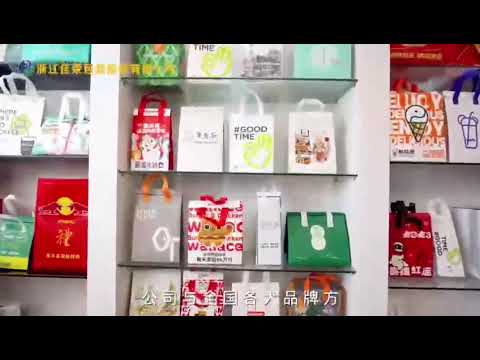
A real factory should comfortably provide production photos or videos.
👉 ▶ Click to watch our factory production video
Evaluate Production Capacity
Ask:
- Monthly capacity
- Number of production lines
- Number of workers
- Peak-season capacity
Capacity should match your future growth plans.
Review Export Experience
Experienced exporters typically understand:
- International packaging standards
- Shipping documentation
- Product compliance requirements
- Communication expectations
Request Factory Videos
Videos often reveal:
- Production scale
- Cleanliness
- Equipment conditions
- Workforce organization
Factory videos are often more useful than certificates alone.
Step 4: Never Compare Suppliers Using Price Alone
This is perhaps the biggest sourcing mistake buyers make.
A quotation is only one part of the picture.
A supplier offering 5% lower pricing may eventually create costs through:
- Quality problems
- Delayed shipments
- Poor communication
- Product inconsistency
The cheapest quote is rarely the cheapest supplier.
Step 5: Request Samples Before Making Decisions
Samples reveal details that quotations cannot.
Evaluate:
Material Quality
Does the fabric feel consistent?
GSM Accuracy
Is the actual weight close to specifications?
Printing Quality
Check:
- Color consistency
- Registration accuracy
- Ink adhesion
Handle Strength
Test load-bearing performance.
Seams and Construction
Inspect:
- Stitching quality
- Ultrasonic sealing
- Edge finishing
Step 6: Calculate Total Landed Cost
Many buyers focus exclusively on product price.
A better approach is calculating total landed cost.
Consider:
- Product cost
- Freight cost
- Customs duties
- Warehousing
- Product failures
- Reorder costs
A slightly higher-priced supplier with stable quality often reduces overall procurement expenses.
Step 7: Evaluate Communication Quality
Good communication prevents expensive mistakes.
Pay attention to:
Response Speed
Technical Understanding
Problem-Solving Ability
Transparency
Strong communication often predicts strong project execution.
Step 8: Place a Trial Order
Before committing to large quantities, place a trial order.
A trial order helps evaluate:
- Production consistency
- Packaging quality
- Delivery performance
- Communication effectiveness
Many hidden problems become visible during trial production.
Step 9: Build Long-Term Supplier Relationships
After years in the industry, one pattern becomes clear.
The most successful buyers rarely switch suppliers constantly.
Long-term partnerships often generate:
Better Pricing Stability
Suppliers value predictable business.
Priority Production Scheduling
Repeat customers often receive scheduling advantages.
Faster Problem Resolution
Trust improves efficiency.
Better Product Development
Suppliers become familiar with customer requirements.
Lower Overall Risk
Predictability reduces sourcing disruptions.
Common Red Flags When Choosing a Supplier
Avoid suppliers who:
- Refuse to provide factory information
- Cannot provide production photos or videos
- Offer prices dramatically below market averages
- Respond inconsistently
- Avoid sample requests
- Make unrealistic delivery promises
If something appears too good to be true, it often is.
Future Trends in China's Non Woven Bag Industry
Several trends are shaping supplier selection in 2026.
More Automation
Factories continue investing in automated production equipment.
Increased Sustainability Requirements
Demand for reusable and recyclable packaging continues growing.
Faster Customization
Digital workflows shorten development cycles.
Greater Supply Chain Integration
Factories increasingly provide:
- Packaging solutions
- Logistics coordination
- Product sourcing support
This trend further reduces some traditional advantages of trading companies.
Final Thoughts
There is no universal "best" supplier.
The right supplier depends on:
- Order quantity
- Customization needs
- Delivery requirements
- Budget
- Long-term business goals
For very small purchases, marketplaces such as Amazon or Temu may be practical.
For supplier research, Alibaba remains valuable.
For experienced buyers seeking domestic pricing, 1688 can be effective.
For buyers sourcing multiple unrelated products, trading companies may still offer convenience.
However, for businesses purchasing customized non woven bags on a regular basis, direct factory sourcing generally provides the best balance of cost, customization, quality control, communication efficiency, and long-term scalability.
China's manufacturing ecosystem continues to provide significant competitive advantages, and buyers who invest time in supplier verification, sample evaluation, and relationship building are far more likely to achieve successful sourcing outcomes.
Frequently Asked Questions (FAQ)
Is Alibaba better than buying directly from a factory?
Not necessarily. Alibaba is a sourcing platform, while factories are manufacturers. Many factories also operate Alibaba stores. Buyers should verify whether the supplier is an actual manufacturer.
Is Temu cheaper than factory-direct purchasing?
For small quantities, Temu can be more economical because products are already stocked in local warehouses. For customized wholesale orders, factory-direct sourcing is usually cheaper.
Can factories arrange shipping?
Yes. Most export-oriented factories can recommend freight forwarders, arrange logistics, or work directly with the buyer's preferred shipping partner.
Are trading companies still useful in 2026?
Yes, especially when buyers need products from multiple industries. However, many factories now provide sourcing assistance, shipment consolidation, and logistics coordination, reducing some traditional trading company advantages.
How many bags should I order before working directly with a factory?
Many manufacturers become significantly more competitive when orders reach 1,000–5,000 pieces or higher. Exact MOQs vary by product and customization requirements.
How can I verify whether a supplier is a real factory?
Request factory videos, production photos, equipment information, capacity data, certifications, and product samples. Video factory tours are often one of the most effective verification methods.
Is China still competitive despite tariffs and shipping fluctuations?
In most cases, yes. China's mature supply chain, production efficiency, skilled workforce, and manufacturing scale continue to provide strong cost advantages compared with many alternative sourcing destinations.
What matters more: price or quality?
Both matter, but total procurement cost matters most. A slightly higher-priced supplier with consistent quality often reduces overall costs by minimizing defects, delays, and replacement orders.
What is the biggest mistake buyers make when sourcing non woven bags?
Focusing only on unit price. Successful sourcing requires evaluating quality, communication, production capability, logistics support, and long-term reliability.
How long does custom non woven bag production usually take?
Most custom orders require approximately 15–35 days depending on order quantity, printing requirements, material availability, and production schedules.