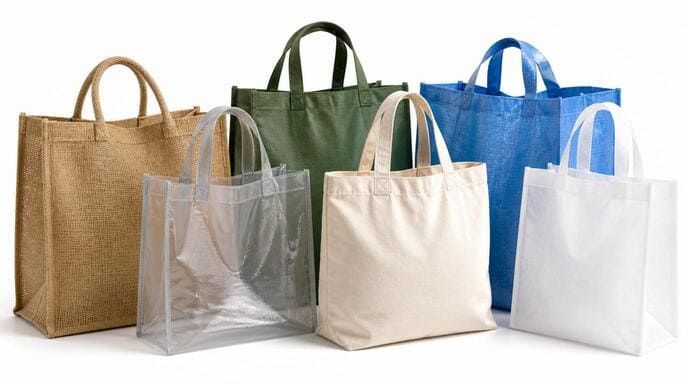
Choosing the right shopping bag materials is one of the most important decisions in wholesale and custom bag projects.
Many buyers focus mainly on unit price when sourcing wholesale shopping bags, but the material choice affects far more than the initial cost. The selected material directly influences:
- Bag durability
- Load-bearing performance
- Printing quality
- Production cost
- Sustainability goals
- Customer experience
- Brand perception
A shopping bag is not only used for carrying products. It is also a part of the customer experience and an extension of brand identity.
For example, a lightweight non woven polypropylene bag may be an ideal choice for promotional campaigns because it provides competitive pricing, easy customization, and efficient large-scale production.
However, if customers need to carry heavier products repeatedly, a stronger material such as PP woven, canvas, or jute may provide better long-term performance.
Similarly, luxury retailers often choose coated paper bags, cotton bags, or canvas tote bags because appearance, texture, and premium feeling are more important than the lowest possible cost.
Therefore, professional buyers should evaluate shopping bag materials based on:
- Intended application
- Required carrying capacity
- Expected reuse frequency
- Printing requirements
- Moisture protection needs
- Sustainability objectives
- Target customer expectations
- Production budget
The best material is not always the cheapest option.
A successful custom shopping bag project requires the right balance between performance, appearance, cost, and brand value.
Non Woven Polypropylene (PP) Bags
Non woven polypropylene (PP) bags are one of the most commonly used reusable shopping bag materials worldwide.
They are made from polypropylene fibers that are bonded together through heat, pressure, or other manufacturing processes instead of being woven into traditional fabric structures.
This production method creates a lightweight material with good strength, flexible customization options, and excellent cost efficiency.
For wholesale buyers, non woven PP bags are especially popular because they provide a practical balance between:
- Affordable pricing
- Large-scale production capability
- Lightweight transportation
- Custom printing flexibility
- Reusable performance
They are widely used in:
- Supermarket promotions
- Trade shows
- Retail campaigns
- Corporate events
- Promotional giveaways
Material Characteristics of Non Woven PP Bags
Lightweight Structure
One of the biggest advantages of non woven polypropylene is its lightweight construction.
Compared with thicker fabric materials such as canvas or jute, non woven PP requires less raw material, which helps reduce:
- Product weight
- Transportation costs
- Storage space requirements
This makes it suitable for large-volume orders where thousands or millions of bags are required.
Cost-Effective Production
Non woven PP bags are widely selected for projects where budget control is important.
The material allows manufacturers to produce customized bags efficiently because it is suitable for large-scale production with automated bag-making machines. Compared with traditional sewing processes, modern non woven bag production uses more automated equipment, which significantly reduces manual labor requirements and improves production efficiency. Large-scale machines can handle high-volume orders with stable output, helping manufacturers lower labor costs while maintaining consistent quality.
Additional advantages include:
- Raw material costs are competitive
- Production processes are highly scalable
- Printing options are flexible
- Different sizes and structures can be produced easily
For promotional campaigns or retail programs requiring large quantities, non woven PP is often one of the most economical solutions due to its efficient machine production, reduced labor requirements, and suitability for bulk manufacturing.
Durability and Load Performance
Although non woven PP is lightweight, it can provide reliable durability when the correct material thickness and structure are selected.
The performance depends on:
- Material GSM
- Bag size
- Handle design
- Reinforcement structure
- Sewing or bonding method
For example:
A 70 GSM non woven bag is suitable for lightweight promotional use, while a 100–120 GSM bag provides better strength and a more premium hand feel.
Higher GSM generally provides:
- Better tear resistance
- Stronger handles
- Longer reuse cycles
However, choosing the highest GSM is not always necessary.
The ideal thickness depends on the intended application.
GSM Selection for Non Woven PP Bags
GSM means grams per square meter.
It measures the weight and density of the material rather than directly measuring physical thickness.
For non woven PP shopping bags, common GSM ranges include:
| GSM Range | Common Applications |
|---|---|
| 60–70 GSM | Promotional giveaways, lightweight bags |
| 80–100 GSM | Retail shopping bags, reusable bags |
| 110–120 GSM | Stronger reusable bags, premium promotions |
A higher GSM usually creates:
- Stronger material structure
- Better hand feel
- Higher durability
However, it also increases:
- Raw material consumption
- Production cost
- Shipping weight
Wholesale buyers should select GSM based on actual usage rather than simply choosing thicker materials.
Printing Performance of Non Woven PP Bags
Printing compatibility is one of the reasons why non woven polypropylene remains popular in custom bag production.
The surface is relatively uniform compared with many natural fiber materials, allowing brands to display logos and graphics effectively.
Common printing methods include:
Screen Printing
Screen printing is one of the most widely used methods for non woven PP bags.
Advantages include:
- Cost-effective for bulk orders
- Suitable for simple logos
- Strong ink coverage
- Reliable production efficiency
It works especially well for:
- Brand logos
- Text designs
- Simple graphics
- Limited-color artwork
Heat Transfer Printing
Heat transfer printing provides better detail reproduction compared with traditional screen printing.
It is suitable for:
- Complex graphics
- Multiple colors
- Detailed patterns
This method transfers printed designs onto the bag surface through heat and pressure.
Lamination Printing
Laminated non woven bags provide an upgraded printing surface.
A film layer is added to the material, creating:
- A smoother surface
- Brighter colors
- Better image clarity
- Improved moisture resistance
Laminated non woven bags are often selected by brands that need a more premium appearance while maintaining reasonable costs.
Plain Non Woven vs Laminated Non Woven Bags
The choice between plain and laminated non woven bags depends on brand positioning, usage requirements, and desired appearance.
| Feature | Plain Non Woven Bag | Laminated Non Woven Bag |
|---|---|---|
| Surface | Fabric-like texture | Smooth film-coated surface |
| Printing Effect | Suitable for simple logos and basic designs | Better for colorful graphics and detailed patterns |
| Water Resistance | No waterproof protection; absorbs moisture like fabric | Improved water resistance due to laminated film layer |
| Appearance | Simple, natural, and textile-like appearance | More premium, glossy or refined appearance |
| Cost | Lower | Slightly higher |
Plain Non Woven Bags
Best for:
- Promotional campaigns
- Trade shows
- Eco events
- Budget retail programs
Advantages:
- Lower cost
- Lightweight
- Easy customization
- Natural appearance
Laminated Non Woven Bags
Best for:
- Retail brands
- Food packaging
- Premium promotions
- Shopping campaigns
Advantages:
- Brighter printing
- Better moisture protection
- Easier cleaning
- More attractive appearance
Common Applications of Non Woven PP Bags
Non woven polypropylene bags are widely used across different industries.
Promotional Events
Companies often choose non woven PP bags for:
- Exhibitions
- Conferences
- Marketing campaigns
- Brand promotions
The advantages include:
- Low production cost
- Large quantity availability
- Easy logo printing
- Lightweight transportation
Supermarkets and Retail Campaigns
Many retailers use reusable non woven bags as alternatives to disposable packaging.
Applications include:
- Grocery shopping bags
- Membership gift bags
- Seasonal promotional bags
- Customer appreciation campaigns
The bags can be customized with:
- Different sizes
- Handle lengths
- Colors
- Printing designs
- Gusset structures
📌 Quick Overview
Non woven PP bags are one of the most cost-effective reusable shopping bag materials. They are ideal for promotional campaigns, retail programs, and large-volume custom orders because they offer lightweight performance, flexible customization, and competitive pricing.
PP Woven Bags
PP woven bags are a stronger alternative to non woven polypropylene bags and are widely used when higher load capacity, durability, and repeated reuse are required.
Unlike non woven PP bags, which are made by bonding fibers together, PP woven bags are produced by weaving polypropylene strips into a structured fabric.
This woven structure creates a stronger material network, improving:
- Tensile strength
- Tear resistance
- Carrying capacity
- Long-term durability
For wholesale buyers looking for heavy duty shopping bags, PP woven is often a better choice than lightweight reusable bag materials.
Common applications include:
- Grocery shopping bags
- Wholesale retail bags
- Hardware stores
- Agricultural-style packaging
- Large reusable shopping programs
Material Characteristics of PP Woven Bags
Strong Woven Structure
The biggest difference between PP woven and non woven PP bags is the material structure.
PP woven bags use:
- Horizontal polypropylene strips
- Vertical polypropylene strips
These strips are woven together to create a stronger fabric construction.
This structure provides:
- Better resistance against tearing
- Higher load-bearing ability
- Improved durability during repeated use
Because of this strength, PP woven bags are suitable for customers who need reliable performance instead of only low-cost packaging.
Higher Load-Bearing Performance
One of the main reasons businesses choose PP woven bags is their ability to carry heavier products.
Compared with standard promotional bags, PP woven bags are better suited for:
- Bottled products
- Household supplies
- Heavy groceries
- Bulk purchases
The actual carrying capacity depends on several factors:
- Material thickness
- Bag dimensions
- Handle design
- Bottom reinforcement
- Sewing quality
A professionally designed PP woven shopping bag can significantly reduce problems such as:
- Handle breakage
- Bottom tearing
- Product damage
Durable for Repeated Use
Reusable shopping bags are expected to withstand repeated carrying cycles.
PP woven materials perform well because they provide:
- Strong fabric structure
- Good abrasion resistance
- Long service life
This makes them suitable for businesses that want customers to reuse bags frequently.
Examples include:
- Supermarkets offering reusable bags
- Wholesale stores
- Retail brands promoting sustainable packaging
Water Resistance and Protection
PP woven materials naturally provide better moisture resistance than many natural fiber materials.
The polypropylene structure helps reduce water absorption compared with:
- Paper bags
- Cotton bags
- Canvas bags
However, standard woven surfaces are not completely waterproof because small gaps may exist between woven strips.
For improved protection, manufacturers can add lamination.
Laminated PP woven bags provide:
- Better moisture resistance
- Easier cleaning
- Smoother printing surface
- More premium appearance
Printing Performance of PP Woven Bags
PP woven bags support multiple printing methods, but the woven texture affects the final appearance.
Because the surface has visible woven patterns, extremely detailed images may not appear as sharp as they would on smoother materials.
For brands requiring stronger visual effects, laminated PP woven bags are usually preferred.
Flexographic Printing
Flexographic printing is commonly used for large-volume PP woven bag production.
Advantages:
- Efficient mass production
- Suitable for repeated patterns
- Competitive cost for high quantities
It is commonly used for:
- Brand names
- Simple graphics
- Large-area printing
Lamination Printing
Laminated PP woven bags provide a smoother surface for printing.
Benefits include:
- Brighter colors
- Improved image clarity
- Better graphic presentation
- Increased moisture protection
This makes them suitable for retail brands that need both:
- Strong bag performance
- Professional appearance
Screen Printing
Screen printing is suitable for:
- Simple logos
- Promotional designs
- Limited-color artwork
It is commonly used when:
- Order quantities are large
- Graphic designs are simple
- Cost efficiency is important
PP Woven Bags vs Non Woven PP Bags
Both materials are made from polypropylene, but their structures create different performance characteristics.
| Feature | Non Woven PP | PP Woven |
|---|---|---|
| Material Structure | Bonded fibers | Woven polypropylene strips |
| Strength | Medium | High |
| Cost | Lower | Medium |
| Load Capacity | Medium | Higher |
| Surface Feel | Softer | More structured |
| Durability | Good | Excellent |
| Common Use | Promotions, retail campaigns | Heavy-duty reusable bags |
| Printing | Good | Better after lamination |
Choose Non Woven PP When:
- Budget control is important
- Large quantities are required
- Bags are mainly promotional
- Lightweight packaging is preferred
Choose PP Woven When:
- Customers carry heavier products
- Longer service life is expected
- Durability is the priority
- Bags need stronger structure
Common Applications of PP Woven Bags
Grocery Shopping Bags
Grocery customers often carry products with different weights, including:
- Bottles
- Canned goods
- Fresh products
- Household items
PP woven bags provide stronger support and reduce the risk of damage during transportation.
Heavy Product Packaging
Industries requiring stronger reusable bags often select PP woven materials.
Examples include:
- Building supply stores
- Garden retailers
- Wholesale markets
The stronger structure helps protect products and improves customer experience.
Retail Reusable Bags
Many retailers use PP woven bags as long-term reusable packaging because they provide:
- Better durability
- Professional appearance
- Repeat-use value
📌 Quick Overview
PP woven bags are designed for stronger performance and heavier applications. Compared with non woven PP bags, they provide higher tensile strength, better load capacity, and longer reuse cycles, making them suitable for heavy-duty shopping and retail applications.
Paper Shopping Bags
Paper shopping bags remain one of the most widely used packaging solutions because they combine:
- Excellent printing performance
- Natural appearance
- Strong branding value
- Flexible customization options
They are commonly selected by:
- Fashion retailers
- Cosmetic brands
- Restaurants
- Cafes
- Gift shops
- Premium retail stores
Unlike synthetic materials, paper naturally creates a connection with:
- Sustainability
- Craftsmanship
- Premium presentation
However, different paper types provide different visual effects and performance characteristics.
The two most common options are:
- Kraft paper bags
- Coated paper bags
In recent years, a newer type of paper bag has also gained attention — seamless paper bags (waistline-free paper bags).
Using automatic machine one-piece forming technology, they provide a cleaner appearance, stronger bottom structure, and improved consistency compared with traditional paper bag designs.
Kraft Paper Bags
Kraft paper bags are popular among brands that want a natural and eco-friendly appearance.
They are made from wood pulp-based paper materials and usually feature a recognizable brown or natural color.
Common applications include:
- Organic food brands
- Coffee shops
- Handmade products
- Eco-conscious retailers
Material Characteristics of Kraft Paper Bags
Natural Appearance
The biggest advantage of kraft paper is its visual identity.
The natural brown surface creates a feeling of:
- Simplicity
- Authenticity
- Environmental awareness
- Handmade quality
This makes kraft paper suitable for brands that want to communicate natural values.
Eco-Friendly Branding Appeal
Kraft paper is often associated with sustainable packaging.
It is commonly used by companies promoting:
- Reduced plastic usage
- Natural products
- Environmentally responsible concepts
However, sustainability depends on the complete product lifecycle, including:
- Raw material sourcing
- Manufacturing process
- Transportation
- Recycling systems
Printing Compatibility
Kraft paper supports several printing methods, including:
- Flexographic printing
- Screen printing
- Digital printing
Because kraft paper has a natural brown background, printed colors usually appear softer compared with white coated paper.
This creates a more organic and traditional appearance.
Coated Paper Bags
Coated paper bags are designed for brands that prioritize:
- Premium appearance
- Bright colors
- Detailed graphics
- High-end retail presentation
A coating layer is applied to the paper surface, improving smoothness and ink control.
They are widely used by:
- Fashion brands
- Cosmetic companies
- Luxury retailers
- Gift packaging companies
Material Characteristics of Coated Paper Bags
Smooth Printing Surface
The coated surface provides better printing conditions.
Advantages include:
- Sharper images
- More accurate colors
- Better detail reproduction
This makes coated paper suitable for:
- Complex logos
- Product images
- High-quality brand graphics
Premium Appearance
Compared with kraft paper, coated paper creates a more refined appearance.
It supports:
- Glossy finishes
- Matte finishes
- Special coatings
- Luxury visual effects
For brands where packaging presentation is important, coated paper bags often provide stronger perceived value.
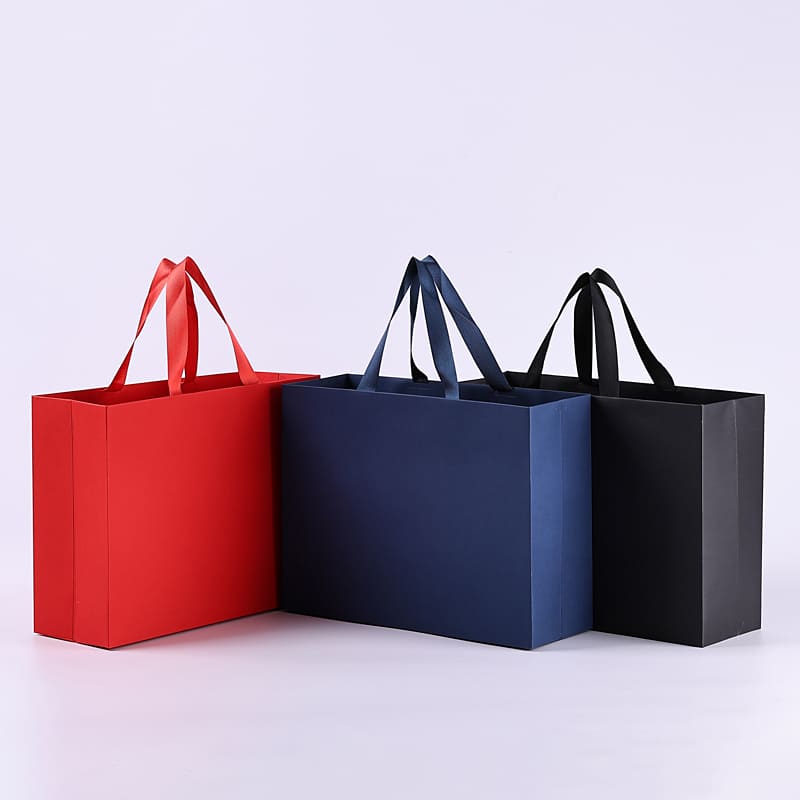
Seamless Paper Bags (Waistline-Free Paper Bags)
Seamless paper bags are a newer generation of paper shopping bags designed to improve the structure, appearance, and production consistency of traditional paper bags.
Unlike conventional paper bags that are assembled through folding and gluing processes, seamless paper bags are produced using automatic bag-making machines with one-piece forming technology.
The bag body and bottom structure are formed through an integrated process, creating a cleaner appearance with no visible waistline or traditional bottom seam.
They are commonly selected by:
- Premium retail brands
- Fashion stores
- Cosmetic companies
- Gift packaging companies
- High-end promotional projects
Material and Structure Characteristics of Seamless Paper Bags
One-Piece Machine Forming
The biggest difference between seamless paper bags and traditional paper bags is the manufacturing method.
Traditional paper bags usually require multiple processes, including:
- Paper folding
- Side seam bonding
- Bottom folding
- Bottom reinforcement
These connection points can become potential weak areas during use.
Seamless paper bags use automatic bag-making machines to form the bag structure in one continuous process, improving:
- Production consistency
- Structural stability
- Appearance quality
- Manufacturing efficiency
Stronger Bottom Structure
The bottom is one of the most important load-bearing areas of a paper shopping bag.
In traditional paper bags, the bottom is usually created through folded layers and glued joints.
Under heavy loads or repeated use, the bottom area may experience:
- Adhesive failure
- Folding stress
- Seam separation
Seamless paper bags reduce these weaknesses through an integrated bottom-forming structure.
The reinforced bottom design helps improve:
- Weight-bearing capacity
- Durability during transportation
- Overall bag stability
This makes them more suitable for products with higher packaging requirements.
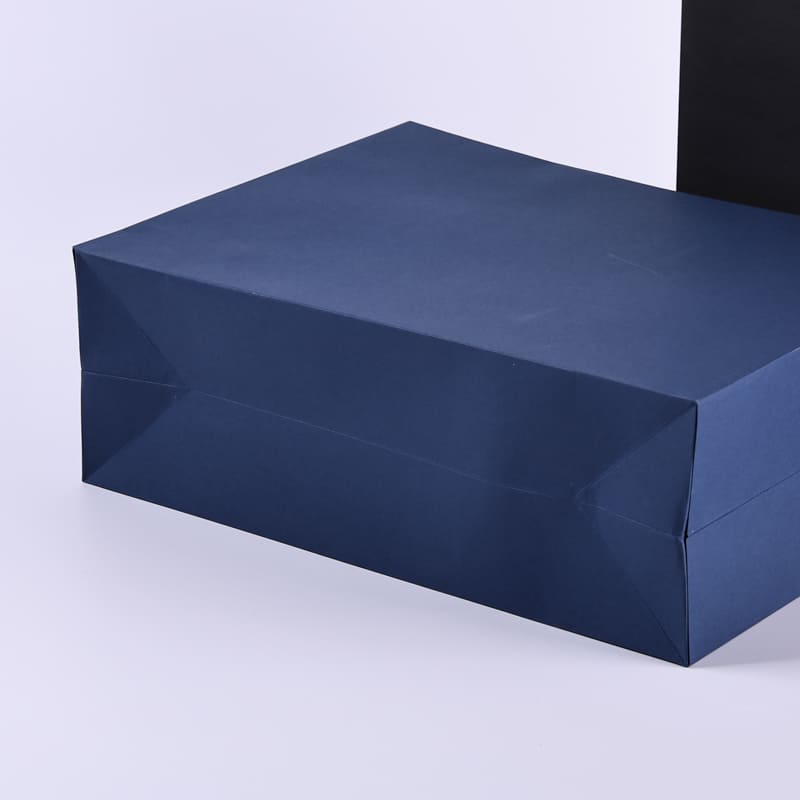
Cleaner Premium Appearance
Because seamless paper bags eliminate visible waistlines and obvious bottom seams, they provide a more refined appearance.
Advantages include:
- Smooth bag surface
- Better visual consistency
- More premium presentation
- Improved brand image
This makes them especially suitable for brands that focus on packaging experience and retail presentation.
Printing Performance of Seamless Paper Bags
Seamless paper bags maintain the excellent printing advantages of traditional paper materials.
They can support:
- Offset printing
- Flexographic printing
- Digital printing
- Special surface finishes
The smoother structure also helps printed designs appear more consistent because there are fewer visual interruptions from side seams or folds.
Common customization options include:
- Brand logos
- Full-color graphics
- Embossing
- Hot stamping
- Matte or glossy finishes
Printing Performance of Paper Shopping Bags
Paper is one of the most printing-friendly shopping bag materials.
Its flat surface allows manufacturers to achieve detailed branding effects.
Common printing methods include:
Offset Printing
Suitable for:
- High-quality images
- Detailed artwork
- Premium packaging
Advantages:
- Excellent color accuracy
- Smooth graphic reproduction
Flexographic Printing
Suitable for:
- Large-volume production
- Simple designs
- Cost-efficient printing
Digital Printing
Suitable for:
- Small quantity orders
- Personalized designs
- Limited editions
Advantages:
- No printing plate required
- Flexible customization
Moisture Resistance Considerations
Paper naturally absorbs moisture, which is one of its main limitations.
However, manufacturers can improve protection through:
- Film lamination
- PE coating
- Special paper treatment
Coated paper bags generally provide better surface protection than untreated kraft paper.
However, paper bags are still more sensitive to moisture compared with synthetic reusable materials such as:
- PP woven
- Non woven PP
- RPET
📌 Quick Overview
Paper shopping bags are ideal for brands that prioritize appearance, printing quality, and retail presentation. Kraft paper provides a natural and eco-friendly image, coated paper delivers premium graphics and stronger visual impact, while seamless paper bags offer an upgraded structure with one-piece machine forming, a cleaner appearance, and stronger bottom performance.
Canvas and Cotton Shopping Bags
Canvas and cotton bags are premium reusable shopping bag materials widely selected by brands that focus on:
- Long-term reuse
- Premium customer experience
- Natural appearance
- Brand exposure
Compared with lower-cost materials such as non woven PP, canvas and cotton bags are positioned more toward quality, lifestyle, and brand value.
Many fashion brands, boutique stores, museums, lifestyle companies, and corporate gift programs choose these materials because customers are more likely to continue using them after purchase.
A reusable canvas tote bag that remains in daily use for months or years can become a long-term branding tool.
Material Characteristics of Canvas and Cotton Bags
Strong and Durable Structure
Canvas is a tightly woven fabric usually made from cotton or cotton-blended fibers.
Its dense structure provides:
- Excellent tear resistance
- Strong carrying capacity
- Long service life
- Better shape retention
Compared with lightweight synthetic bags, canvas bags are designed for repeated daily use.
They are suitable for carrying:
- Books
- Clothing
- Daily supplies
- Shopping products
- Promotional materials
The actual durability depends on:
- Fabric thickness
- Weaving density
- Handle reinforcement
- Stitching quality
- Bag construction
A well-designed canvas bag can withstand repeated use for years.
Soft and Natural Hand Feel
Cotton bags are valued for their comfortable texture and natural appearance.
Compared with synthetic materials, cotton provides:
- Softer touch
- More natural feeling
- Better customer comfort
This makes cotton bags suitable for brands that want to create a lifestyle-oriented image.
Common applications include:
- Fashion accessories
- Lifestyle products
- Eco-conscious brands
- Boutique retail packaging
Premium Brand Perception
One of the biggest advantages of canvas and cotton bags is their perceived value.
Customers often associate these materials with:
- Quality
- Sustainability
- Craftsmanship
- Premium products
For businesses selling higher-value products, the material itself becomes part of the customer experience.
For example:
A clothing brand using a thick canvas tote bag creates a stronger premium impression than using a thin promotional bag.
Canvas and Cotton Bag Applications
Fashion Brands
Fashion retailers commonly use canvas and cotton bags as:
- Shopping packaging
- Seasonal promotional products
- Limited-edition merchandise
Because customers often reuse these bags in daily life, they provide continuous brand visibility.
Boutique Stores
Small and premium retail stores often prefer natural fabric bags because they match:
- Handmade products
- Artistic brands
- Premium merchandise
The natural texture helps create a more personalized shopping experience.
Corporate Gifts and Events
Canvas bags are also widely used for:
- Business conferences
- Employee gifts
- Brand campaigns
- Corporate events
Compared with disposable packaging, reusable fabric bags create stronger long-term value.
Printing Performance of Canvas and Cotton Bags
Canvas and cotton materials provide excellent branding opportunities, but their printing characteristics are different from synthetic materials.
Natural fibers absorb ink more easily, creating a softer and more textile-like appearance.
The final printing effect depends on:
- Fabric texture
- Material density
- Ink type
- Printing method
Common printing methods include:
- Screen printing
- Heat transfer printing
- Digital textile printing
- Embroidery
Screen Printing
Screen printing is one of the most commonly used methods for canvas and cotton bags.
Advantages:
- Cost-effective for bulk production
- Strong ink coverage
- Durable printing effect
- Suitable for simple logos
It works especially well for:
- Brand logos
- Text designs
- Minimal graphics
Embroidery
Embroidery is often selected for premium canvas bags.
Advantages include:
- Three-dimensional appearance
- High perceived value
- Excellent durability
It is commonly used for:
- Luxury brands
- Corporate gifts
- Fashion accessories
However, embroidery is more suitable for simple designs because extremely detailed graphics may not reproduce well.
Heat Transfer Printing
Heat transfer printing is suitable when brands require:
- Multiple colors
- Detailed images
- Complex patterns
It provides better graphic reproduction than traditional printing methods for some applications.
Printing Considerations for Natural Fabric Bags
Canvas Texture
Canvas usually has a visible woven structure.
This creates:
- Natural appearance
- Handmade feeling
- Vintage style
However, the texture may slightly reduce the sharpness of extremely fine details.
Cotton Surface
Cotton generally provides a softer and smoother surface.
Advantages include:
- Better color absorption
- Comfortable texture
- Natural printing appearance
It is suitable for brands that want a softer lifestyle image.
Canvas vs Cotton Bags
| Feature | Canvas Bags | Cotton Bags |
|---|---|---|
| Material Density | Higher | Medium |
| Durability | Excellent | Good |
| Hand Feel | Structured | Soft |
| Premium Appearance | High | Medium-High |
| Reuse Ability | Excellent | Good |
| Common Applications | Fashion, gifts, premium retail | Lifestyle products, promotional bags |
| Printing | Good | Excellent |
Choose Canvas Bags When:
- Maximum durability is required
- Premium feeling is important
- Long-term reuse is expected
- The bag needs stronger structure
Choose Cotton Bags When:
- Softer hand feel is preferred
- Lightweight design is needed
- Natural lifestyle branding is the goal
- Comfortable daily use is important
📌 Quick Overview
Canvas and cotton bags are premium reusable shopping bag materials that combine durability, natural texture, and strong branding value. Canvas provides stronger structure and longer service life, while cotton offers a softer and more lightweight customer experience.
Jute Shopping Bags
Jute bags are natural fiber shopping bags known for their unique texture, eco-friendly image, and rustic appearance.
They are commonly selected by brands that want to communicate:
- Natural values
- Environmental awareness
- Traditional craftsmanship
- Organic lifestyle concepts
Unlike smooth synthetic materials, jute has a distinctive rough texture that creates a strong visual difference.
Common applications include:
- Organic food brands
- Agricultural product companies
- Handmade product businesses
- Eco-conscious retailers
- Gift packaging
Material Characteristics of Jute Bags
Natural Fiber Structure
Jute is a plant-based fiber material with a thick and textured surface.
Its natural structure provides:
- Good strength
- Strong visual identity
- Durable reusable performance
Compared with thin fabric bags, jute bags provide a more substantial feeling.
Strong Eco-Friendly Image
Jute is widely associated with sustainable packaging because it comes from natural plant fibers.
Brands often choose jute bags to communicate:
- Environmental responsibility
- Natural product positioning
- Sustainable lifestyle values
However, sustainability should always be evaluated based on the complete lifecycle, including:
- Farming practices
- Manufacturing process
- Transportation
- Product lifespan
Rustic and Handmade Appearance
One of the biggest advantages of jute is its unique appearance.
The textured surface creates:
- Natural style
- Handmade feeling
- Traditional character
This makes jute especially suitable for brands that want to stand out from common synthetic packaging.
Durability and Performance of Jute Bags
Jute bags provide good durability because of their thick fiber structure.
They are suitable for carrying:
- Grocery products
- Agricultural goods
- Gift items
- Daily shopping products
However, compared with synthetic materials, jute has some limitations:
- Less moisture resistance
- Rougher texture
- Higher sensitivity to prolonged water exposure
For applications requiring waterproof performance, additional treatments may be needed.
Printing Performance of Jute Bags
The textured surface of jute creates unique printing characteristics.
Because jute fibers are rough and absorbent:
- Fine details may become less sharp
- Small text may lose clarity
- Colors may appear softer
Therefore, jute works best with simple and bold designs.
Recommended designs include:
- Large logos
- Simple graphics
- Minimal patterns
- Natural branding styles
Suitable Printing Methods for Jute Bags
Screen Printing
Screen printing is one of the most common methods for jute bags.
Advantages:
- Good ink coverage
- Suitable for bulk orders
- Works well with simple designs
Heat Transfer Printing
Heat transfer printing can provide better detail reproduction for certain jute applications.
It is suitable for:
- More complex logos
- Decorative patterns
Embroidery
Embroidery works well with jute because the thick structure supports decorative stitching.
Advantages:
- Premium appearance
- Strong durability
- Handmade feeling
Jute Bag Applications
Organic and Natural Brands
Jute bags are often used by:
- Organic food companies
- Farm product brands
- Natural product retailers
The material reinforces the connection between packaging and nature.
Gift Packaging
Jute bags are popular for:
- Wine packaging
- Festival gifts
- Premium product packaging
The natural texture creates a stronger gift presentation.
Eco-Friendly Retail Packaging
Brands focusing on sustainability often choose jute because it provides a clear environmental message.
📌 Quick Overview
Jute bags provide a natural, rustic, and eco-friendly appearance that helps brands create a unique packaging identity. They offer good durability and strong visual appeal but are better suited for simple printing designs due to their textured surface.
RPET / Recycled Polyester Bags
RPET bags are becoming an increasingly popular choice for brands looking for sustainable shopping bag materials that combine environmental value with practical performance.
RPET stands for recycled polyethylene terephthalate.
It is usually produced by recycling PET plastic bottles and converting them into polyester fibers, which are then used to manufacture reusable bags.
Compared with traditional polyester bags, RPET provides an additional sustainability story because it supports:
- Plastic waste reduction
- Recycled material usage
- Circular economy concepts
- Sustainable brand positioning
For wholesale buyers, RPET bags provide a balance between:
- Durability
- Lightweight performance
- Modern appearance
- Excellent printing compatibility
They are commonly used for:
- Sustainable retail programs
- Corporate environmental campaigns
- Promotional products
- Reusable shopping bags
- Lifestyle brands
Material Characteristics of RPET Bags
Made From Recycled Materials
The main feature of RPET is its recycled content.
The production process generally involves:
- Collecting used PET bottles
- Cleaning and processing recycled plastic
- Converting materials into polyester fibers
- Producing reusable bag fabrics
This gives brands an opportunity to communicate sustainability efforts through packaging.
However, buyers should evaluate sustainability based on the complete product lifecycle, including:
- Manufacturing process
- Transportation impact
- Product lifespan
- Recycling possibilities
Lightweight and Durable Structure
Although RPET is lightweight, it provides strong practical performance.
Its polyester fiber structure offers:
- Good tear resistance
- Long service life
- Quick-drying performance
- Stable shape retention
Compared with natural fiber materials, RPET generally provides better resistance against:
- Moisture
- Daily wear
- Frequent handling
This makes it suitable for reusable shopping applications.
Smooth Surface for Branding
One of the biggest advantages of RPET bags is their smooth fabric surface.
Compared with textured materials such as:
- Jute
- Canvas
- Cotton
RPET provides:
- Cleaner printing results
- Better image clarity
- More accurate color reproduction
This makes it suitable for brands requiring detailed graphics or colorful designs.
Printing Performance of RPET Bags
RPET polyester provides excellent printing compatibility, especially for modern digital printing technologies.
Common printing methods include:
- Heat transfer printing
- Sublimation printing
- Screen printing
- Digital printing
Heat Transfer Printing
Heat transfer printing is widely used for RPET bags.
Advantages:
- High-detail graphics
- Multiple colors
- Complex designs
- Smooth appearance
It is suitable for:
- Brand illustrations
- Product images
- Colorful patterns
Sublimation Printing
Because RPET is polyester-based, it works well with sublimation printing.
Advantages:
- Full-color printing
- Strong color integration
- Excellent graphic durability
It is commonly used for:
- Promotional bags
- Sports-style bags
- Customized designs
Screen Printing
Screen printing remains a practical option for RPET bags.
It is suitable for:
- Simple logos
- Text designs
- Large-volume orders
Advantages:
- Cost-effective
- Reliable production
- Good durability
Applications of RPET Bags
Sustainable Brand Packaging
Many companies use RPET bags to strengthen environmental messaging.
Common users include:
- Eco-conscious brands
- Outdoor companies
- Lifestyle businesses
- Corporate sustainability programs
Promotional Campaigns
RPET bags are suitable for organizations that want promotional products with stronger environmental value.
Examples:
- Environmental events
- Trade shows
- Corporate campaigns
Retail Reusable Bags
Retailers increasingly use RPET shopping bags because they provide:
- Reusable performance
- Premium appearance
- Sustainability appeal
📌 Quick Overview
RPET bags combine recycled materials, durability, lightweight performance, and excellent printing compatibility. They are a strong choice for brands seeking sustainable reusable shopping bags with modern appearance and reliable performance.
How Shopping Bag Materials Affect Printing Quality
Material selection directly influences the final printing result of custom shopping bags.
Even with the same printing technology, different materials can create different visual effects because each material has different:
- Surface smoothness
- Fiber structure
- Ink absorption
- Coating treatment
- Material texture
Choosing the correct combination of bag material and printing method helps brands achieve better appearance, stronger durability, and better cost control.
Surface Smoothness and Graphic Detail
The surface structure of a material determines how accurately it can display printed designs.
Smooth Surface Materials
Examples:
- Coated paper
- Laminated non woven PP
- RPET polyester
- Laminated PP woven
These materials usually provide:
- Sharper graphics
- Stronger color contrast
- Better fine-detail reproduction
They are suitable for:
- Complex logos
- Product images
- Detailed artwork
- Colorful branding
Textured Surface Materials
Examples:
- Canvas
- Jute
- Natural cotton
These materials create a more natural appearance.
Advantages:
- Handmade feeling
- Premium texture
- Unique visual identity
However, limitations include:
- Less sharp small details
- Softer color appearance
- Reduced fine-line accuracy
They are better suited for:
- Simple logos
- Minimal designs
- Natural branding styles
Material Absorption and Color Performance
Different materials absorb ink differently, which affects the final color appearance.
| Material | Printing Characteristics |
|---|---|
| Coated Paper | Bright colors, sharp details |
| Laminated Non Woven PP | High color brightness and clear graphics |
| Plain Non Woven PP | Good logo printing performance |
| PP Woven | Good printing, improved after lamination |
| Canvas | Natural textured appearance |
| Cotton | Soft but clear printing |
| Jute | Rustic and softer color effect |
| RPET | Excellent color reproduction |
Choosing the Right Printing Method Based on Material
The best printing method depends on both the material and the design requirements.
Screen Printing
Best for:
- Non woven PP bags
- Canvas bags
- Cotton bags
- Jute bags
- RPET bags
Advantages:
- Cost-effective for bulk orders
- Strong ink coverage
- Reliable durability
Suitable for:
- Logos
- Text
- Simple graphics
Lamination Printing
Best for:
- non woven bags
- PP woven bags
- paper bag
Advantages:
- Bright colors
- Premium appearance
- Better moisture resistance
Suitable for brands requiring:
- High visual impact
- Large-area graphics
- Retail presentation
Heat Transfer Printing
Best for:
- RPET bags
- Polyester bags
- Some non woven applications
Advantages:
- Detailed images
- Multiple colors
- Flexible designs
Suitable for:
- Complex artwork
- Photographic images
- Color gradients
Digital Printing
Best for:
- Small quantity custom orders
- Personalized designs
- Limited editions
Advantages:
- No printing plates required
- Flexible customization
- Suitable for complex images
Sublimation Printing
Best for:
- Polyester materials
- RPET bags
Advantages:
- Full-color printing
- Strong durability
- Smooth appearance
Shopping Bag Material Comparison: Which Material Is Right for Your Business?
There is no single best shopping bag material for every business.
The ideal choice depends on:
- Intended application
- Required durability
- Printing requirements
- Sustainability goals
- Budget range
- Brand positioning
Different industries have different priorities.
For example:
A supermarket may prioritize strength and cost efficiency.
A luxury retailer may prioritize appearance and printing quality.
An environmental brand may focus on recycled or natural materials.
| Material | Durability | Cost | Printing Performance | Sustainability | Common Applications |
|---|---|---|---|---|---|
| Non Woven PP | Medium | Low | Good | Medium | Promotional bags, retail campaigns |
| PP Woven | High | Medium | Good | Medium | Heavy-duty shopping bags |
| Kraft Paper | Low-Medium | Low-Medium | Excellent | High | Eco packaging, restaurants |
| Coated Paper | Medium | Medium | Excellent | Medium-High | Premium retail packaging |
| Canvas | High | Higher | Good | High | Fashion brands, premium totes |
| Cotton | Medium-High | Medium-Higher | Good | High | Lifestyle products |
| Jute | High | Higher | Limited | High | Natural brands |
| RPET | High | Medium | Excellent | High | Sustainable reusable bags |
Non Woven PP Bags: Best for Cost-Efficient Large Orders
Recommended for:
- Promotional campaigns
- Supermarket events
- Trade shows
- Corporate giveaways
Advantages:
- Low production cost
- Lightweight shipping
- Easy customization
- Large-scale production capability
Limitations:
- Lower strength than woven materials
PP Woven Bags: Best for Heavy-Duty Applications
Recommended for:
- Grocery stores
- Wholesale retailers
- Heavy product packaging
Advantages:
- Strong structure
- High carrying capacity
- Better tear resistance
Limitations:
- Higher cost than non woven PP
- More structured appearance
Paper Bags: Best for Retail Presentation
Recommended for:
- Fashion stores
- Cosmetic brands
- Restaurants
- Gift packaging
Advantages:
- Excellent printing quality
- Premium appearance
- Strong branding effect
Limitations:
- Lower moisture resistance
- Lower reuse performance compared with fabric bags
Canvas and Cotton Bags: Best for Premium Reusable Packaging
Recommended for:
- Fashion brands
- Lifestyle companies
- Corporate gifts
Advantages:
- Durable
- Premium hand feel
- Strong customer reuse value
Limitations:
- Higher material cost
- Higher transportation weight
Jute Bags: Best for Natural Branding
Recommended for:
- Organic brands
- Eco-conscious businesses
- Agricultural products
Advantages:
- Natural appearance
- Strong texture
- Unique brand identity
Limitations:
- Limited printing details
- Lower moisture resistance
RPET Bags: Best for Sustainable Modern Brands
Recommended for:
- Sustainable companies
- Environmental campaigns
- Corporate responsibility projects
Advantages:
- Recycled material story
- Durable performance
- Excellent printing results
Limitations:
- Higher cost compared with some standard synthetic materials
📌 Quick Overview
The best shopping bag material depends on balancing durability, cost, printing requirements, sustainability goals, and brand positioning. Non woven PP is ideal for cost-efficient orders, PP woven for heavy-duty use, paper for premium presentation, canvas and cotton for reusable luxury packaging, jute for natural branding, and RPET for sustainable modern solutions.
How to Choose the Right Shopping Bag Material for Wholesale Orders
Selecting the right shopping bag material is not only a product decision but also a balance between performance, cost, customer expectations, and brand positioning.
Many wholesale buyers make the mistake of choosing materials only based on the lowest unit price.
However, the cheapest material may not always create the best business value.
A suitable material should match:
- How the bag will be used
- How much weight it needs to carry
- How often customers will reuse it
- What printing effect is required
- What brand image the bag should communicate
- What budget range is acceptable
The following guide helps buyers choose the right material according to different business needs.
For Promotional Events and Large Quantity Campaigns
Recommended Material: Non Woven PP Bags
For promotional activities, exhibitions, conferences, and marketing campaigns, cost efficiency is usually the top priority.
Non woven PP bags are often the preferred choice because they provide:
- Competitive pricing
- Large production capacity
- Easy logo customization
- Lightweight transportation
Common applications:
- Trade show bags
- Event giveaway bags
- Corporate promotional bags
- Brand advertising bags
For large orders involving thousands or millions of pieces, non woven PP provides an excellent balance between cost and practical performance.
For Heavy Products and Frequent Reuse
Recommended Material: PP Woven Bags
When customers need to carry heavier products or reuse bags frequently, PP woven bags are a stronger solution.
They provide:
- Higher tensile strength
- Better load-bearing ability
- Improved tear resistance
- Longer service life
Common applications:
- Grocery stores
- Wholesale retailers
- Hardware stores
- Heavy product packaging
PP woven bags are especially suitable when bag failure could affect customer experience.
For Premium Retail Packaging
Recommended Materials: Paper Bags / Canvas Bags
Retail brands often focus on appearance and customer experience rather than only cost.
Paper and canvas materials provide stronger branding value because they create:
- Premium presentation
- Better tactile experience
- Higher perceived value
Paper Bags
Suitable for:
- Fashion stores
- Cosmetic brands
- Gift packaging
- Luxury retail
Advantages:
- Excellent printing quality
- Flexible finishing options
- Professional appearance
Canvas Bags
Suitable for:
- Lifestyle brands
- Boutique stores
- Premium reusable packaging
Advantages:
- Durable
- Reusable
- High customer value perception
For Eco-Friendly Branding
Recommended Materials: RPET / Jute / Cotton / Canvas
Brands focusing on sustainability often choose materials that support environmental messaging.
RPET Bags
Suitable when brands want:
- Recycled material stories
- Modern sustainable positioning
- Durable reusable products
Jute Bags
Suitable when brands want:
- Natural appearance
- Rustic style
- Traditional craftsmanship feeling
Cotton and Canvas Bags
Suitable when brands want:
- Long-term reuse
- Premium eco-friendly packaging
- Lifestyle branding
However, sustainability should not be judged only by the material name.
A truly sustainable solution also depends on:
- Product lifespan
- Manufacturing process
- Transportation efficiency
- Recycling possibilities
For Cost-Controlled Large Volume Orders
Recommended Materials: Non Woven PP / Paper
For businesses ordering large quantities, production efficiency and cost control are important.
Non woven PP and paper bags are commonly selected because they provide:
- Lower material cost
- Efficient production
- Flexible customization
- Easy transportation
They are suitable for:
- Supermarket campaigns
- Retail promotions
- Food packaging
- Event programs
How Material Choice Affects Shopping Bag Cost
Shopping bag pricing is influenced by much more than the raw material itself.
The final quotation depends on:
- Material type
- Material thickness
- Bag size
- Printing method
- Lamination requirements
- Handle design
- Construction method
- Packaging method
- Shipping weight
A professional buyer should evaluate the complete cost structure instead of comparing only material prices.
Raw Material Cost
Different materials naturally have different price levels.
Generally:
Lower Cost Materials
- Non woven PP
- Standard paper
Medium Cost Materials
- PP woven
- RPET
- Cotton
Higher Cost Materials
- Canvas
- Jute
- Premium recycled fabrics
However, a higher material cost does not always mean a higher overall cost.
A more durable reusable bag may provide better long-term value because customers can use it repeatedly.
Material Thickness and GSM
Material thickness directly affects production cost.
For example:
A 70 GSM non woven bag and a 120 GSM non woven bag use different amounts of raw material.
A higher GSM usually means:
- Stronger structure
- Better hand feel
- Higher durability
- Higher material cost
However, excessive thickness may increase:
- Product cost
- Shipping weight
- Storage requirements
The correct GSM should match:
- Product weight requirements
- Expected reuse frequency
- Target selling price
Printing Method Cost
Printing technology also affects the final bag price.
Screen Printing
Usually more economical for:
- Large quantities
- Simple logos
- Limited colors
Common materials:
- Non woven PP
- Canvas
- Cotton
- Jute
Heat Transfer Printing
Usually costs more but provides:
- More detailed graphics
- Multiple colors
- Better image reproduction
Common materials:
- RPET
- Polyester
- Some non woven applications
Lamination Printing
Adds additional processing costs because it requires:
- Film material
- Lamination process
However, it improves:
- Color brightness
- Surface protection
- Premium appearance
Common applications:
- Laminated non woven bags
- PP woven bags
- Premium retail bags
Bag Construction and Custom Features
The structure of a shopping bag also affects cost.
Additional features may include:
- Bottom gusset
- Side gusset
- Reinforced handles
- Zippers
- Inner pockets
- Special shapes
- Additional layers
A simple flat bag requires fewer materials and production steps.
A structured bag with multiple features requires:
- More material
- More labor
- More processing time
Why Choosing the Cheapest Material May Increase Long-Term Costs
Choosing the lowest-cost material may appear economical at first, but it can create problems if the bag does not meet actual usage requirements.
Potential issues include:
- Handle breakage
- Customer complaints
- Poor brand impression
- Frequent replacement needs
For businesses using shopping bags as marketing tools, quality directly influences customer perception.
A slightly higher-quality material may provide better value through:
- Longer reuse cycles
- Better customer satisfaction
- Stronger brand exposure
The best purchasing decision is not always the lowest unit price.
It is the material that provides the best balance between:
- Cost
- Performance
- Customer experience
- Brand value
Working With an Experienced Shopping Bag Manufacturer
Material selection is only one part of a successful custom shopping bag project.
An experienced manufacturer can help buyers evaluate:
- Suitable materials
- Correct GSM selection
- Printing compatibility
- Production methods
- Quality requirements
Before starting mass production, buyers should confirm:
- Material specification
- Bag dimensions
- Sample approval
- Printing effect
- Packaging requirements
This helps reduce risks related to:
- Incorrect material selection
- Unexpected production costs
- Poor printing results
- Unsuitable bag performance
A professional manufacturer can provide practical recommendations based on:
- Product application
- Target market
- Order quantity
- Budget requirements
Conclusion: The Right Material Creates Better Shopping Bags
Choosing the right shopping bag material directly affects:
- Product performance
- Brand presentation
- Printing quality
- Production cost
- Sustainability value
There is no universal best material for every business.
The ideal choice depends on the purpose of the bag.
For example:
- Non woven PP bags are suitable for affordable promotional bags and large-volume orders.
- PP woven bags provide stronger performance for heavy-duty shopping applications.
- Paper bags deliver excellent printing effects and premium retail presentation.
- Canvas and cotton bags create durable reusable packaging with strong brand value.
- Jute bags support natural and eco-friendly brand positioning.
- RPET bags combine recycled materials with modern performance.
Wholesale buyers should select materials based on actual requirements rather than price alone.
By considering:
- Usage purpose
- Durability needs
- Printing requirements
- Sustainability goals
- Budget range
businesses can create shopping bags that are not only functional packaging solutions but also effective branding tools.
A well-designed shopping bag is more than a container.
It is a product experience, a marketing opportunity, and a reflection of the brand itself.
已按你的要求修改:
- FAQ 每个答案改成连续段落形式
- 去掉所有
*分行短句 - 去掉所有 Quick Overview 快速概览
- 保留 FAQ 结构,适合 SEO 长文结尾使用
FAQ: Shopping Bag Materials Explained
Q1: What is the best material for reusable shopping bags?
There is no single material that works best for every situation. Non woven PP is commonly selected for affordable reusable bags, PP woven is suitable for heavy-duty applications that require higher strength, canvas provides a more premium and durable option, while RPET is often chosen by brands focusing on sustainable image. The right material depends on how frequently the bag will be reused, what products it needs to carry, and what kind of customer experience the brand wants to create.
Q2: Which shopping bag material is the most durable?
For applications that require higher durability, PP woven bags, canvas bags, and jute bags are generally considered stronger options compared with lightweight shopping bag materials. However, overall durability is not determined only by the material itself. Factors such as material thickness, handle construction, reinforcement design, and manufacturing quality also have a significant impact on the final carrying performance.
Q3: What does GSM mean for shopping bags?
GSM stands for grams per square meter and is a measurement used to describe material weight and density. A higher GSM usually indicates a thicker and denser material, which often provides better strength but may also increase production costs. GSM is commonly used when evaluating materials such as non woven PP, canvas, and cotton bags, helping buyers compare different material options for strength, appearance, and pricing.
Q4: Are non woven PP bags environmentally friendly?
The environmental impact of non woven PP bags depends on multiple factors, including how often they are reused, the source of the material, available recycling systems, and the overall product lifespan. Because they can be reused many times compared with single-use bags, non woven PP bags can support sustainability goals when they are properly designed, used repeatedly, and managed responsibly after their service life.
Q5: Which shopping bag material is best for printing?
Different materials provide different printing advantages. Paper bags are widely used for detailed and premium-quality printing, laminated non woven bags offer bright colors and strong visual effects because of their smooth film surface, RPET materials can achieve high-quality graphics for sustainable branding projects, and canvas bags create a natural and textured appearance that works well for lifestyle brands. The best printing material depends on the required design effect, budget, and brand image.
Q6: Are laminated non woven bags better than plain non woven bags?
Laminated non woven bags are a better choice when brands need brighter colors, improved moisture resistance, and a more premium appearance. Plain non woven bags are usually preferred when cost efficiency and a natural fabric-like texture are more important. The better option depends on the purpose of the bag, the desired visual effect, and the balance between performance and budget.
Q7: What material is best for eco-friendly shopping bags?
Choosing an eco-friendly shopping bag material requires considering more than just the material itself. Factors such as reusability, production impact, material source, and brand sustainability goals should all be evaluated. RPET, cotton, canvas, jute, and kraft paper are common sustainable shopping bag options, but the most suitable choice depends on the complete lifecycle of the product and how it will be used.
Q8: How do I choose the right shopping bag material for wholesale orders?
Choosing the right shopping bag material for wholesale orders requires evaluating the application purpose, required carrying strength, printing requirements, budget, and brand positioning. Buyers should first identify how the bags will be used and then compare different materials based on durability, appearance, cost, and sustainability requirements. Working with an experienced shopping bag manufacturer can help confirm the most suitable material solution and avoid choosing a material that does not match the final application.