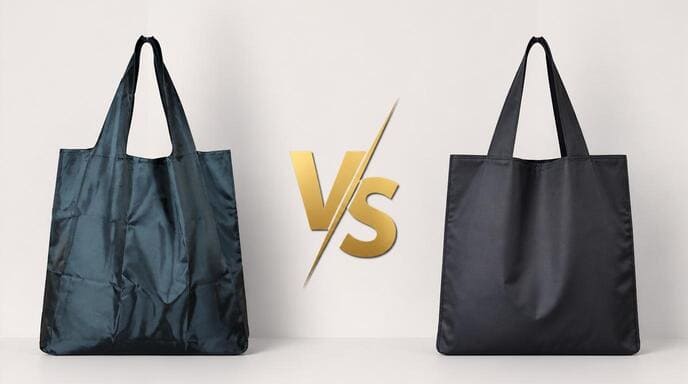
Deciding between a nylon bag and a polyester bag for your custom needs can feel overwhelming. Both offer durability and versatility, but understanding their core differences is key to selecting the perfect fit for your brand and application. As a nylon bags manufacturer and polyester bags manufacturer with extensive experience, I've seen firsthand how the right material can elevate a product. Let's break down the advantages of each to help you make an informed choice for your next batch of custom bags.
Generally, nylon bags offer superior softness, abrasion resistance, and a premium feel, making them ideal for high-end promotional items or demanding applications. Polyester bags, conversely, are more budget-friendly, UV-resistant, and dimensionally stable, making them a great choice for large-scale promotional campaigns and everyday shopping bags.
Choosing the right fabric is more than just a material decision; it's a strategic one that impacts your brand's image, your budget, and the user's experience. By understanding the nuances of nylon and polyester, you can ensure your custom polyester bags or custom nylon bags perfectly meet your objectives.
What Is a Nylon Bag?
A nylon bag is constructed from synthetic polyamide fibers known for their exceptional strength, elasticity, and durability1. Nylon was one of the first truly synthetic fibers, developed in the 1930s2, and quickly found uses in everything from hosiery to industrial applications due to its unique properties. In bag manufacturing, nylon offers a premium feel and robust performance.
Nylon Material Overview
Nylon, chemically known as polyamide (PA), is a thermoplastic silky material that can be manufactured into fibers, films, or solid shapes.3 Its production involves linking repeating molecular units, which gives it its characteristic strength and resilience. For fabric bags, different weights and weaves are used to achieve specific textures and strengths.
Common nylon fabric specifications you might encounter include:
- Nylon 210D: A lightweight yet strong option, often used for drawstring bags or liners where flexibility and low weight are crucial. The 'D' stands for denier, a measure of fiber thickness.4
- Nylon 420D: Offers a good balance of strength and weight, suitable for durable tote bags and smaller backpacks.
- Nylon 600D: A popular choice for rugged applications like durable promotional bags, luggage, and heavy-duty backpacks, offering excellent abrasion resistance.
- Nylon ripstop: This weave incorporates a special reinforcing technique that makes it resistant to tearing and ripping5, making it ideal for high-stress outdoor gear.
Characteristics of Nylon Bags
When you choose a nylon bag, you're opting for a material that brings several distinct advantages to the table. Its unique properties make it a favored choice for many applications where performance and aesthetics are paramount.
Key Traits of Nylon Bags
- High abrasion resistance6: Nylon fibers are incredibly tough and resistant to wear and tear from friction. This makes custom nylon bags ideal for items that will see a lot of handling or rubbing.
- Soft and smooth texture: Compared to many polyester fabrics, nylon often has a softer, silkier feel, contributing to a more luxurious perceived value.
- Lightweight: Despite its strength, nylon is surprisingly light. This is a significant advantage for travel gear, backpacks, and any item where reducing overall weight is beneficial.
- Good tear strength: Nylon exhibits excellent resistance to tearing7, meaning it's less likely to rip or snag catastrophically.
- Premium appearance: The inherent sheen and smooth texture of nylon often give it a more upscale look and feel compared to polyester, making it perfect for premium custom bags.
Common Applications for Nylon Bags
The superior qualities of nylon lend themselves to a wide array of applications, particularly where durability and a refined look are desired. As a nylon bags manufacturer, we see these materials used in some demanding scenarios.
From travel companions to everyday essentials, nylon excels:
- Travel bags: Suitcases, duffel bags, and carry-ons benefit from nylon's light weight and resilience.
- Backpacks: Hiking, school, and everyday backpacks often use nylon for its strength and comfort.
- Sports bags: Gym bags and gear bags need to withstand rough use, making nylon a logical choice.
- Drawstring bags: Lightweight and flexible, nylon drawstring bags are popular for promotional giveaways and casual use.
- Outdoor bags: Tents, sleeping bag stuff sacks, and high-performance backpacks utilize nylon's durability and water resistance.
- Premium promotional bags: For brands seeking a high-end image, custom nylon totes or briefcases make a sophisticated statement.
What Is a Polyester Bag?
A polyester bag is made from synthetic polymer fibers derived from petroleum. Polyester is one of the most common materials used globally for textiles8, valued for its versatility, durability, and cost-effectiveness. It's a workhorse material for various types of fabric bags, offering a reliable option for many needs.
Polyester Material Overview
Polyester, specifically polyethylene terephthalate (PET), is known for its strength, wrinkle resistance, and dimensional stability9. It's a widely used synthetic fabric because it can be manufactured to mimic the feel of natural fibers while offering superior performance in many areas. For reusable bags, polyester is a prevalent choice.
Typical polyester fabric specifications include:
- Polyester 210D: A lighter weight option, often used for lining or very lightweight promotional items.
- Polyester 300D: Offers a good blend of durability and flexibility, suitable for many types of promotional bags and event giveaways.
- Polyester 420D: Provides increased strength and durability over 300D, making it a good choice for shopping bags and tote bags that need to carry more weight.
- Polyester 600D: One of the most popular weights for durable bags like tote bags, backpacks, and cooler bags, offering excellent value for money and good wear resistance.
Characteristics of Polyester Bags
Polyester bags are a popular choice for custom orders due to a range of practical characteristics that meet the needs of many businesses and events. Its balanced properties make it a reliable go-to material.
Key Traits of Polyester Bags
- Strong dimensional stability: Polyester fabrics are less prone to stretching or shrinking when wet or dry, maintaining their shape well over time.
- Better UV resistance: Compared to nylon, polyester generally holds up better against prolonged exposure to sunlight, making it a good choice for items used outdoors or frequently displayed.
- Lower cost: Polyester is typically more economical to produce than nylon, making it a highly cost-effective option, especially for large volume orders. This is a significant factor for polyester bags manufacturer companies looking to offer competitive pricing.
- Easy printing: Polyester surfaces readily accept various printing techniques, allowing for vibrant and detailed designs, particularly with methods like sublimation.
- Good durability: While not as abrasion-resistant as high-end nylon, polyester is still a very durable material, capable of withstanding regular use without significant degradation.
Common Applications for Polyester Bags
The cost-effectiveness, durability, and printing capabilities of polyester make it an incredibly versatile material for a vast range of custom bag applications. It’s a staple for many types of custom bags.
Polyester is found in many everyday and promotional items:
- Shopping bags: Cost-effective and durable, making them ideal for retail use and brand promotion.
- Promotional bags: A go-to choice for giveaways, conferences, and marketing campaigns due to affordability and printability.
- Cooler bags: Polyester's structure and ability to accept coatings make it suitable for insulated bags.
- Cosmetic bags: Its stability and ease of cleaning are beneficial for makeup and toiletry bags.
- Packaging bags: Used for various retail and product packaging needs.
- Event giveaway bags: An economical way to provide branded bags at events of any scale.
Nylon Bag vs Polyester Bag: Key Differences
When choosing between nylon and polyester for your custom bags, understanding their material performance, durability, water resistance, printing capabilities, and cost is crucial. As a custom bags supplier, we help clients navigate these differences daily to find the best fit for their unique project needs.
1. Material Performance Comparison
Here’s a breakdown of how nylon and polyester fabrics stack up against each other in key performance metrics:
| Feature | Nylon Bag | Polyester Bag |
|---|---|---|
| Strength | Higher tensile strength | Strong and dimensionally stable |
| Abrasion Resistance | Excellent | Good |
| Softness | Softer, silkier feel | Slightly stiffer, can vary with weave |
| Weight | Lighter | Slightly heavier for comparable denier |
| Shape Retention | Average (can stretch slightly when wet) | Better (less prone to stretching/shrinking) |
| UV Resistance | Moderate (can degrade over time with sun) | Better (more resistant to UV damage) |
| Cost | Higher raw material cost | More affordable |
- Insight: For applications demanding extreme durability against friction and a premium feel, nylon bags often have an edge. For everyday use where UV exposure and stable shape are key, polyester bags can be more practical.
2. Durability and Lifespan
The long-term performance of a bag is a critical consideration, especially for reusable bags intended for frequent use. Both nylon and polyester offer good durability, but their strengths lie in different areas.
Nylon Bags: Built for Rigor
Nylon fibers are naturally more flexible and resilient. This characteristic gives nylon bags superior resistance against repeated bending and friction. This makes them exceptionally well-suited for heavy-duty applications and demanding outdoor use where bags might be dragged, scraped, or stressed repeatedly. Think of rugged backpacks or durable travel gear; nylon is often the material of choice. Its inherent toughness means a nylon bag can often last longer under harsh conditions.
Polyester Bags: Enduring Stability
Polyester bags, while very durable, are known for maintaining their shape better over time. They are less affected by moisture and temperature fluctuations, which contributes to their dimensional stability. Crucially, polyester exhibits better resistance to sunlight degradation than nylon. This makes polyester bags a solid choice for long-term daily use, such as shopping bags or promotional totes that will be exposed to the elements or displayed for extended periods.
Conclusion: If your primary concern is resistance to heavy friction and repeated flexing, a nylon bag offers an advantage. For applications where consistent shape and resistance to sunlight are paramount for long-term daily use, a polyester bag is often the better performer.
3. Water Resistance and Protection
Protecting contents from moisture is a vital function for many types of bags. Both nylon and polyester offer some degree of water resistance, which can be enhanced through various treatments.
Nylon Bags: Naturally Resilient
Nylon naturally possesses low water absorption properties.10 When it does get wet, it doesn't become excessively heavy or lose much strength.11 Furthermore, nylon's surface can be effectively treated with coatings to achieve excellent waterproof or water-resistant performance. This makes custom nylon bags a great option when you need reliable protection against rain or spills, especially for travel or outdoor gear.
Polyester Bags: Enhanced Moisture Barrier
Polyester is naturally more moisture-resistant than many other fabrics and absorbs very little water.12 It dries quickly and maintains its integrity even when damp.13 For applications requiring a high level of waterproofing, polyester is frequently used with various coatings.
Common Protective Treatments:
PU Coating (Polyurethane): Applied to the inside or outside of the fabric, PU coating creates a barrier that significantly improves water resistance and can add structure.14 Many cooler bags and outdoor gear bags use PU-coated polyester or nylon.
PVC Coating (Polyvinyl Chloride): A thicker, more rigid coating that offers excellent waterproofing and durability, though it can be less flexible than PU.
Laminated Fabric: A layer of film (like plastic or TPU) is bonded to the fabric, creating a highly effective waterproof barrier. This is common for food packaging bags or highly specialized waterproof gear.
Insight: Both materials can be made very water-resistant. The choice might depend on the specific type of coating required and the overall feel desired for the fabric bags.
4. Printing and Customization Options
The ability to display vibrant logos, graphics, and branding is often a primary goal for custom bags. Both nylon and polyester offer excellent customization opportunities, but they suit different printing methods and aesthetic outcomes.
Nylon Bag Printing
Nylon's smooth, often slightly glossy surface provides a high-quality base for printing.
- Suitable Printing Methods:
- Screen Printing: Ideal for simple, bold logos and text, offering good durability.
- Heat Transfer: Allows for multi-color designs and photographic images, transferring ink from a film to the fabric.
- Embroidery: Adds a premium, tactile dimension, perfect for upscale branding on custom nylon bags.
- Digital Printing: Increasingly used for complex, full-color designs with shorter runs.
- Advantages: The premium texture of nylon complements high-end printing, making it suitable for luxury branding and sophisticated promotional bags.
Polyester Bag Printing
Polyester's versatility and cost-effectiveness extend to its printing capabilities, offering a wide range of options for achieving vibrant and detailed designs.
- Suitable Printing Methods:
- Screen Printing: Widely used for its cost-effectiveness and durability on larger runs.
- Sublimation Printing: This is where polyester truly shines. Dyes are transferred into the fabric under heat and pressure, creating incredibly vibrant, full-color, edge-to-edge graphics that won't fade or peel. This is excellent for detailed patterns and complex artwork on custom polyester bags.
- Heat Transfer: Similar to nylon, it allows for detailed graphics.
- Digital Printing: A flexible option for various designs.
- Advantages: Polyester offers more printing flexibility, especially with sublimation, allowing for more colorful patterns and intricate designs at a competitive price point, making it ideal for mass-produced promotional bags and shopping bags.
5. Cost Comparison: Nylon vs Polyester Bags
Cost is almost always a significant factor in bulk custom orders. When comparing nylon and polyester, polyester generally holds the advantage in affordability.
Nylon Bags: Performance Comes at a Price
- Advantages:
- Higher performance: Superior strength, abrasion resistance, and a premium feel justify the higher cost for certain applications.
- Premium feeling: The texture and look often convey higher perceived value.
- Limitations:
- Higher raw material cost: Nylon fibers and their processing are typically more expensive than polyester. This leads to a higher per-unit cost for nylon bags.
Polyester Bags: Budget-Friendly Bulk
- Advantages:
- More affordable: Polyester raw materials are less expensive, making it a more economical choice for large quantities.15 This is a key advantage for polyester bags manufacturer operations focused on high-volume production.
- Better price control for bulk orders: The lower material cost allows for more competitive pricing on large orders of custom polyester bags.
- Limitations:
- Less luxurious hand feel: While durable, polyester may not offer the same soft, premium feel as high-quality nylon.
Wholesale Buying Considerations
When placing a wholesale order for either custom nylon bags or custom polyester bags, several factors influence the final price and quality:
- Material thickness (Denier): Higher denier numbers generally mean thicker, stronger, and more expensive fabric.16 A 600D polyester bag will be more robust and costly than a 210D nylon bag.
- Fabric density (Weave): Tightly woven fabrics are stronger and more durable.
- Printing method: Complex multi-color prints, embroidery, or sublimation will increase costs.
- Bag structure: Features like extra pockets, reinforced handles, zippers, or complex stitching add to manufacturing costs.
- Order quantity: As with most custom manufacturing, larger order quantities significantly reduce the per-unit cost. This is especially true for economical materials like polyester.
6. Nylon Bag vs Polyester Bag for Different Applications
The best material often depends entirely on the intended use of the bag. Here’s a guide based on common scenarios:
Best Choice for Outdoor Bags
- Winner: Nylon
- Reasons: Its lightweight nature is crucial for hikers and campers. High abrasion resistance and good tear strength ensure durability against rough terrain and repeated use.17 Its flexibility also allows it to pack down easily. Nylon bags manufacturers often recommend it for serious outdoor gear.
Best Choice for Promotional Bags
- Winner: Polyester
- Reasons: The lower cost makes it ideal for mass distribution at events and marketing campaigns. Its ease of printing, especially with vibrant sublimation, allows for eye-catching branding. Polyester’s durability ensures the promotional bags get used repeatedly, extending brand visibility.
Best Choice for Shopping Bags
- Winner: Polyester
- Reasons: Cost-effectiveness is key for retail shopping bags. Polyester’s durability handles daily use and the weight of groceries well. Its stable shape and UV resistance mean the bags will look good for a long time, promoting the brand consistently.
Best Choice for Premium Custom Bags
- Winner: Nylon
- Reasons: The superior texture, lighter weight, and more upscale appearance of nylon elevate the perceived value of the bag. This is essential for high-end merchandise packaging, luxury brand promotions, or executive giveaways where sophistication is paramount.
Nylon vs Polyester: Which One Is More Sustainable?
In today's market, sustainability is a critical factor for many brands and consumers. Both nylon and polyester are synthetic, petroleum-based materials, which present environmental challenges. However, advancements in manufacturing and material sourcing are making both options more eco-friendly.
Nylon Bags: A Durable, Recyclable Option
- Synthetic fiber: Like polyester, nylon originates from petroleum-based materials.
- Recycled Nylon: While less common and often more expensive than recycled polyester, options for recycled nylon are emerging. These can significantly reduce the environmental footprint.
- Longer lifespan: The exceptional durability of nylon bags means they can last for many years, reducing the frequency of replacement and thus lowering overall consumption and waste.
Polyester Bags: The Recycled Champion
- Recycled Polyester (RPET): This is where polyester shines in sustainability. RPET bags are made from recycled plastic bottles, diverting waste from landfills and oceans. This is a widely available and cost-effective eco-friendly option.
- Easier to source recycled materials: The infrastructure for recycling PET plastic into fabric is well-established, making recycled polyester bags a readily accessible choice for businesses looking for sustainable reusable bags.
- Common choice for eco-friendly promotional bags: Many companies opt for RPET bags for their environmental credentials and excellent printing capabilities, making them a popular choice for green marketing initiatives.
Insight: While both materials have synthetic origins, the widespread availability and cost-effectiveness of recycled polyester make RPET bags a leading choice for environmentally conscious brands seeking sustainable reusable bags. However, the inherent longevity of high-quality nylon also contributes to its sustainability profile by reducing replacement needs.
How to Choose Between Nylon Bags and Polyester Bags?
Selecting the right material for your custom bags boils down to prioritizing your needs. After years of working with clients to produce a vast range of custom bags, I've found these decision points are usually the most critical.
Choose Nylon Bags If You Need:
✔ Premium appearance: For a sophisticated, upscale look and feel. ✔ Lightweight design: Essential for travel, sports gear, or when minimizing weight is a priority. ✔ High abrasion resistance: For bags that will undergo significant wear and tear, like heavy-duty backpacks or luggage. ✔ Outdoor performance: Durability and flexibility make it suitable for demanding outdoor applications. ✔ Long-term durability: When the bag is intended for very frequent, heavy use over many years.
Choose Polyester Bags If You Need:
✔ Cost-effective production: For budget-conscious projects and large order volumes. ✔ Large quantity orders: When mass production and affordability are key drivers. ✔ Custom printing flexibility: Especially for vibrant, full-color graphics and detailed patterns (sublimation). ✔ Stable quality: Reliability in terms of shape retention and resistance to UV and moisture for everyday use. ✔ Promotional packaging: A practical and economical choice for brand visibility and giveaways.
Frequently Asked Questions
What is the main difference between nylon and polyester bags?
Nylon bags are generally softer, lighter, and more abrasion-resistant, offering a premium feel. Polyester bags are more rigid, UV-resistant, and budget-friendly, making them ideal for large-scale promotions.
Which material is more durable for bags?
Both are durable, but nylon excels in resistance to abrasion and repeated flexing, making it ideal for heavy-duty use. Polyester offers better shape retention and UV resistance for long-term daily exposure.
Are nylon bags waterproof?
Nylon itself has low water absorption. However, most nylon bags achieve excellent water resistance through coatings like PU or PVC, making them highly protective for contents.
Can polyester bags be printed with colorful designs?
Yes, polyester is excellent for printing. Techniques like sublimation allow for vibrant, full-color, edge-to-edge designs that are durable and won't peel or fade, making them perfect for eye-catching promotional items.
Which material is more sustainable for custom bags?
While both are synthetic, recycled polyester (RPET) is widely available and cost-effective, making RPET bags a strong sustainable choice. The longevity of durable nylon bags also contributes to sustainability by reducing the need for frequent replacement.
Conclusion
Ultimately, the choice between a nylon bag and a polyester bag hinges on your specific requirements and priorities. If you're aiming for a premium feel, exceptional abrasion resistance, and lightweight performance for demanding applications, nylon is often the superior choice. For budget-conscious projects, vibrant full-color printing, excellent UV resistance, and stable shape retention for widespread promotional use, polyester presents a compelling and practical solution. As manufacturers, we understand that both custom nylon bags and custom polyester bags play vital roles in branding and functionality.
At 浙江佳荣包装股份有限公司 (Zhejiang Jiarong Packaging Co., Ltd.) and our international platform 温州佳容国际贸易有限公司 (Wenzhou Jiarong International Trade Co., Ltd.) under the brand ecobaggo, we pride ourselves on being a leading custom bags supplier. We offer a comprehensive range of fabric bags crafted from various materials, including high-quality nylon and polyester, with extensive OEM/ODM customization options. Whether you need durable drawstring bags, eye-catching promotional bags, reliable shopping bags, or premium reusable bags, our expertise ensures you receive products that meet your exact specifications and exceed your expectations. Contact us today to discuss your next custom bag project and let us help you find the perfect material and design to elevate your brand!
"A comparative study of mechanical performance ...", https://scholarsjunction.msstate.edu/cgi/viewcontent.cgi?article=1057&context=td. A polymer or textile materials reference describes nylon as a family of synthetic polyamides and documents its relatively high strength, elasticity, and durability as fiber properties. Evidence role: definition; source type: education. Supports: Nylon bags are made from synthetic polyamide fibers associated with strength, elasticity, and durability.. Scope note: Property values vary by nylon type, filament form, weave, denier, and finishing treatment. ↩
"Nylon-6 | fibre", https://www.britannica.com/topic/nylon-6. A historical reference on nylon records its development by DuPont chemists in the 1930s and its status as an early fully synthetic fiber. Evidence role: historical_context; source type: encyclopedia. Supports: Nylon was among the first fully synthetic fibers and was developed in the 1930s.. ↩
"Process Factors in Long-Fiber Thermoplastic Compression ...", https://pmc.ncbi.nlm.nih.gov/articles/PMC13074948/. A polymer reference defines nylon as a thermoplastic polyamide and notes that it can be processed into fibers, films, and molded solid articles. Evidence role: definition; source type: encyclopedia. Supports: Nylon is a thermoplastic polyamide that can be manufactured into fibers, films, or solid shapes.. Scope note: The description applies broadly to nylon/polyamide materials, not specifically to every bag-grade nylon fabric. ↩
"Units of textile measurement", https://en.wikipedia.org/wiki/Units_of_textile_measurement. A textile glossary defines denier as a unit expressing the linear mass of fibers or yarns, commonly used to indicate relative fiber or yarn fineness. Evidence role: definition; source type: institution. Supports: The “D” in fabric specifications stands for denier, a measure related to fiber or yarn thickness.. Scope note: Denier is technically a mass-per-length measure, so it approximates thickness only when comparing fibers of similar density and construction. ↩
"What Does “Tear Resistant” Really Mean in Workwear Fabrics?", https://ripstopfabric.com/tear-resistant-workwear-fabric-meaning/. A textile or outdoor-materials reference explains that ripstop fabrics use a reinforced grid of stronger yarns to reduce propagation of tears. Evidence role: mechanism; source type: education. Supports: Ripstop weave uses reinforcement to improve resistance to tearing and ripping.. Scope note: Ripstop construction improves tear propagation resistance but does not make fabric tear-proof; performance depends on yarn, denier, and coating. ↩
"Understand Your Fibers | Textiles", https://site.extension.uga.edu/textiles/textile-basics/understand-your-fibers/. A comparative textile materials source reports that nylon fibers generally show high abrasion resistance, supporting their use in products exposed to repeated friction. Evidence role: general_support; source type: education. Supports: Nylon bags benefit from nylon fibers’ high abrasion resistance.. Scope note: Abrasion resistance in finished bags is affected by fabric weave, denier, coatings, and test method, so the source supports the general material tendency rather than every nylon bag. ↩
"Polyamide vs. Nylon: Key Differences, Strengths, and Best ...", https://additiveplus.com/polyamide-vs-nylon-key-differences-strengths-and-best-uses/?srsltid=AfmBOopSKyk_sbjh1VIod6cbj1nsVIXGA12kJT98JW9gFJKq7IFs0D5J. A textile engineering reference discussing nylon fiber properties identifies nylon as having high toughness and tear resistance relative to many textile fibers. Evidence role: general_support; source type: education. Supports: Nylon fabric can exhibit strong tear resistance, making it less prone to ripping under stress.. Scope note: The claim is strongest for comparable fabrics; actual tear strength depends on yarn size, weave, fabric weight, seams, and finishing. ↩
"Cotton: World Markets and Trade - USDA", https://esmis.nal.usda.gov/sites/default/release-files/kp78gg36g/69700t67w/rn302v99j/cotton.pdf. An international textile or fiber-market source reports polyester as the dominant or most widely produced textile fiber, supporting the claim of its global prevalence in textiles. Evidence role: statistic; source type: institution. Supports: Polyester is among the most common textile materials globally.. Scope note: Market share figures change by year and may measure fiber production rather than bag-specific fabric use. ↩
"Performance Properties in Fibers and Fabrics", https://d24-h.tamu.edu/files/2023/02/D2D-Performance-Properties-in-Fibers-and-Fabrics-Copy.pdf. A textile science source describes polyester fibers as strong, resistant to wrinkling, and relatively dimensionally stable, which explains their common use in durable fabrics. Evidence role: general_support; source type: education. Supports: Polyester is associated with strength, wrinkle resistance, and dimensional stability.. Scope note: The source supports inherent polyester fiber tendencies; finished-bag behavior depends on fabric construction, coatings, and manufacturing quality. ↩
"Mid-infrared emissivity of nylon, cotton, acrylic, and ...", https://research.cec.sc.edu/files/asc/files/documents/belliveau-et-al-2019-mid-infrared-emissivity-of-nylon-cotton-acrylic-and-polyester-fabrics-as-a-function-of-moisture.pdf. A textile science reference on polyamide fibers reports nylon’s moisture regain and water absorption as relatively low compared with hydrophilic natural fibers, supporting the characterization of nylon as low-absorption. Evidence role: definition; source type: education. Supports: Nylon naturally possesses low water absorption properties.. Scope note: Values vary by nylon type, fabric construction, and finishing treatment. ↩
"Nylon Structure vs. Water Absorption", https://madisongroup.com/nylon-structure-vs-water-absorption/. A materials or textile engineering source comparing nylon’s wet and dry tensile properties would support the claim that nylon retains much of its strength when wet and has limited water uptake. Evidence role: mechanism; source type: paper. Supports: Nylon does not become excessively heavy or lose much strength when wet.. Scope note: The degree of strength retention and weight change depends on nylon grade, fabric density, and duration of water exposure. ↩
"Increased Comfort of Polyester Fabrics", https://upcommons.upc.edu/bitstreams/be48fd46-81f1-4817-9c39-a18660766900/download. A textile fiber reference giving polyester’s low moisture regain supports the claim that polyester absorbs little water and is relatively moisture resistant among common fabrics. Evidence role: definition; source type: education. Supports: Polyester is naturally moisture-resistant and absorbs very little water.. Scope note: The comparison depends on which fabrics are included; polyester is most clearly lower-absorption than cotton, wool, and many other natural fibers. ↩
"Increased Comfort of Polyester Fabrics - PMC", https://pmc.ncbi.nlm.nih.gov/articles/PMC8433904/. A textile engineering source describing polyester’s hydrophobicity and dimensional stability would support the statement that polyester dries relatively quickly and retains performance when damp. Evidence role: mechanism; source type: education. Supports: Polyester dries quickly and maintains integrity when damp.. Scope note: Drying time also depends on fabric thickness, weave, airflow, and finishing treatments, not only fiber chemistry. ↩
"Bio-Based Healable 2K PU Textile Coating for Durable ... - PMC", https://pmc.ncbi.nlm.nih.gov/articles/PMC9570760/. A textile coatings reference explaining polyurethane-coated fabrics would support that PU layers act as water-resistant barriers and can alter fabric hand or stiffness. Evidence role: mechanism; source type: education. Supports: PU coating improves fabric water resistance and can add structure.. Scope note: Actual waterproof performance depends on coating thickness, formulation, seam construction, and test standard. ↩
"Polyester Fiber Market Prices", https://www.emergingtextiles.com/fiber-market-prices/polyester-fiber-market-prices/. A market or industry statistical source comparing polyester and nylon fiber prices would support the claim that polyester is generally lower-cost than nylon in bulk textile applications. Evidence role: statistic; source type: institution. Supports: Polyester raw materials are generally less expensive than nylon, making polyester more economical for large-volume orders.. Scope note: Fiber prices fluctuate by region, petroleum feedstock costs, grade, and contract timing; evidence should be treated as market-context support rather than a universal price rule. ↩
"Physical Testing - Textile Technology Center", https://www.gaston.edu/textile-technology-center/product-testing/physical-testing/. A textile measurement reference defining denier as mass per unit length would support that higher denier yarns are generally heavier and often used for thicker, stronger fabrics. Evidence role: definition; source type: education. Supports: Higher denier numbers generally indicate thicker, heavier yarns and often stronger, costlier fabrics.. Scope note: Strength and cost also depend on polymer type, weave, yarn quality, finishing, and manufacturing volume, so denier alone does not determine performance or price. ↩
"Highly Soft, Abrasion-Resistant, and Moisture-Absorbent Wool ...", https://pmc.ncbi.nlm.nih.gov/articles/PMC11281004/. A textile performance study or outdoor-materials reference reporting nylon’s abrasion and tear resistance would support the use of nylon in applications exposed to repeated rubbing and mechanical stress. Evidence role: general_support; source type: paper. Supports: Nylon’s abrasion resistance and tear strength make it suitable for durable outdoor bags.. Scope note: The evidence would support nylon’s material suitability in context, not prove that every nylon bag will outperform every polyester bag, because fabric weight and construction matter. ↩