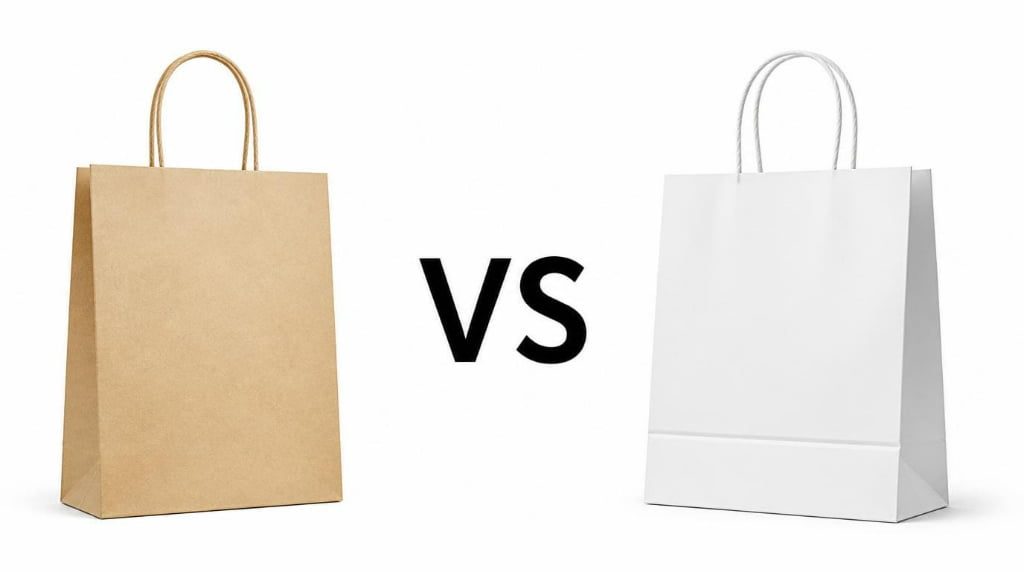
Many buyers have recently noticed a new type of paper shopping bag with a cleaner, more modern appearance. Unlike traditional folded paper bags, it has no visible side seam and features a one-piece integrated bottom. Because this manufacturing technology is still relatively new, many buyers naturally ask the same question: What is a seamless paper bag, and how is it different from a traditional folded paper bag?
A seamless paper bag is a fully machine-made paper bag with no visible side seam (also called a waistline) and a one-piece integrated bottom. Traditional folded paper bags are produced by folding and gluing multiple paper sections together. Although both serve the same purpose, they use different manufacturing methods and are suitable for different packaging needs.
This guide explains what seamless paper bags are, how they are manufactured, why they were developed, and how they compare with traditional folded paper bags in appearance, structure, production, customization, and applications.
What Is a Seamless Paper Bag?
Many buyers assume a seamless paper bag is simply a premium version of a traditional paper bag or believe "seamless" means it is made without glue. Neither assumption is correct.
A seamless paper bag is produced by a dedicated forming machine. Its defining features are a smooth exterior with no visible side seam and a one-piece integrated bottom formed during the manufacturing process.
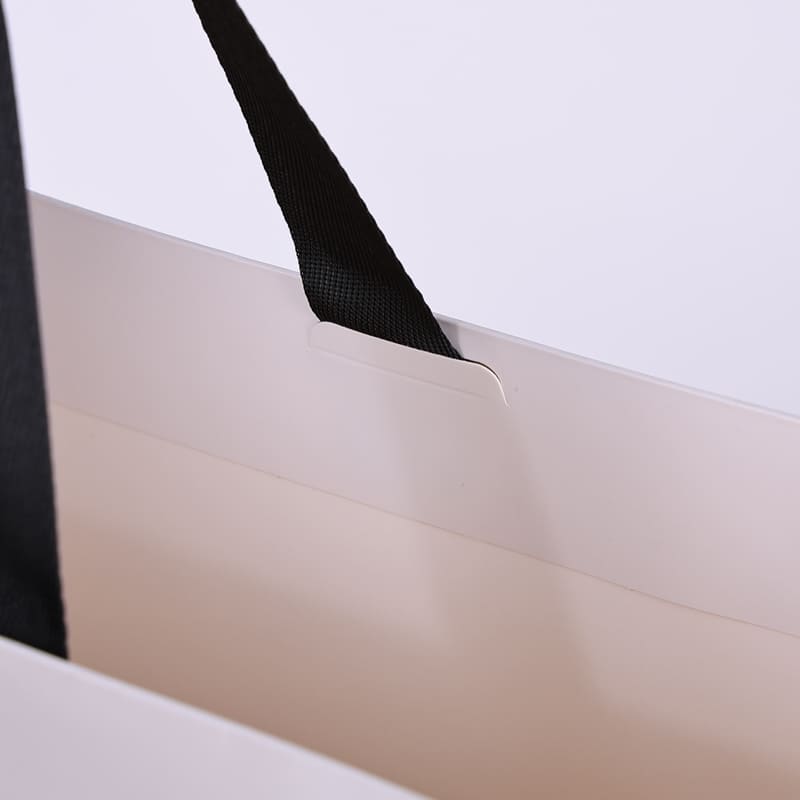
Unlike traditional folded paper bags, the bag body is formed automatically rather than assembled from multiple folded sections. This creates a cleaner appearance and more consistent product quality.
Although the bag is called "seamless," hot melt adhesive is still used. The difference is that the adhesive remains hidden inside the structure instead of creating an exposed side joint.
As this technology has only become commercially available in recent years, seamless paper bags are mainly used for premium retail packaging, fashion shopping bags, cosmetics packaging, gift bags, and other applications where appearance and consistency are important.
Main Characteristics
- No visible side seam (waistline)
- One-piece integrated bottom
- Fully machine-made production
- Hidden hot melt bonding
- Clean, modern appearance
- High production consistency
| Feature | Seamless Paper Bag |
|---|---|
| Side seam | No visible seam |
| Bottom | One-piece integrated bottom |
| Manufacturing | Fully automated |
| Bonding | Hidden hot melt adhesive |
| Appearance | Clean and modern |
| Production consistency | Very high |
Rather than replacing traditional paper bags, seamless paper bags provide another manufacturing option for brands seeking a premium appearance and highly standardized production.
Why Is It Called a Seamless Paper Bag?
The word "seamless" often causes confusion because it usually describes fabrics. In paper packaging, however, it simply refers to the bag's appearance.
A seamless paper bag has no visible vertical side seam on the outside of the finished bag.
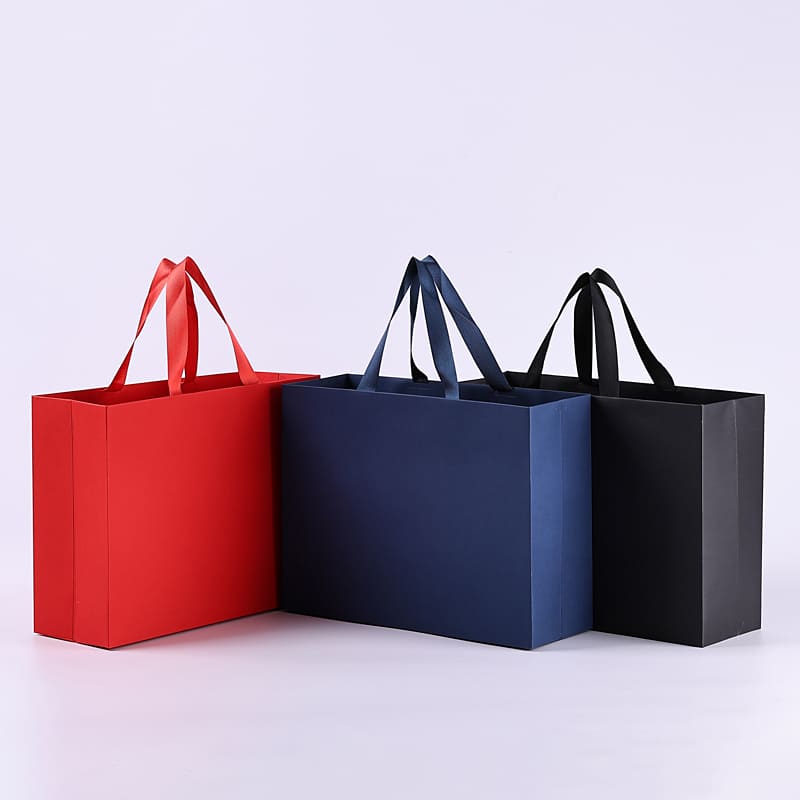
Traditional folded paper bags normally have a glued overlap running down one side of the bag body. This visible joint is often called the waistline in the paper bag industry.
By eliminating this exposed joint, seamless paper bags create a cleaner and more continuous exterior.
This also improves printing presentation.
- Large graphics remain uninterrupted.
- Logos are not divided by a side seam.
- Full-panel artwork looks cleaner.
- The finished package appears more premium.
These visual advantages are one reason seamless paper bags are becoming increasingly popular in luxury retail, fashion, cosmetics, jewelry, and gift packaging.
Why Were Seamless Paper Bags Developed?
Traditional folded paper bags remain one of the most widely used packaging solutions in the world. Seamless paper bags were developed not to replace them, but to meet new market demands.
As brands place greater emphasis on packaging quality and automation, manufacturers have introduced new production technologies that deliver cleaner appearance and greater consistency.
Several trends have driven their adoption.
Premium Packaging
Luxury and premium brands increasingly prefer packaging with a simple, refined appearance.
Removing the visible side seam creates a cleaner shopping bag that better reflects premium branding.
Automated Manufacturing
Modern forming machines produce bags under highly controlled conditions, improving dimensional accuracy and overall consistency.
Efficient Large-Volume Production
Once production equipment has been adjusted, the machine can produce large quantities of identical bags efficiently, making seamless paper bags ideal for repeat orders.
Better Printing Presentation
Without a visible side seam interrupting the surface, large logos, photographs, and full-panel graphics can be displayed more naturally.
| Market Trend | Benefit |
|---|---|
| Premium branding | Cleaner appearance |
| Automation | Stable product quality |
| Large-volume production | Higher efficiency |
| Premium printing | Better graphic continuity |
| Modern retail packaging | Stronger brand image |
Seamless paper bags have become popular because advances in manufacturing now allow brands to achieve both premium appearance and highly consistent production.
How Are Seamless Paper Bags Made?
Although seamless paper bags look similar to traditional paper bags, their manufacturing process is completely different.
Instead of folding and gluing multiple paper sections together, a dedicated forming machine automatically creates the bag body and forms the integrated bottom in one continuous production process.
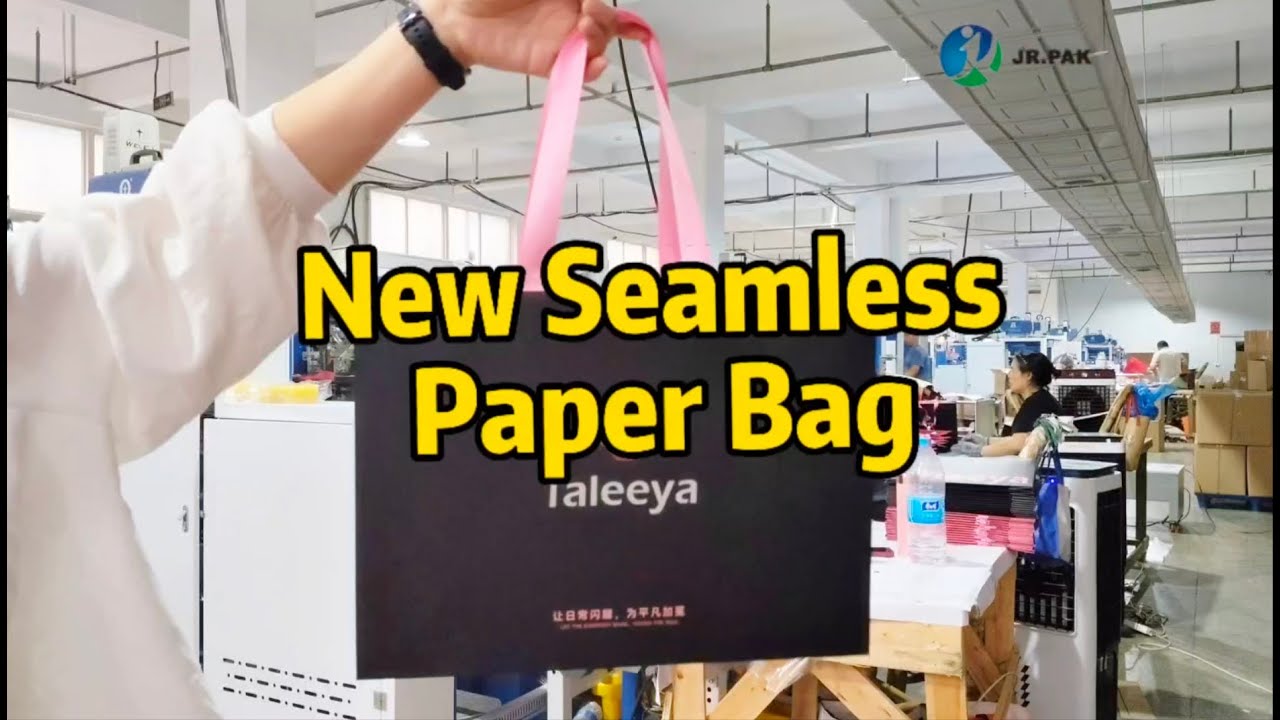
Watch the seamless paper bag production process on YouTube.
Unlike many paper converting machines that use paper rolls, seamless paper bags are produced from pre-cut paper sheets stacked in piles. This allows accurate positioning before forming begins.
Before production starts, technicians adjust the machine according to the required bag size, paper thickness, bottom dimensions, and glue position. After setup, the machine produces large quantities of bags with excellent consistency.
Step 1. Machine Setup
Operators adjust the machine according to the customer's specifications, including:
- Bag width
- Bag height
- Bottom dimensions
- Paper thickness
- Glue position
- Feeding accuracy
Proper setup ensures stable production throughout the order.
Step 2. Automatic Sheet Feeding
The machine automatically feeds stacked paper sheets one by one.
Compared with roll-fed production, this method provides precise positioning and stable print alignment.
Step 3. Bag Body Forming
Each sheet is automatically formed into a bag body without creating the exposed overlapping side seam found on traditional folded paper bags.
Step 4. Hot Melt Bonding
The machine automatically applies hot melt adhesive to internal bonding areas with precise control, ensuring reliable bonding while maintaining a clean exterior.
Step 5. Integrated Bottom Forming
The bottom is formed as a one-piece integrated structure during the automated process instead of being assembled from several folded flaps.
This design contributes to the bag's clean appearance and balanced load distribution.
Step 6. Finished Bag Output
After forming, the finished bags are discharged for inspection before moving to handle attachment, quality inspection, or packaging.
Manufacturing Summary
| Production Step | Description |
|---|---|
| Machine setup | Configure machine parameters |
| Sheet feeding | Feed stacked paper sheets |
| Body forming | Form the bag body |
| Hot melt bonding | Apply internal adhesive |
| Bottom forming | Form integrated bottom |
| Finished output | Inspection and next process |
Compared with traditional folding methods, this automated process reduces manual operations while delivering excellent consistency for large production runs.
What Is a Traditional Folded Paper Bag?
Traditional folded paper bags have been the industry standard for decades and are still widely used in retail, supermarkets, restaurants, bakeries, gift shops, and many other industries.
Unlike seamless paper bags, traditional folded paper bags are manufactured by folding and gluing multiple sections of paper to form both the bag body and the bottom.
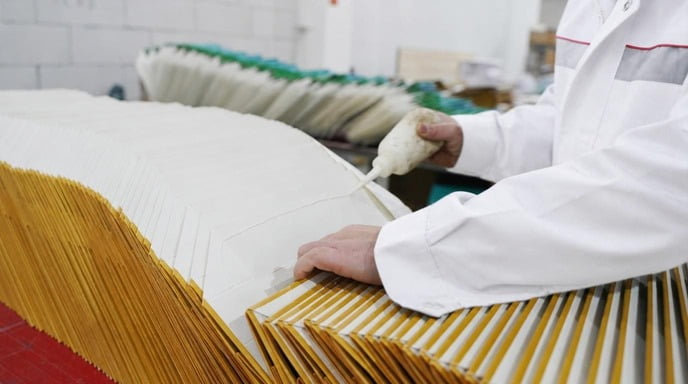
Modern equipment can automate much of the process, but the bag is still created through a series of folding and bonding operations.
A typical production process includes:
- Paper cutting
- Creasing
- Body folding
- Side seam gluing
- Bottom folding
- Bottom bonding
- Handle attachment
- Final inspection
Because this manufacturing method has been refined over many years, it supports a wide range of sizes, structures, and custom designs.
Main Characteristics
- Visible side seam
- Folded and glued bottom
- Mature manufacturing technology
- Excellent size flexibility
- Suitable for small production runs
- Easy customization
| Feature | Traditional Folded Paper Bag |
|---|---|
| Side seam | Visible |
| Bottom | Folded and glued |
| Manufacturing | Folding and gluing process |
| Size flexibility | Excellent |
| Small orders | Suitable |
| Custom structures | Easy to produce |
Traditional folded paper bags remain the preferred choice for many custom projects because of their flexibility and proven manufacturing process.
Appearance Comparison
The most obvious difference between these two paper bags is their appearance.
Side Seam
A seamless paper bag has a smooth exterior with no visible vertical side seam.
Traditional folded paper bags include a glued overlap where the bag body is joined together, making the side seam visible.
For premium brands, this small structural difference creates a cleaner and more refined presentation.
| Feature | Seamless Paper Bag | Traditional Folded Paper Bag |
|---|---|---|
| Visible side seam | No | Yes |
| Surface appearance | Smooth | Side joint visible |
| Overall style | Modern | Traditional |
Printing Presentation
The absence of a side seam also improves how printed artwork appears.
On seamless paper bags, large graphics and full-panel designs can extend naturally across the surface without interruption.
Traditional folded paper bags may require designers to avoid placing important graphics over the glued overlap.
This advantage is especially valuable for:
- Luxury shopping bags
- Fashion packaging
- Cosmetics packaging
- Jewelry packaging
- Premium gift bags
For simple logos or text-only designs, the visual difference is usually minimal. However, for large artwork, seamless paper bags generally provide a cleaner result.
Bottom Structure Comparison
Besides the side seam, the bottom construction is the biggest structural difference between these two paper bags.
One-Piece Integrated Bottom
One of the defining features of a seamless paper bag is its one-piece integrated bottom.
Instead of folding several paper flaps together, the machine forms the bottom as one integrated structure during production.
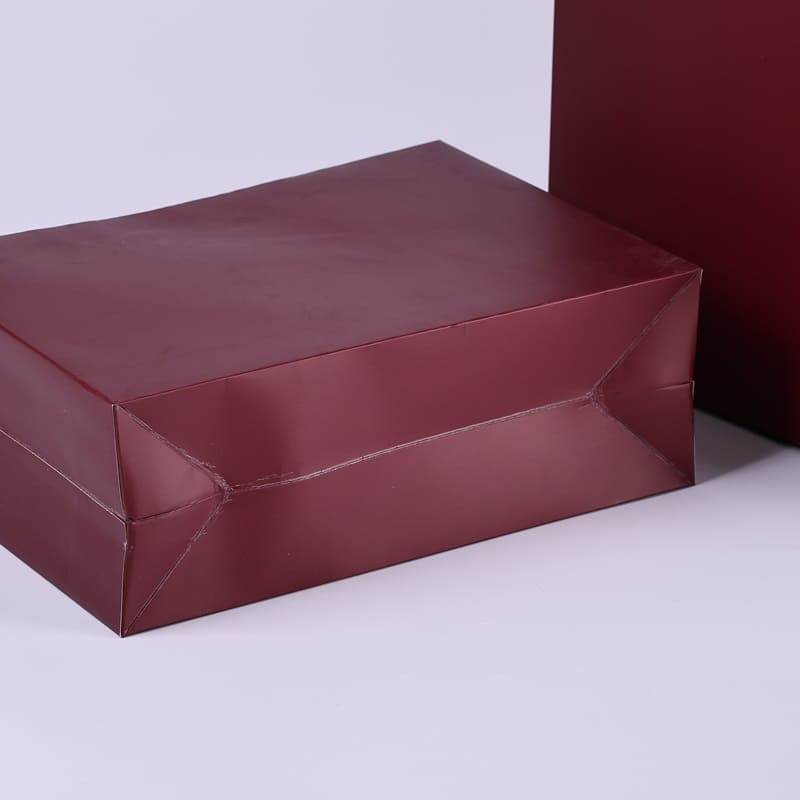
Compared with a folded bottom, this design creates a cleaner appearance with fewer visible folds.
Under the same material specifications, the integrated structure generally distributes weight more evenly across the base. Actual carrying strength, however, still depends on paper weight, paper quality, glue quality, bag dimensions, and manufacturing accuracy.
Traditional Folded Bottom
Traditional paper bags create the base by folding and gluing several paper flaps together.
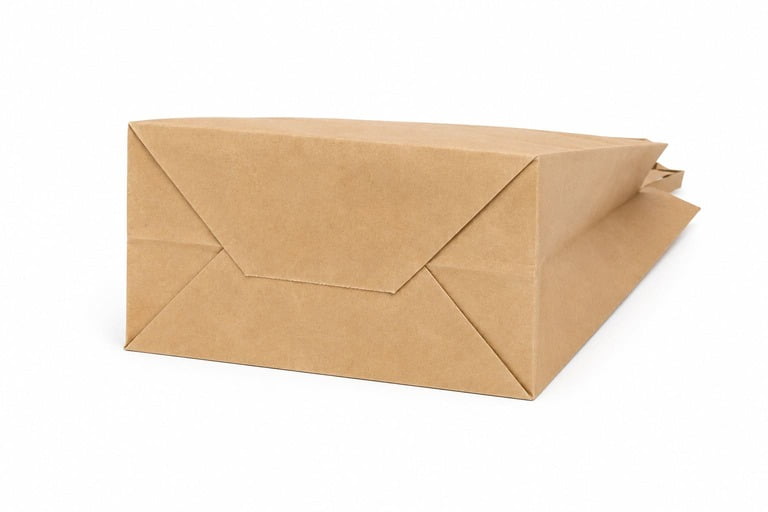
This structure has been proven through decades of practical use and remains highly reliable for everyday retail packaging.
Because the bottom is built from multiple folded sections, more fold lines and bonding areas remain visible after production.
Structural Comparison
| Bottom Feature | Seamless Paper Bag | Traditional Folded Paper Bag |
|---|---|---|
| Bottom construction | One-piece integrated bottom | Folded and glued bottom |
| Visible folds | Very few | Multiple |
| Load distribution | More even | Concentrated at folded areas |
| Appearance | Clean and smooth | Traditional folded structure |
| Manufacturing | Machine formed | Folding and gluing |
Rather than one design replacing the other, each structure is optimized for different manufacturing priorities.
Manufacturing Comparison
Although both products are paper shopping bags, they are produced using different manufacturing technologies.
Seamless Paper Bag Production
Seamless paper bags are manufactured using dedicated automated forming equipment.
Once the machine has been adjusted, production follows a continuous process with minimal manual intervention.
This provides excellent consistency in:
- Bag dimensions
- Glue application
- Bottom formation
- Overall appearance
The process is particularly suitable for large production runs requiring stable quality.
Traditional Folded Paper Bag Production
Traditional folded paper bags are manufactured through a sequence of folding and gluing operations.
Although modern production lines are highly automated, this method offers greater flexibility when producing different bag sizes or special structures.
Key Manufacturing Differences
| Manufacturing Factor | Seamless Paper Bag | Traditional Folded Paper Bag |
|---|---|---|
| Production method | Dedicated forming machine | Folding and gluing |
| Automation level | Very high | Moderate to high |
| Manual operations | Minimal | More adjustments |
| Production consistency | Excellent | Good |
| Standardized production | Excellent | Good |
| Structural flexibility | Moderate | Excellent |
Neither method is universally better. The right choice depends on production requirements.
Production Efficiency and Customization
Many buyers ask which type of paper bag is faster to produce.
The answer depends on order quantity and customization requirements.
Production Efficiency
Seamless paper bags require machine setup before production begins.
Technicians adjust the equipment according to the required:
- Bag width
- Bag height
- Bottom dimensions
- Paper thickness
- Glue position
This preparation takes time, but once completed, the machine can produce large quantities of bags quickly and consistently.
Traditional folded paper bags usually require less equipment adjustment when specifications change, making them more practical for smaller orders or projects with frequent design changes.
Customization Flexibility
Both manufacturing methods support common customization options, including:
- CMYK printing
- Pantone colors
- Matte lamination
- Gloss lamination
- Hot stamping
- UV coating
- Embossing
- Cotton rope handles
- Ribbon handles
- Twisted paper handles
- Flat paper handles
The main difference is size flexibility.
Because seamless paper bags are produced on dedicated equipment, production sizes must remain within the machine's operating range.
Traditional folded paper bags are less restricted and can accommodate more unusual dimensions or special structures.
Which Production Method Fits Your Project?
| Requirement | Recommended Choice |
|---|---|
| Large-volume standardized production | Seamless Paper Bag |
| Long-term repeat orders | Seamless Paper Bag |
| Premium retail packaging | Seamless Paper Bag |
| Small production runs | Traditional Folded Paper Bag |
| Frequent size changes | Traditional Folded Paper Bag |
| Unusual bag dimensions | Traditional Folded Paper Bag |
Many manufacturers now offer both production methods, allowing buyers to choose the most suitable solution based on their products, branding goals, order volume, and budget.
Advantages of Seamless Paper Bags
Seamless paper bags are designed for brands that value premium presentation, standardized production, and long-term purchasing consistency. Their advantages come directly from their unique manufacturing method.
Clean and Premium Appearance
Without a visible side seam, the bag has a smooth and refined exterior that creates a stronger premium impression.
This makes seamless paper bags especially suitable for:
- Luxury retail
- Fashion brands
- Cosmetics
- Jewelry
- Premium gift packaging
Better Printing Presentation
A continuous printing surface allows logos, photographs, and full-panel artwork to appear more complete without being interrupted by a side seam.
For brands that rely on visual packaging, this provides greater design freedom and a cleaner finished result.
Consistent Production Quality
Automated manufacturing helps maintain consistent:
- Bag dimensions
- Bonding quality
- Bottom structure
- Printing alignment
- Overall appearance
This consistency is especially valuable for chain stores and international brands ordering large quantities over multiple production batches.
Ideal for Large Repeat Orders
Although machine setup requires preparation before production, the process becomes highly efficient for repeat orders using the same specifications.
For businesses with long-term purchasing plans, this improves production efficiency while maintaining stable quality.
Advantages at a Glance
| Advantage | Business Value |
|---|---|
| Clean appearance | Premium brand image |
| Continuous printing surface | Better artwork presentation |
| Automated production | Stable quality |
| High consistency | Reliable repeat orders |
| Efficient mass production | Ideal for long-term procurement |
Advantages of Traditional Folded Paper Bags
Traditional folded paper bags continue to be widely used because of their flexibility and adaptability.
Greater Size Flexibility
Traditional production supports a broader range of bag sizes and structures, including very small, oversized, or custom-shaped bags that may exceed the operating range of seamless paper bag machines.
Better for Small Orders
Because less machine setup is required, traditional folded paper bags are often the more economical option for small production runs, seasonal packaging, or limited-edition projects.
Easier Product Development
When bag dimensions or structures need frequent adjustment during development, the traditional manufacturing process offers greater flexibility and faster modification.
Advantages at a Glance
| Advantage | Business Value |
|---|---|
| Flexible dimensions | Suitable for custom projects |
| Easy structural adjustment | Supports special designs |
| Practical for small orders | Lower setup requirements |
| Mature manufacturing process | Reliable and versatile |
Seamless Paper Bags vs Traditional Folded Paper Bags: Quick Comparison
The table below summarizes the key differences between these two manufacturing methods.
| Feature | Seamless Paper Bags | Traditional Folded Paper Bags |
|---|---|---|
| Visible side seam | No | Yes |
| Bottom structure | One-piece integrated bottom | Folded and glued bottom |
| Manufacturing method | Fully automated forming machine | Folding and gluing process |
| Paper feeding | Stacked paper sheets | Folding production process |
| Appearance | Modern and minimal | Traditional |
| Printing continuity | Excellent | Good |
| Production consistency | Excellent | Good |
| Large-volume production | Excellent | Good |
| Small production runs | Moderate | Excellent |
| Size flexibility | Limited by machine range | Highly flexible |
| Typical applications | Premium retail, fashion, cosmetics | General retail, shopping, gift bags |
Neither type is universally better.
Seamless paper bags are ideal for premium branding and standardized mass production, while traditional folded paper bags remain the preferred solution for custom sizes, frequent design changes, and smaller production runs.
Frequently Asked Questions
What is a seamless paper bag?
A seamless paper bag is a fully machine-made paper bag with no visible side seam and a one-piece integrated bottom.
Why is it called a seamless paper bag?
Because the finished bag has no visible vertical side seam, creating a cleaner and more continuous exterior.
Are seamless paper bags made without glue?
No. Hot melt adhesive is still used, but it is hidden inside the structure rather than forming an exposed side seam.
Are seamless paper bags stronger than traditional paper bags?
Not necessarily. Carrying strength depends on paper quality, paper weight, bag dimensions, glue quality, and manufacturing accuracy. Under the same specifications, the integrated bottom generally distributes weight more evenly.
Can seamless paper bags be customized?
Yes. Most standard retail sizes can be customized with different paper materials, printing methods, surface finishes, and handle options.
Can seamless paper bags replace traditional folded paper bags?
No. Seamless paper bags are best for premium branding and large standardized orders, while traditional folded paper bags remain the better choice for custom sizes, prototypes, and smaller production runs.
Conclusion
Although seamless paper bags and traditional folded paper bags serve the same purpose, they are based on different manufacturing methods.
Seamless paper bags offer a cleaner appearance, a one-piece integrated bottom, and excellent consistency for large production runs, making them well suited to premium retail packaging.
Traditional folded paper bags provide greater flexibility in size, structure, and small-batch production, making them the preferred choice for many custom packaging projects.
Rather than asking which paper bag is better, buyers should choose the manufacturing method that best matches their branding goals, order volume, customization requirements, and budget. Understanding these differences helps businesses make more informed purchasing decisions and select packaging that supports both product protection and brand image.