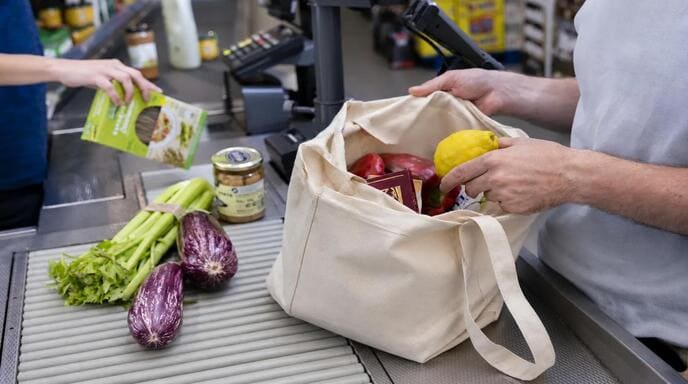
A supermarket and a grocery store can sell many of the same products, but they do not always serve the same shopping mission. That difference can affect basket composition, load requirements, bag capacity, reuse expectations and the way retailers specify shopping bags.
There is no universal store-size threshold separating the two. A large grocery chain may operate much like a supermarket, while a smaller supermarket may have a similar shopping pattern to a neighborhood grocery store.
For bag purchasing, the more useful question is therefore not simply “What type of store is this?” but what customers normally carry, how heavy the basket is, and what the checkout operation requires.
A shopping bag is part of that checkout system. Its size, structure and material need to match the products being carried—not just the store format.
Supermarket vs Grocery Store: What’s the Difference?
The terms overlap, but their typical shopping missions can differ. Supermarkets generally support broader shopping trips, where customers may combine packaged food, fresh products, beverages and household goods. Grocery stores often serve more focused or frequent trips, with customers buying food, beverages and everyday essentials in smaller combinations.
These are tendencies rather than strict definitions. Store size, purchasing volume and basket weight do not necessarily move together.
The key point for bag purchasing is that store format is only a starting point. A large supermarket program may mainly involve lightweight packaged food, while a smaller grocery store selling bottled drinks, canned goods or bulk products may place greater demands on bag strength.
The store format provides context. The basket determines the bag.
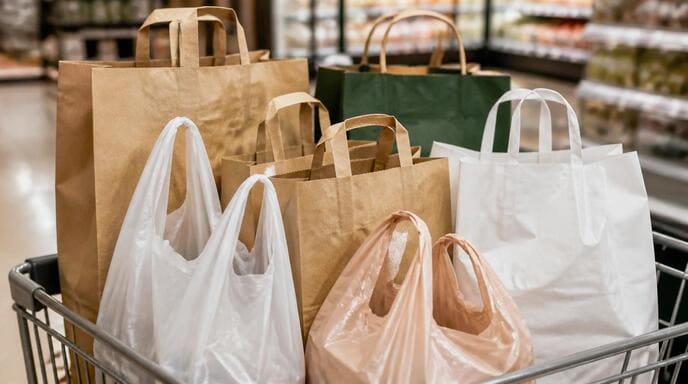
How Shopping Behavior Determines Bag Requirements
The number of items in a basket does not tell the whole story. Ten lightweight packaged products and ten bottles may occupy similar checkout space but create very different stresses on the bag.
Product density, shape and weight distribution are often more useful indicators. Bottled drinks can create concentrated loads around the bottom and handle attachment points. Cans create similar challenges, while irregular produce may require more usable volume even when the total weight is moderate.
For this reason, bag specifications should be based on the heaviest realistic shopping condition, rather than simply the average number of items.
One important distinction is capacity versus strength. A larger bag provides more volume, but it does not automatically make the bag stronger. Increasing material weight can improve carrying performance, but it can also increase material consumption and unit cost.
The practical approach is to define the load first, then determine the dimensions, gusset, material weight, handle construction and bottom structure needed to support it.
How Bag Standardization Affects Supermarket Purchasing
For supermarkets, bag selection is not only a product-design decision. It can also affect purchasing efficiency and production cost.
High-volume supermarket programs can often benefit from using one main standardized bag size when the shopping missions and basket requirements are relatively consistent. A standard size simplifies store distribution, inventory management and replenishment, while also making production easier to plan.
There is another reason standardization can matter: changing bag specifications creates production setup work.
When a factory produces different bag sizes, production parameters may need to be adjusted. Depending on the bag type and process, this can involve changes to forming, cutting, printing, sewing or other machine settings. Each change takes time and can reduce production efficiency when many specifications are mixed into the same purchasing program.
For example, if a retailer needs 100,000 bags, producing all 100,000 to one standardized specification is generally more straightforward than dividing the same quantity among several different sizes. The exact price difference depends on the product and production process, but concentrating volume on one specification can create better conditions for competitive unit pricing.
This does not mean every supermarket needs only one bag size. If different store formats or shopping missions create genuinely different capacity requirements, multiple sizes may be justified.
The purchasing principle is simpler: do not add different bag sizes unless they solve a real operational need.
Why Shopping Behavior Affects Material Selection
Material selection should follow the way the bag will be used.
For lightweight everyday shopping, non-woven PP can offer a practical balance of material use, production efficiency and cost. If the retailer needs stronger branding, a smoother printed surface or better resistance to splashes and surface contamination, laminated non-woven may be more suitable.
For heavier or more demanding baskets—particularly where bottles, cans or other dense products are common—PP woven or another stronger construction may be considered. RPET can be appropriate when recycled-material positioning is important, while cotton or canvas may be chosen when the reusable bag is also intended to support a more premium brand image.
The point is not that one material belongs to one type of retailer. The shopping requirement should determine the material direction.
Material choice should then be checked against dimensions, GSM, gusset, handle construction, bottom structure and expected reuse. The same material can perform differently when the overall bag construction changes.
Lamination should also be described accurately. It can improve splash and surface resistance and provide a smoother printing surface, but laminated non-woven should not automatically be described as completely waterproof.
Why Bag Structure Matters
Material alone does not determine carrying performance.
Two bags made from similar material can behave differently because of their dimensions, gusset, handle construction, bottom structure and material weight. This matters particularly in grocery applications, where loads are rarely distributed evenly.
A gusset can increase usable volume for bottles, cartons and irregular products. Handle construction becomes more important when heavy products create concentrated force near the attachment points, while bottom construction matters when dense products repeatedly load the base.
This leads to a more useful specification sequence:
Basket → weight → capacity → structure → material → production specification
Rather than starting with “What material should a supermarket bag use?”, the better question is “What does the bag need to carry, and what construction will handle that condition efficiently?”
This approach can also prevent over-specification. A retailer does not necessarily need the heaviest material simply because the bag is intended for supermarket use. The construction should match the actual load while keeping material use and production cost under control.
When Grocery Shopping Includes Chilled or Frozen Products
Chilled and frozen products introduce another requirement: temperature retention.
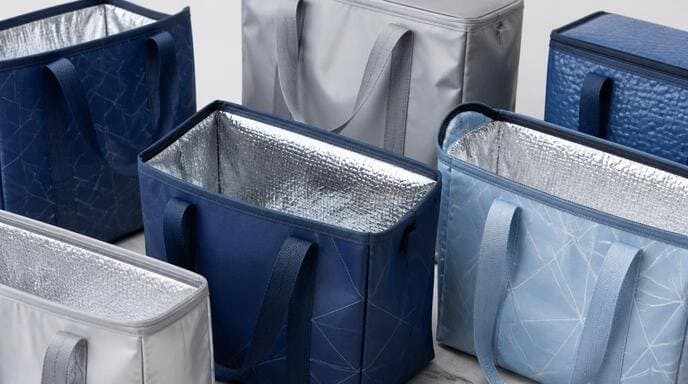
In this situation, the bag is not only a carrier. It also becomes a short-term thermal packaging component. An insulated shopping bag may combine an outer layer such as PP non-woven, RPET non-woven or laminated material with a foil lining and, when required, EPE foam.
These layers perform different functions. Foil primarily reflects radiant heat, while foam reduces heat transfer. Neither layer creates cold, and actual performance depends on product temperature, outside conditions, holding time and whether ice packs are used.
The specification therefore needs to consider both thermal requirements and carrying requirements. A retailer selling frozen groceries may need more insulation and capacity, while a heavy chilled basket also requires sufficient structural strength.
What Should Retailers Specify When Ordering Custom Shopping Bags?
A request such as “We need reusable bags for a supermarket” provides useful context, but it does not define the product.
A manufacturer needs enough information to translate the checkout environment into a production specification. The most useful details are bag dimensions, typical and heavier basket conditions, product mix, material preference, expected reuse, printing requirements, order quantity and destination market.
Product mix is particularly important. A bag intended mainly for bread and packaged snacks has different requirements from one that regularly carries bottled drinks, canned goods or chilled products.
Order quantity also matters beyond the total number of bags. If a large order can be concentrated into one practical size and specification, production planning may be simpler and unit pricing may benefit from greater production efficiency.
Instead of:
“We need a large reusable supermarket bag.”
A more useful purchasing brief would be:
“The bag will mainly carry mixed groceries, including bottled drinks and packaged food. It should accommodate a larger basket, withstand repeated use and handle concentrated loads around the handle and bottom.”
That description gives the manufacturer practical information for developing the bag.
Destination-market requirements should also be considered before production. Depending on the market, retailers may need to review requirements related to single-use bag restrictions, recycled content, labeling, customer bag fees or reuse.
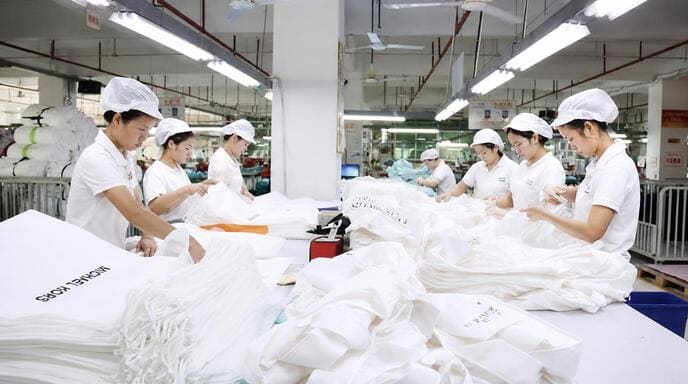
A Better Way to Choose Bags for Supermarkets and Grocery Stores
The most useful way to approach the supermarket-versus-grocery question is to move from retail format to actual operating conditions.
Start with the shopping mission: what customers usually buy and how frequently they shop. Then look at the basket: product types, weight, volume and load distribution. From there, determine the required bag capacity and structure before selecting the material and final production specifications.
For high-volume supermarket programs, there is one additional purchasing question: can one standardized bag size handle the main shopping mission?
If the answer is yes, concentrating a large order on one size can simplify inventory and production while creating better conditions for unit cost. If different store formats or shopping missions genuinely require different capacities, multiple sizes may make more sense.
The goal is not to find a generic “supermarket bag” or “grocery store bag.” It is to define a bag specification that fits the actual shopping behavior and can be produced consistently across repeat orders.
Frequently Asked Questions
Is a supermarket the same as a grocery store?
Not exactly. The terms overlap, but supermarkets generally support broader shopping missions and assortments, while grocery stores often focus more heavily on food, beverages and everyday essentials. There is no universal store-size threshold separating the two.
Do supermarkets need stronger shopping bags than grocery stores?
Not automatically. Strength should be determined by the actual basket. A grocery store selling many bottled drinks can create higher load requirements than a supermarket whose customers mainly purchase lightweight packaged food.
What shopping bag material is suitable for a supermarket?
There is no single material for every supermarket. Non-woven PP can suit lightweight everyday shopping, while laminated non-woven, PP woven or RPET may be considered according to load, appearance, recycled-material positioning and reuse requirements.
Can supermarkets use one standard bag size?
Yes, when shopping missions and basket requirements are relatively consistent. For high-volume orders, concentrating production on one specification can simplify purchasing and production and may provide better conditions for unit pricing than splitting the same quantity across several sizes.
What determines shopping bag strength?
Strength depends on the complete construction, including material, GSM, dimensions, gusset, handle attachment, bottom structure and expected reuse. Material weight alone does not determine carrying performance.
What information should retailers provide to a shopping bag supplier?
Useful information includes dimensions, order quantity, typical and heavier basket conditions, product mix, expected reuse, material preference, printing requirements, destination market and applicable compliance requirements.
Conclusion
Supermarkets and grocery stores overlap too much for store format alone to determine the right shopping bag.
The more important question is how the bag will actually be used at checkout. Product mix, basket weight, load distribution, capacity and reuse expectations should guide the specification.
For large supermarket programs, standardization can also become part of the cost decision. When one bag size can meet the main shopping requirements, concentrating volume on that specification can simplify production and create better conditions for competitive unit pricing.
The practical lesson is simple:
Do not start with the bag material. Start with the basket.
Identify what customers carry, how the weight is distributed and how the bag will be used. Then determine the structure, material and production specification that fit those conditions.
The products inside the basket matter more than the sign above the checkout.