When people search for Trader Joe's reusable bags, they are often interested in more than the bags themselves. Some want to understand why these grocery bags have become recognizable, while others are looking for reusable bag ideas for their own retail business.
Trader Joe's provides an interesting example because its reusable bags are closely connected with the company's overall retail strategy. They are practical products, but they also reflect the brand's personality, customer experience, and approach to everyday shopping.
For businesses developing custom reusable bags, the value of studying Trader Joe's is not about copying its exact designs. The more important lesson is understanding how a simple shopping bag can become a product customers recognize and continue using.
What Is Trader Joe's and Why Are Its Reusable Bags Popular?
Trader Joe's: A Unique Grocery Brand in the US Market
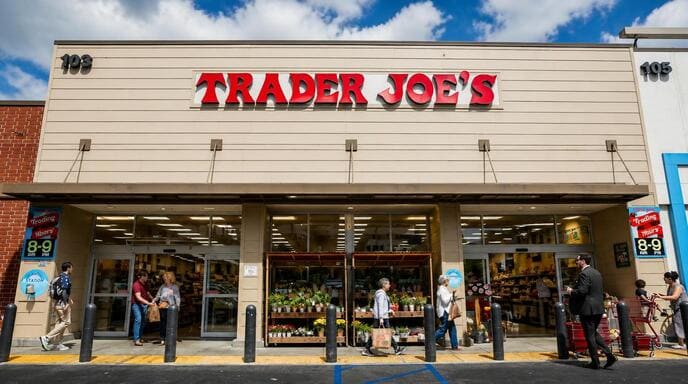
Trader Joe's is an American grocery chain founded in 1958. Over decades of development, it has built a strong reputation for offering distinctive products, affordable pricing, and a shopping experience that feels different from many traditional supermarkets.
One important part of Trader Joe's strategy is its focus on private-label products. Instead of relying mainly on well-known national brands, the company develops many products under its own name. This allows Trader Joe's to control product selection, packaging style, and overall brand presentation.
The company is also known for creating a more personal shopping environment. Many stores use friendly staff interactions, unique product names, and creative visual elements to make customers feel connected with the brand.
This approach helps explain why even smaller items, such as reusable shopping bags, can receive attention.
A reusable bag in a typical supermarket may simply serve a transportation function. At Trader Joe's, the bag becomes another part of the customer's interaction with the brand.
Quick Overview
Trader Joe's stands out because it creates a complete shopping experience. Its reusable bags support this experience by extending the brand beyond the store.
How Reusable Bags Became Part of the Trader Joe's Experience
Reusable bags have become increasingly common in grocery retail because consumers and businesses are moving away from single-use packaging. However, not every reusable bag receives the same level of attention.
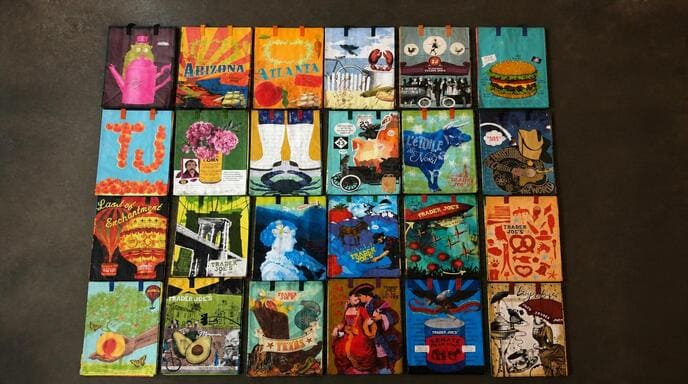
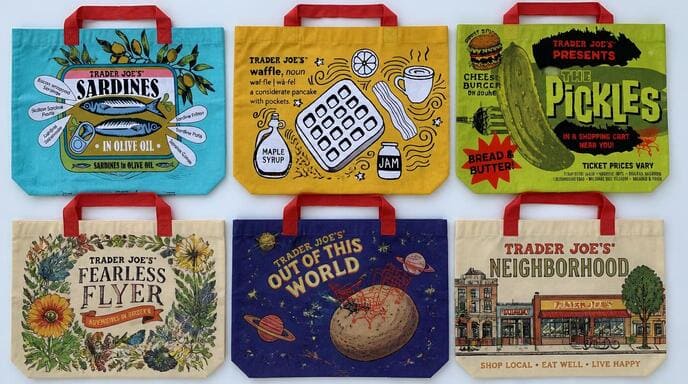
Trader Joe's bags are noticed because they are consistent with the company's overall image.
Many designs include:
- Regional illustrations connected with local markets
- Seasonal artwork that changes over time
- Colors and patterns that feel different from standard supermarket bags
- Visual elements that customers associate with the Trader Joe's shopping experience
The bag remains a functional product, but it also becomes a reminder of the store. Customers may continue using it after leaving the grocery environment, giving the product a longer life than traditional packaging.
For businesses, this shows that reusable bags can serve two purposes: carrying products and extending brand exposure after the customer leaves the store.
Quick Overview
Trader Joe's reusable bags are effective because they combine practical use with a recognizable customer experience.
Why Trader Joe's Reusable Bags Attract Customer Attention
Design Choices That Match the Trader Joe's Brand Personality
A major reason Trader Joe's bags are memorable is that their designs match the company's personality.
Trader Joe's does not position itself as a traditional supermarket focused only on efficiency. Its brand image is more casual, creative, and approachable. The reusable bags follow the same direction.
Instead of using the bag only as a place for a large company logo, the designs often focus on visual storytelling. Artwork, colors, and themes help the product feel like part of the brand environment.
For customers, this can change the way they view the bag.
A standard promotional bag may feel like an advertisement. A well-designed reusable bag can feel like something customers are happy to own and use.
For retailers, the lesson is that customization should begin with understanding the customer:
- Who will use the bag?
- Where will customers carry it?
- What experience should the product create?
- Does the design match the company's identity?
A reusable bag is a physical product, but it also communicates something about the brand behind it.
The Role of Regional and Seasonal Bag Designs
One interesting aspect of Trader Joe's reusable bags is the use of different designs for different markets and occasions.
Regional designs allow customers to feel a connection between the product and their location. Seasonal designs create a sense of change and encourage customers to notice new releases.
For retail businesses, similar strategies may include:
- Holiday-themed shopping bags
- City-specific designs
- Event-related packaging
- Limited promotional collections
However, changing designs alone does not create value. The artwork still needs to support the company's identity.
A successful reusable bag program combines creative design with a clear understanding of the target customers.
Functionality That Supports Everyday Use
Although design helps attract attention, customers continue using reusable bags because they are practical.
A reusable shopping bag needs enough capacity for daily purchases, comfortable handles, and a structure that can handle repeated use.
Businesses should also consider:
- Storage convenience
- Material strength
- Handle reinforcement
- Expected reuse frequency
- Production consistency
A bag that looks attractive but performs poorly will usually have a shorter useful life.
This is why successful reusable bag programs balance appearance with real customer needs.
What Retail Businesses Can Learn From Trader Joe's Reusable Bags
Reusable Bags as Part of Customer Experience
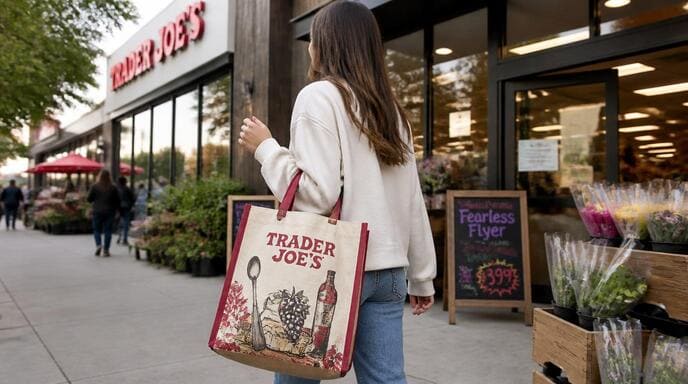
Traditional packaging usually has a short customer journey. A product package may be opened, discarded, or stored away shortly after purchase.
Reusable bags are different because customers often continue using them after the original purchase.
A bag may appear:
- During future shopping trips
- In local communities
- At workplaces
- During travel or outdoor activities
This creates additional interaction between customers and brands.
However, visibility alone is not enough. Customers continue using reusable bags only when the product provides practical value or creates a positive connection.
Trader Joe's demonstrates that reusable bags can become long-term brand touchpoints when they are designed as part of the customer experience.
Why Businesses Should Not Simply Copy Existing Bag Designs
Businesses often study successful products and consider creating similar versions. However, copying Trader Joe's style does not guarantee the same results.
The reason is that the bag works because it matches Trader Joe's customers, products, and brand positioning.
Different businesses have different requirements:
| Business Goal | Suitable Bag Solution |
|---|---|
| Large supermarket promotions | Cost-effective non-woven PP bags |
| Premium retail branding | Canvas or cotton tote bags |
| Grocery delivery | Insulated reusable bags |
| Long-term shopping programs | Woven PP bags |
The right reusable bag is not the one that looks most similar to another company's product. It is the one that fits the intended users and business purpose.
What Materials Are Commonly Used for Trader Joe's Style Reusable Bags?
Different materials create different customer experiences. The best choice depends on usage, durability requirements, customization needs, and budget.
Non-Woven and Woven PP Bags
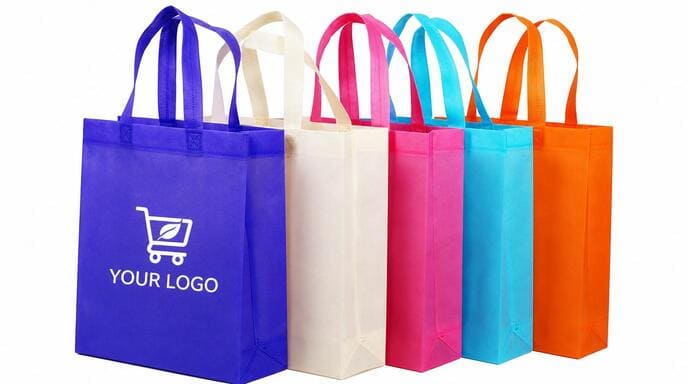
Polypropylene (PP) is one of the most widely used materials for reusable shopping bags.
Non-woven PP bags are popular in supermarkets, promotions, and large retail programs because they provide a practical balance between cost and customization.
They are commonly selected for:
- Large production quantities
- Lightweight transportation
- Flexible printing options
- Cost-controlled projects
Woven PP bags use a stronger woven structure and usually provide better load-bearing performance. They are suitable for customers who need bags for heavier products or frequent use.
When selecting PP bags, buyers should evaluate material thickness, handle construction, printing quality, and expected usage conditions.
Canvas and Cotton Tote Bags
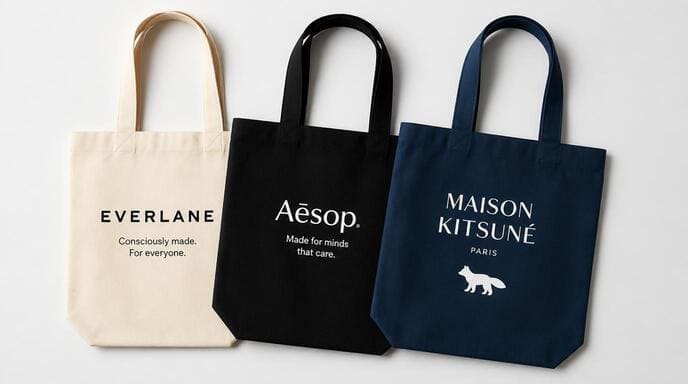
Canvas and cotton bags are often chosen by businesses that want a more premium appearance.
Compared with polypropylene bags, they usually provide a softer texture and stronger lifestyle association. This makes them suitable for brands that want the bag itself to feel like a product.
Common applications include:
- Fashion retailers
- Boutique stores
- Lifestyle brands
- Premium events
The main limitation is cost. Canvas materials usually require higher investment compared with standard PP options.
Insulated Grocery Bags
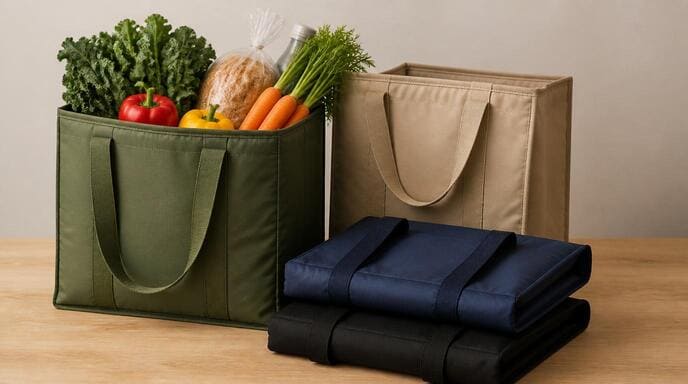
Insulated reusable bags focus on function rather than appearance alone.
They are commonly used for:
- Frozen food
- Fresh groceries
- Meal delivery
- Chilled products
Because insulated bags solve a specific customer problem, they often encourage repeated use.
For food-related businesses, these bags can become part of the service experience by helping customers transport products more conveniently.
Better Alternatives to Trader Joe's Reusable Bags
Businesses do not need to copy Trader Joe's exact bag style. The better approach is selecting a reusable bag based on brand positioning, customer needs, and usage requirements.
| Reusable Bag Type | Best For | Main Advantages | Considerations |
|---|---|---|---|
| Custom Non-Woven PP Bags | Supermarkets, promotions, retail campaigns | Affordable, lightweight, easy customization | Better for regular shopping use |
| Custom Woven PP Bags | Long-term reusable programs | Strong structure, better load capacity | Higher cost than non-woven options |
| Canvas Tote Bags | Fashion brands, premium promotions | Premium appearance and lifestyle appeal | Higher material cost |
| Insulated Grocery Bags | Food retailers and delivery businesses | Temperature protection and practical value | More complex production |
The right choice depends on whether the business prioritizes cost efficiency, durability, premium branding, or functional performance.
How to Choose the Right Reusable Bag Solution?
Consider Usage Scenario and Customer Needs
The first step is understanding how customers will use the bag.
Businesses should consider:
- Occasional promotion or daily shopping use
- Light products or heavier goods
- Brand image or functional requirements
- Expected order quantity
Choosing based only on unit price may lead to a product that does not match customer expectations.
Evaluate Material, Customization, and Manufacturing Ability
A successful reusable bag project requires more than selecting a material.
Buyers should also evaluate:
- Printing methods
- Size options
- Handle reinforcement
- Production capacity
- Quality control process
- Lead time
For large retail programs, working with an experienced manufacturer helps maintain consistency across thousands of bags.
Conclusion: Trader Joe's Reusable Bags Show How Small Products Can Build Brand Value
Trader Joe's reusable bags demonstrate how an ordinary shopping item can become part of a larger brand experience.
Their success is not based on one specific material or design style. Instead, the bags work because they match the company's identity, provide practical value, and connect with customers.
For businesses, the goal is not to create an identical copy of Trader Joe's bags. The better approach is developing reusable bags that fit their own customers, products, and business objectives.
With the right combination of material, design, and manufacturing support, a reusable bag can become more than a carrier. It can become a product customers continue using and associating with the brand.