
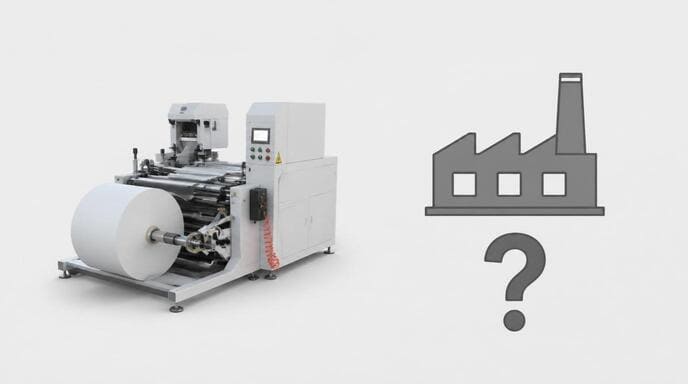
Why Do Factories Use Heat Pressing for Bag Manufacturing?
When buyers evaluate a bag supplier, they often focus on materials, printing, and price. However, the manufacturing process behind the bag also plays an important role in production efficiency, appearance, and cost control.
One technology widely used in modern bag factories is heat pressing, also known as ultrasonic welding or heat lamination. This process helps factories produce clean, consistent, and affordable bags, especially for large-volume orders.
However, heat pressing does not completely replace traditional sewing. Today, professional bag manufacturers usually operate both heat pressing production lines and sewing workshops. Each process has its own advantages, and many customized bags are produced by combining both methods.
What Is Heat Pressing in Bag Manufacturing?
Heat pressing is a manufacturing method that uses heat, pressure, or ultrasonic vibration to bond layers of fabric together without traditional thread stitching.
For non woven bags and laminated bags, factories commonly use ultrasonic welding machines. These machines apply high-frequency vibration and pressure to melt and fuse synthetic fibers together, creating a sealed edge.
This process is widely used for:
- Non woven shopping bags
- Promotional tote bags
- Laminated non woven bags
- Disposable packaging bags
- Some types of insulated cooler bags
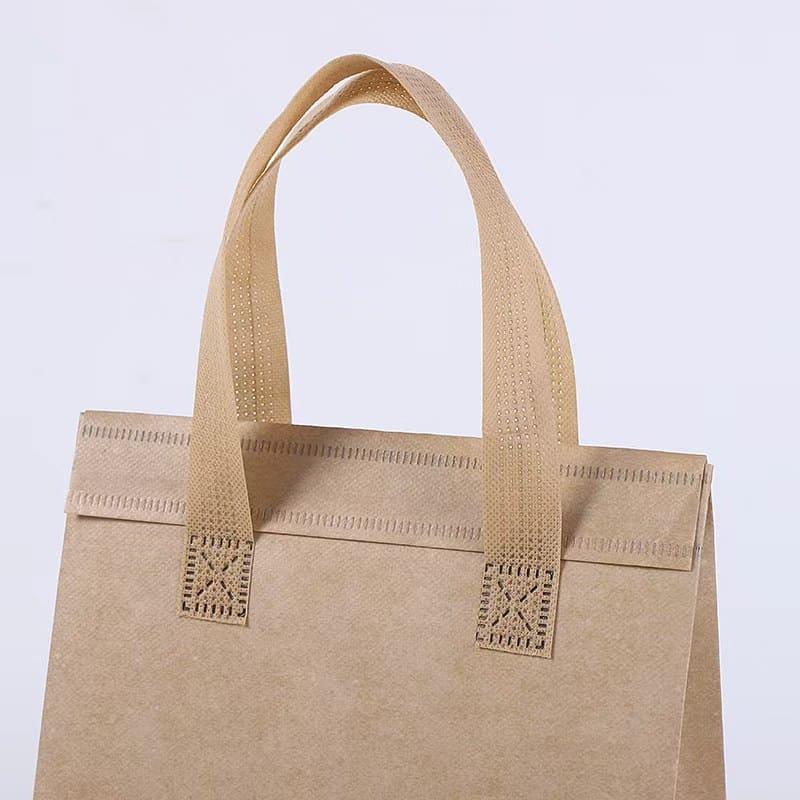
Compared with traditional sewing, heat pressing creates a cleaner appearance because there are no visible stitches or loose threads along the bonded edges.
Why Do Factories Choose Heat Pressing?
1. Higher Production Efficiency for Large Orders
One of the biggest reasons factories invest in heat pressing equipment is production speed.
Traditional sewing requires operators to guide fabric pieces through sewing machines. The production speed depends heavily on worker experience and the complexity of the bag structure.
Heat pressing uses automated equipment to complete bonding quickly and consistently. This makes it especially suitable for large-volume orders where thousands or millions of bags need to be produced within a limited timeframe.
For a non woven bag manufacturer, ultrasonic welding machines allow factories to increase output while maintaining stable quality across large production batches.
This is why heat pressing is commonly used for:
- Promotional bags for events
- Retail shopping bags
- Corporate giveaway bags
- Large supermarket bag projects
2. Cleaner Appearance and Better Production Consistency
Appearance consistency is an important factor for branded packaging, especially when buyers order thousands of customized bags for retail, promotions, or corporate campaigns.
In traditional sewing production, many finishing steps still depend on manual work. After stitching, workers need to trim loose threads and inspect each bag carefully. However, this process can sometimes be affected by lighting conditions, worker attention, and production pressure. Small thread ends may occasionally be missed during inspection.
Even when threads are trimmed, workers usually cannot cut them too aggressively around high-stress areas such as handles. Since the thread structure is connected to the strength of the stitching, excessive trimming may affect the appearance or reliability of the seam. Therefore, some small thread ends may remain to ensure the handle connection stays secure.
Another difference comes from the sewing process itself. In some factories, handle reinforcement or cross stitching is completed manually. Because the result depends heavily on operator skill, the appearance can vary from one worker to another. An experienced operator may create a straight and neat stitch pattern, while another operator may produce slightly uneven lines. These differences usually do not affect the bag's function or load-bearing ability, but they can influence the overall appearance of the finished product.
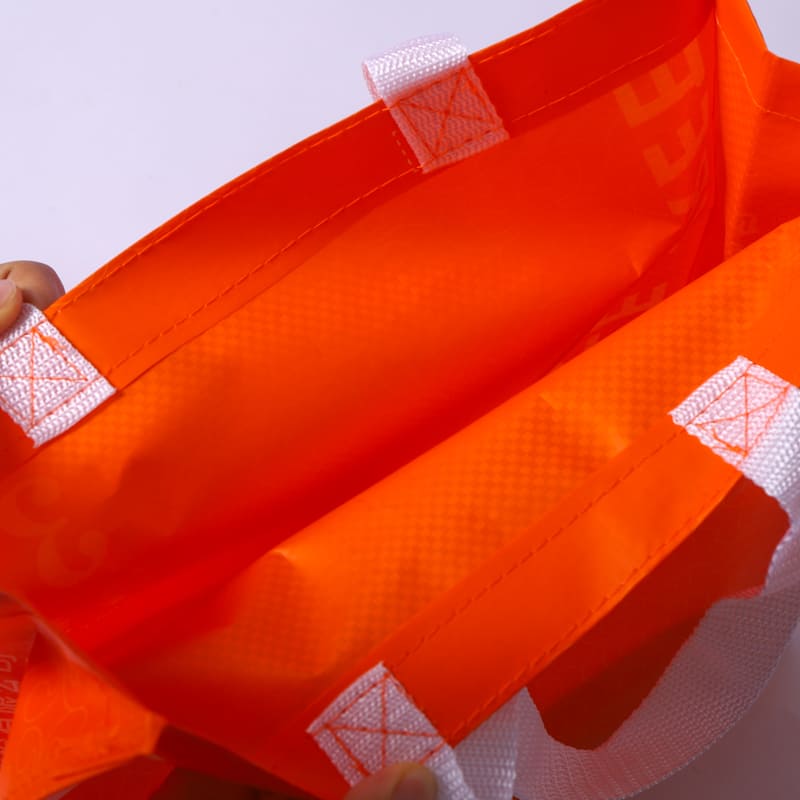
Heat pressing and ultrasonic welding provide a more consistent finishing result because the bonding process is controlled by the machine. The welding position, pressure, and timing remain stable throughout production.
For example, the handle reinforcement points created by ultrasonic welding are usually flatter and more uniform compared with manually stitched reinforcement areas. There are no extra thread lines, loose ends, or variations caused by repeated sewing operations.
This does not mean heat pressing completely replaces sewing. Sewing remains an important process for many durable bag applications, especially where additional reinforcement is required. However, for products where appearance consistency and production efficiency are priorities, ultrasonic welding bags offer clear advantages.
For brands ordering large quantities of customized bags, this higher level of consistency helps maintain a professional and uniform brand image.
3. Lower Production Costs for Suitable Bag Types
Cost control is another important reason factories use heat pressing.
Because ultrasonic welding reduces manual sewing steps, it can lower labor requirements and improve production efficiency.
For simple bag structures, heat pressing can reduce:
- Sewing labor costs
- Thread consumption
- Edge trimming work
- Production time
This makes heat laminated bags and ultrasonic welded bags a popular choice for customers who need affordable packaging solutions.
However, cost advantages depend on the bag design. Complex structures, heavy materials, or high-load applications may still require sewing reinforcement.
Does Heat Pressing Make Bags Stronger Than Sewing?
Heat pressing provides a reliable bond for many bag applications, but it is important to understand its limitations.
For general non woven bags and lightweight promotional bags, ultrasonic welding provides sufficient strength for daily use.
However, the handle area is usually the most stressed part of a bag. Repeated pulling, heavy loading, and long-term use can place significant pressure on handle connections.
For this reason, many factories use a combination of technologies:
- Heat pressing for the main body and side seams
- Sewing reinforcement for handles and high-stress areas
This hybrid production method improves durability while maintaining production efficiency.
For example, a laminated cooler bag manufacturer may use heat sealing for the insulated bag structure while adding stitched reinforcement around handles, shoulder straps, or zipper areas.
Heat Pressing and Sewing: Different Solutions for Different Markets
Some buyers think heat pressing and sewing are competing technologies. In modern packaging factories, this is not the case.
Professional factories usually have both:
Heat Pressing Workshop
Best suited for:
- High-volume production
- Non woven bags
- Simple structures
- Cost-sensitive projects
- Clean appearance requirements
Sewing Workshop
Best suited for:
- Heavy-duty bags
- Complex designs
- Reinforced handles
- Canvas bags
- Oxford fabric bags
- Premium packaging products
Many factories combine both processes according to customer requirements.
For example:
A promotional non woven tote bag may be produced almost entirely by ultrasonic welding.
A durable insulated grocery bag may use heat pressing for the laminated body and sewing for handle reinforcement.
A canvas shopping bag may rely mainly on sewing because the material structure requires stronger stitching.
This flexibility allows manufacturers to provide more customized solutions instead of limiting buyers to one production method.
Why Heat Pressing Is Important for Modern Bag Factories
The packaging industry continues to demand:
- Faster delivery times
- More competitive pricing
- Consistent product quality
- Large-scale production capability
Heat pressing helps factories meet these requirements by improving manufacturing efficiency and reducing unnecessary production steps.
At the same time, experienced suppliers understand that no single process is suitable for every product.
A reliable custom bag manufacturing factory should have multiple production capabilities, including ultrasonic welding, heat lamination, and sewing. This allows buyers to choose the most suitable structure based on budget, appearance, and durability requirements.
Conclusion
Heat pressing has become an important technology in modern bag manufacturing because it improves production speed, appearance consistency, and cost efficiency.
However, it is not a complete replacement for sewing. The best bag factories combine both technologies to create products that balance efficiency and durability.
For buyers looking for custom bags, the key is not choosing between heat pressing and sewing. It is finding a manufacturer that understands when to use each process and how to combine them effectively.
Frequently Asked Questions About Heat Pressing for Bags
1. What is heat pressing in bag manufacturing?
Heat pressing is a production method that uses heat, pressure, or ultrasonic vibration to bond synthetic fabrics together without traditional stitching. In bag manufacturing, ultrasonic welding is commonly used for non woven bags, laminated bags, and some insulated bags because it creates clean edges and improves production efficiency.
2. Is heat pressing better than sewing for making bags?
Heat pressing and sewing are not competing processes. Each method has different advantages.
Heat pressing is ideal for high-volume production, simple structures, and bags that require a clean appearance, such as promotional non woven bags.
Sewing is better suited for heavy-duty bags, complex designs, and areas that require additional reinforcement.
Many professional bag factories use both technologies to provide more flexible customization options.
3. Are ultrasonic welded bags durable?
Yes, ultrasonic welded bags can provide reliable durability for many applications, especially lightweight shopping bags, promotional bags, and laminated non woven bags.
However, the handle area usually receives the most stress during daily use. For products that carry heavier loads, factories often add sewing reinforcement to handles or other high-stress areas to improve overall durability.
4. Why do factories use ultrasonic welding instead of sewing?
Factories choose ultrasonic welding because it can improve production speed, reduce manual processes, and create a cleaner appearance.
Compared with sewing, ultrasonic welding reduces the need for:
- Thread cutting
- Manual seam finishing
- Repeated stitching operations
This makes it suitable for large-volume orders where consistent quality and delivery speed are important.
5. Can heat pressing be used for insulated cooler bags?
Yes, heat pressing is commonly used in some insulated cooler bag production processes.
For example, laminated cooler bags may use heat sealing or ultrasonic welding for certain parts of the bag structure, while sewing can be added to reinforce handles, zippers, or shoulder straps.
The best production method depends on the bag design, material, and expected usage.
6. Do modern bag factories only use heat pressing?
No. Professional bag manufacturers usually operate multiple production processes, including ultrasonic welding, heat lamination, and sewing.
Different products require different solutions:
- Non woven promotional bags often use ultrasonic welding.
- Canvas and Oxford fabric bags usually rely more on sewing.
- Insulated bags may combine heat pressing and sewing.
Having multiple production capabilities allows factories to offer more customized solutions.
7. Does heat pressing reduce the cost of custom bags?
For suitable bag designs, heat pressing can help reduce production costs by improving efficiency and reducing manual labor requirements.
However, the final price of a custom bag also depends on many factors, including:
- Material selection
- Bag size
- Printing method
- Structure design
- Reinforcement requirements
- Order quantity
A professional supplier will recommend the most suitable manufacturing process based on the customer's needs.